Alpine sea holly in March: monthly care
Month-by-month care — Eryngium alpinum
In March your alpine sea holly needs attention: plant / sow and prune.
- Plant / sow
- Prune
What to do this March
Eryngium alpinum thrives in full sun but tolerates partial shade, though flowering may be less intense in shadier spots. Choose a site with well-drained soil; this alpine native dislikes winter waterlogging. It adapts to loam, sandy soil, and chalky conditions, making it versatile for most gardens, but avoid heavy clay unless you improve drainage with grit or coarse sand. Plant in March, April, or May for establishment before summer, or in September and October to give roots time to settle before winter. Dig a hole slightly larger than the root ball and loosen the soil at the base to encourage downward root growth. Position the crown at soil level—planting too deep can lead to rot. Space plants 45 cm apart to allow for their mature spread of 40–50 cm and good air circulation. After planting, water thoroughly to settle the soil around the roots and eliminate air pockets. A 5 cm layer of grit or gravel mulch around the base helps maintain drainage and suppresses weeds, which is particularly useful in heavier soils. Avoid organic mulches like bark that retain moisture against the crown. Eryngium alpinum develops a taproot, so plant young specimens rather than attempting to move established clumps. Container-grown plants establish more reliably than bare-root stock. Water regularly during the first growing season to help roots establish, but once settled, this perennial becomes quite drought-tolerant. Staking is rarely needed despite the 60–80 cm height, as the stems are sturdy and self-supporting even in exposed positions.
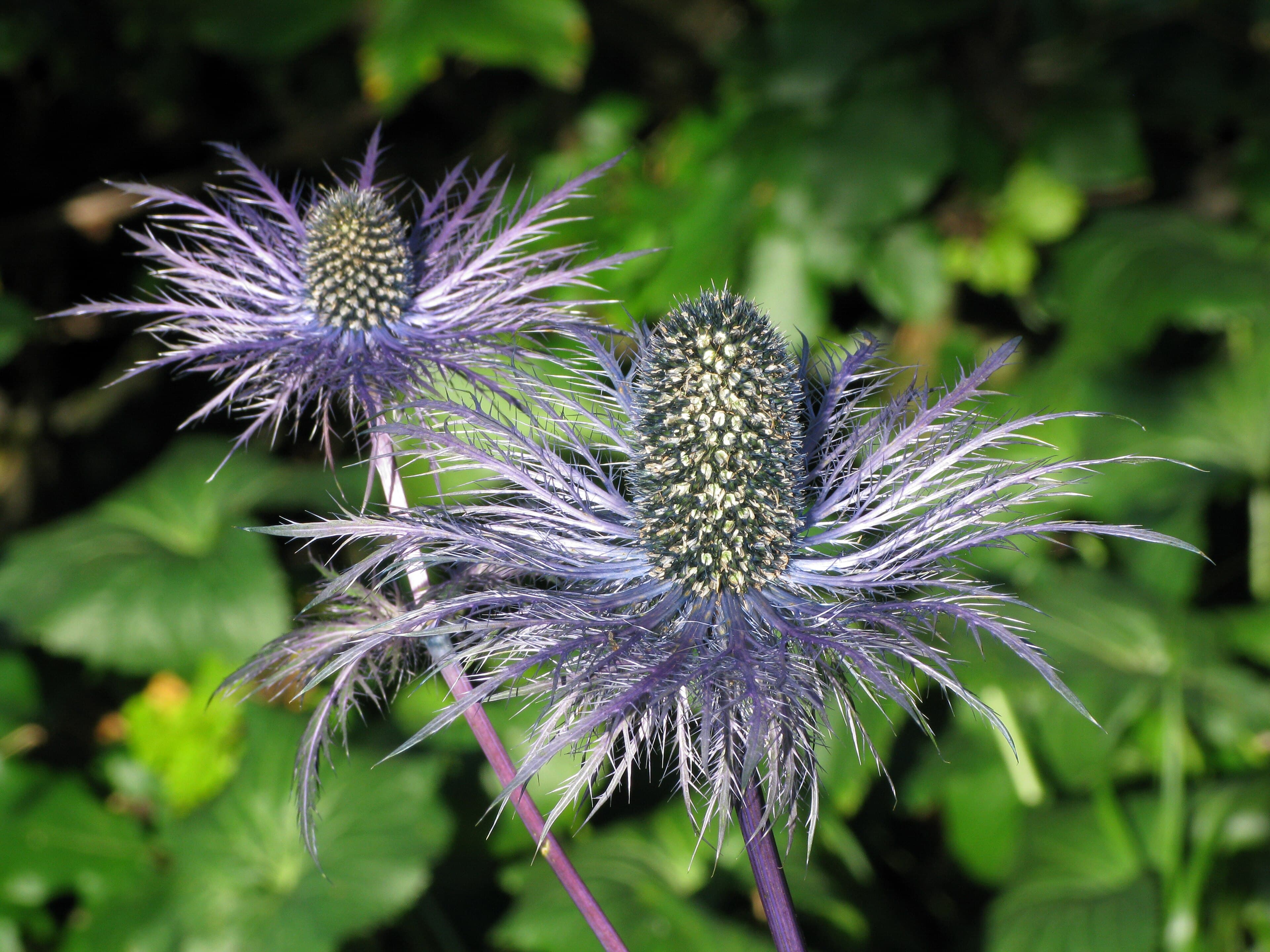
Eryngium alpinum requires minimal pruning, but a tidy-up at the right time keeps plants healthy and looking their best. The main pruning window falls in March or November, and your choice depends on your garden style and local wildlife considerations. Many gardeners prefer to leave the striking metallic-blue flower heads standing through autumn and winter. The dried stems and spiky bracts remain architectural and provide seed for finches, while the structure adds interest to frost-covered borders. If you take this approach, cut back all dead stems to ground level in March, just as new basal growth begins to emerge. Use secateurs or hand shears and remove everything down to about 5 cm above the crown, taking care not to damage the fresh shoots. Alternatively, cut back in November after flowering finishes and foliage begins to collapse. This gives a neater appearance through winter and reduces the risk of fungal issues in very wet climates, though Eryngium alpinum is generally robust. Again, cut stems down to near ground level. Throughout the growing season, deadheading is not necessary. The flowers dry naturally on the stem, and removing them reduces the plant's ornamental value. However, if you want to prevent self-seeding—though Eryngium alpinum is not particularly invasive—you can snip off spent flower heads in late summer before seed ripens. Avoid cutting into old woody growth at the crown. This perennial regenerates from basal shoots each spring, and the crown itself should be left undisturbed. No shaping or thinning is required during the growing season.