Alpine sea holly in November: monthly care
Month-by-month care — Eryngium alpinum
In November your alpine sea holly needs attention: prune.
- Prune
What to do this November
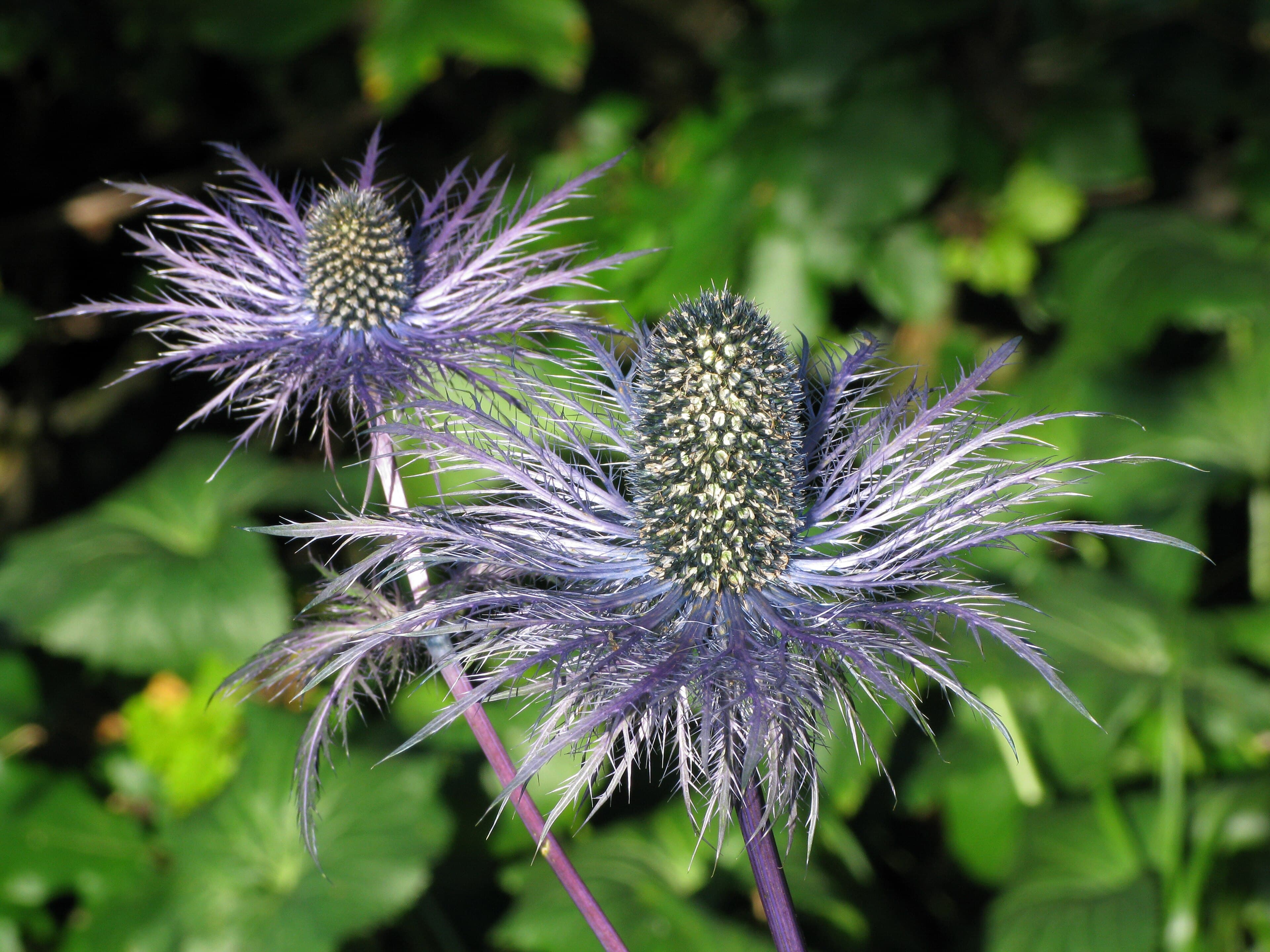
Eryngium alpinum requires minimal pruning, but a tidy-up at the right time keeps plants healthy and looking their best. The main pruning window falls in March or November, and your choice depends on your garden style and local wildlife considerations. Many gardeners prefer to leave the striking metallic-blue flower heads standing through autumn and winter. The dried stems and spiky bracts remain architectural and provide seed for finches, while the structure adds interest to frost-covered borders. If you take this approach, cut back all dead stems to ground level in March, just as new basal growth begins to emerge. Use secateurs or hand shears and remove everything down to about 5 cm above the crown, taking care not to damage the fresh shoots. Alternatively, cut back in November after flowering finishes and foliage begins to collapse. This gives a neater appearance through winter and reduces the risk of fungal issues in very wet climates, though Eryngium alpinum is generally robust. Again, cut stems down to near ground level. Throughout the growing season, deadheading is not necessary. The flowers dry naturally on the stem, and removing them reduces the plant's ornamental value. However, if you want to prevent self-seeding—though Eryngium alpinum is not particularly invasive—you can snip off spent flower heads in late summer before seed ripens. Avoid cutting into old woody growth at the crown. This perennial regenerates from basal shoots each spring, and the crown itself should be left undisturbed. No shaping or thinning is required during the growing season.