Armand clematis in May: monthly care
Month-by-month care — Clematis armandii
In May your armand clematis needs attention: prune and watch the bloom.
- Prune
- Blooms
What to do this May
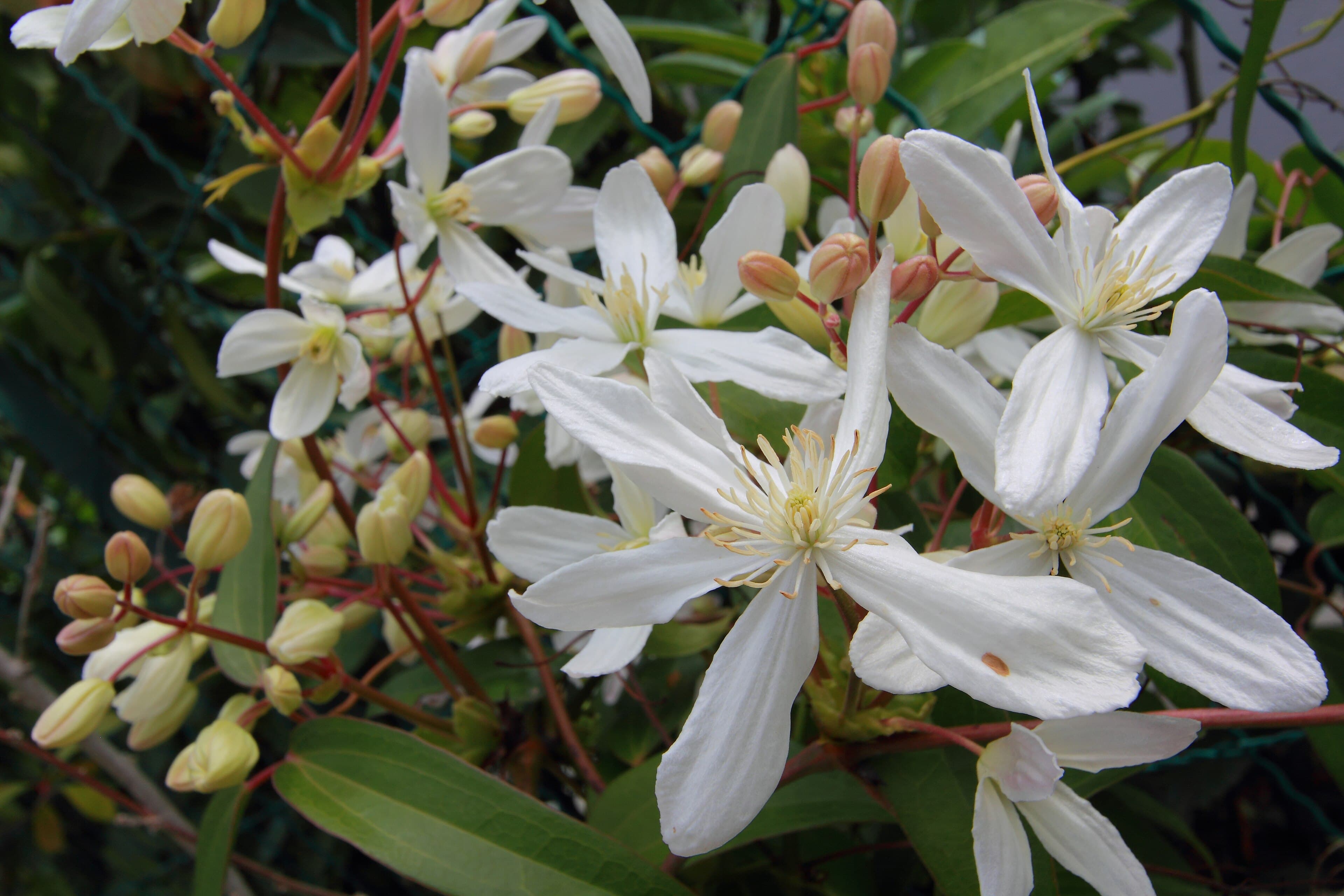
Armand clematis flowers in early spring on growth made the previous year, so timing and restraint are essential. Prune immediately after flowering finishes in May. This gives the plant the rest of the growing season to produce and ripen new wood that will carry next spring's blooms. If you prune too late—into summer or autumn—you risk removing flower buds and losing the following year's display. This clematis belongs to pruning group 1 (early-flowering evergreens), which means it needs minimal pruning. In most years, simply tidy the plant by removing dead, damaged, or frost-scorched stems in May. You can also trim back wayward shoots that have outgrown their space or are tangling with gutters and windows. Cut just above a healthy pair of buds, using clean, sharp secateurs or loppers for thicker stems. If your clematis has become congested, overgrown, or bare at the base after several years, you can carry out harder renovation pruning in May. Remove up to one-third of the oldest stems at ground level to encourage fresh growth from the base. Avoid cutting everything back hard in one go, as recovery can be slow and you'll sacrifice flowers for a season or more. Clematis armandii is vigorous once established and can grow several metres in a season, so some gardeners prefer to prune lightly every year rather than let it run wild. Always wear gloves—the sap can irritate skin—and step back regularly to assess the shape as you work.
Water regularly during the growing season, especially in dry spells, as Armand clematis has moderate water needs and dislikes drought. In spring and summer, water deeply once or twice a week if rainfall is scarce, directing water at the root zone rather than the foliage. Reduce watering in autumn and winter, but don't let the soil dry out completely, particularly in the first couple of years. Evergreen foliage continues to lose moisture even in winter, so check plants during prolonged dry or frosty periods. Feed in March and again in June. In early spring, apply a general-purpose granular fertiliser (such as blood, fish and bone or Growmore) around the base, then mulch with compost or well-rotted manure to lock in moisture and add slow-release nutrients. The June feed—a liquid tomato fertiliser is ideal—supports flowering and helps ripen new growth. Avoid high-nitrogen feeds after midsummer, as soft late growth is vulnerable to frost. Clematis armandii is borderline hardy in zone 7, so winter protection may be needed in cold gardens. Mulch the root zone thickly in late autumn, and consider wrapping young plants or the base in fleece during severe cold snaps. Established plants are tougher but can suffer leaf scorch in harsh winters; damaged foliage usually recovers in spring. Watch for clematis wilt, a fungal disease that causes stems to collapse suddenly. Planting deeply helps, as new shoots can emerge from below ground. Aphids and slugs occasionally trouble young growth in spring. Evergreen leaves may look tatty by late winter; resist the urge to tidy before May, as early pruning removes flower buds.