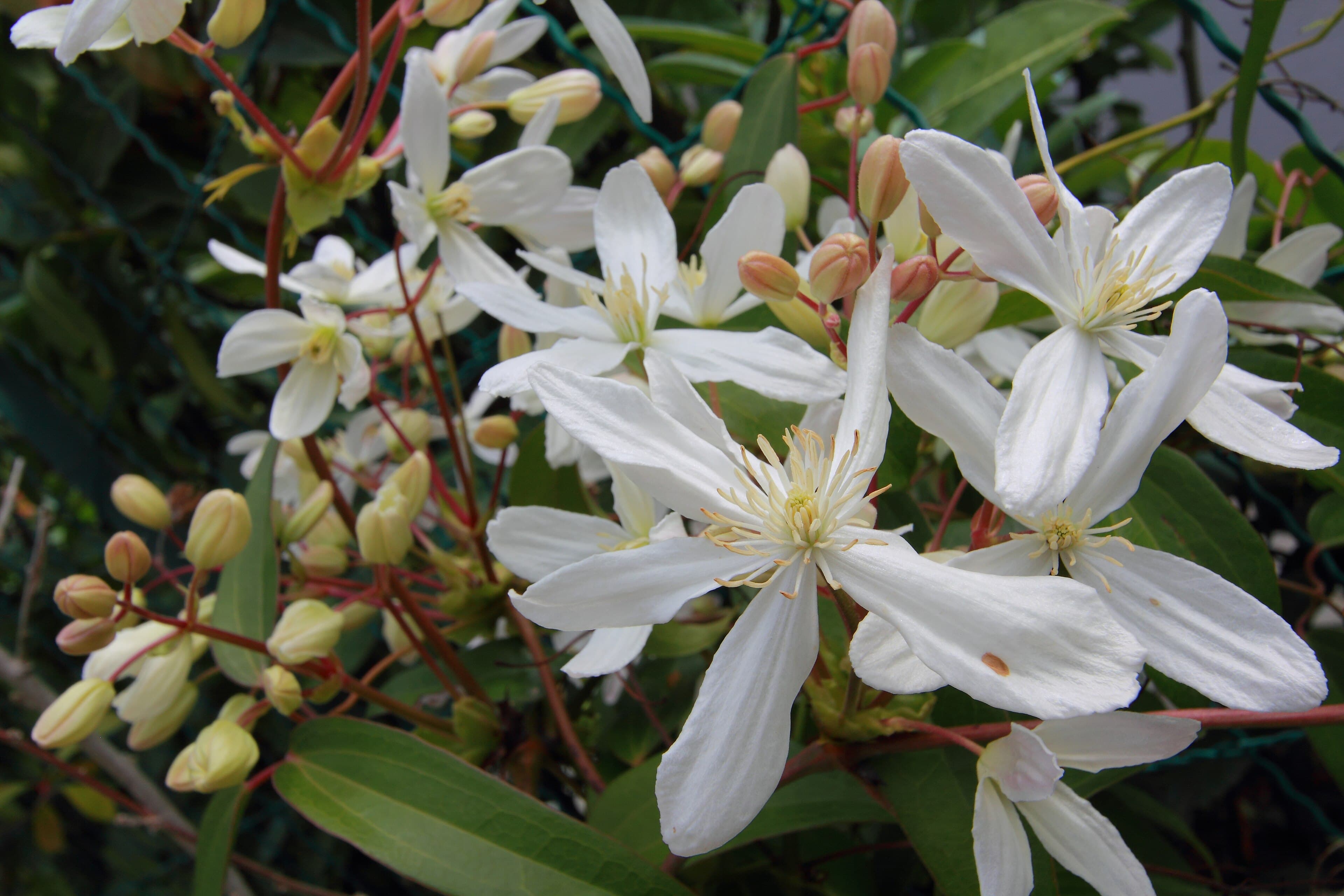
Growing Armand clematis in a pot
For balcony, patio or terrace — Clematis armandii
armand clematis grows well in a pot of at least Ø 60 cm (170 L capacity), in a position with full sun or partial shade. Watering: every 2 days in summer, once every 2 weeks in winter.
Which pot?
Ø 60 cm
~ 170 L potting soil
Give the plant room with a pot slightly wider than the current rootball, with matching depth.
Watering
every 2 days
once every 2 weeks
Always use a pot with drainage holes. Water dries out faster in pots — or the plant drowns. Check weekly with your finger: only water when the top 2 cm of soil is dry.
Pot care
Water regularly during the growing season, especially in dry spells, as Armand clematis has moderate water needs and dislikes drought. In spring and summer, water deeply once or twice a week if rainfall is scarce, directing water at the root zone rather than the foliage. Reduce watering in autumn and winter, but don't let the soil dry out completely, particularly in the first couple of years. Evergreen foliage continues to lose moisture even in winter, so check plants during prolonged dry or frosty periods. Feed in March and again in June. In early spring, apply a general-purpose granular fertiliser (such as blood, fish and bone or Growmore) around the base, then mulch with compost or well-rotted manure to lock in moisture and add slow-release nutrients. The June feed—a liquid tomato fertiliser is ideal—supports flowering and helps ripen new growth. Avoid high-nitrogen feeds after midsummer, as soft late growth is vulnerable to frost. Clematis armandii is borderline hardy in zone 7, so winter protection may be needed in cold gardens. Mulch the root zone thickly in late autumn, and consider wrapping young plants or the base in fleece during severe cold snaps. Established plants are tougher but can suffer leaf scorch in harsh winters; damaged foliage usually recovers in spring. Watch for clematis wilt, a fungal disease that causes stems to collapse suddenly. Planting deeply helps, as new shoots can emerge from below ground. Aphids and slugs occasionally trouble young growth in spring. Evergreen leaves may look tatty by late winter; resist the urge to tidy before May, as early pruning removes flower buds.
Pot-specific tip: add slow-release fertiliser pellets in March — potting soil exhausts much faster than open ground.


