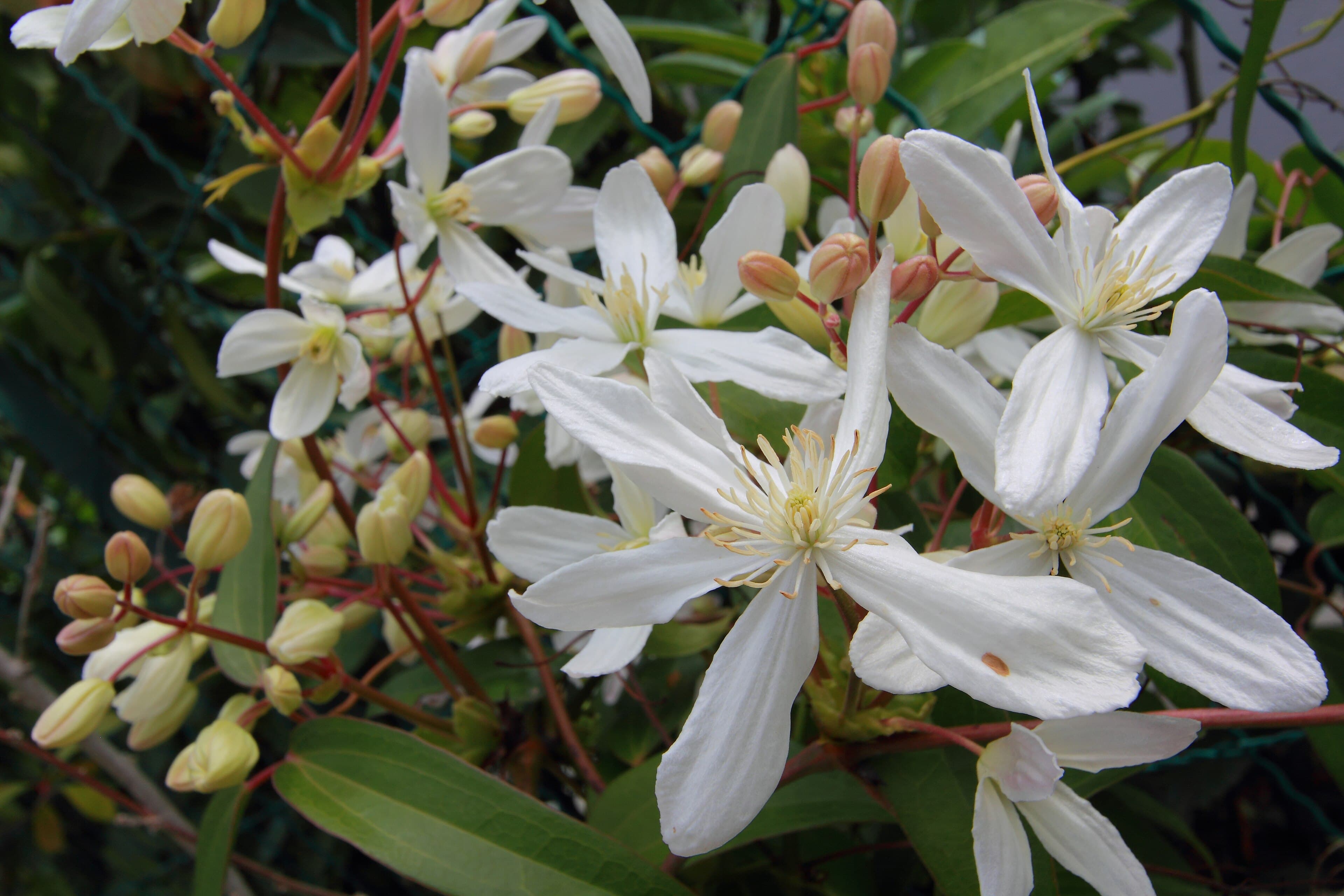
When to plant Armand clematis?
Best month and method — Clematis armandii
Plant your armand clematis in March, April, September and October — the optimal month is usually September.
You're in the planting season right now — a good moment to start.
Spacing
100 cm
≈ 1 plant
For an X m² border, calculate: X × 1 plants.
Step by step: plant armand clematis
Armand clematis thrives in full sun or partial shade, ideally with its roots in cool shade and its head in the light. Choose a sheltered spot away from cold winds, as this evergreen climber sits right on the edge of hardiness in zone 7. A south- or west-facing wall offers the best protection and warmth. The soil should be loam or clay-based, moisture-retentive but well-drained; clematis dislike waterlogged roots. Before planting, dig a hole roughly 45 cm wide and deep, and work in plenty of organic matter such as garden compost or well-rotted manure to improve structure and fertility. Plant in March, April, September, or October when the soil is workable and temperatures are mild. Set the rootball about 8–10 cm deeper than it sat in the pot; this encourages new shoots to develop from below ground and helps the plant recover if clematis wilt strikes. Space plants 100 cm apart if planting more than one. Position the plant at a slight angle leaning toward its support—sturdy trellis, wires, or a pergola—so stems can climb naturally. Clematis armandii can reach 3–7 metres, so ensure your structure is robust. After planting, water thoroughly to settle the soil around the roots. Apply a 5–8 cm layer of mulch (compost, bark, or gravel) around the base, keeping it clear of the stems, to keep roots cool and retain moisture. Tie in the main stems loosely to guide early growth. Water regularly through the first growing season until the plant is established, especially during dry spells.


