Balkan Sage in March: monthly care
Month-by-month care — Salvia nemorosa 'Caradonna'
In March your balkan Sage needs attention: plant / sow and fertilise.
- Plant / sow
- Fertilise
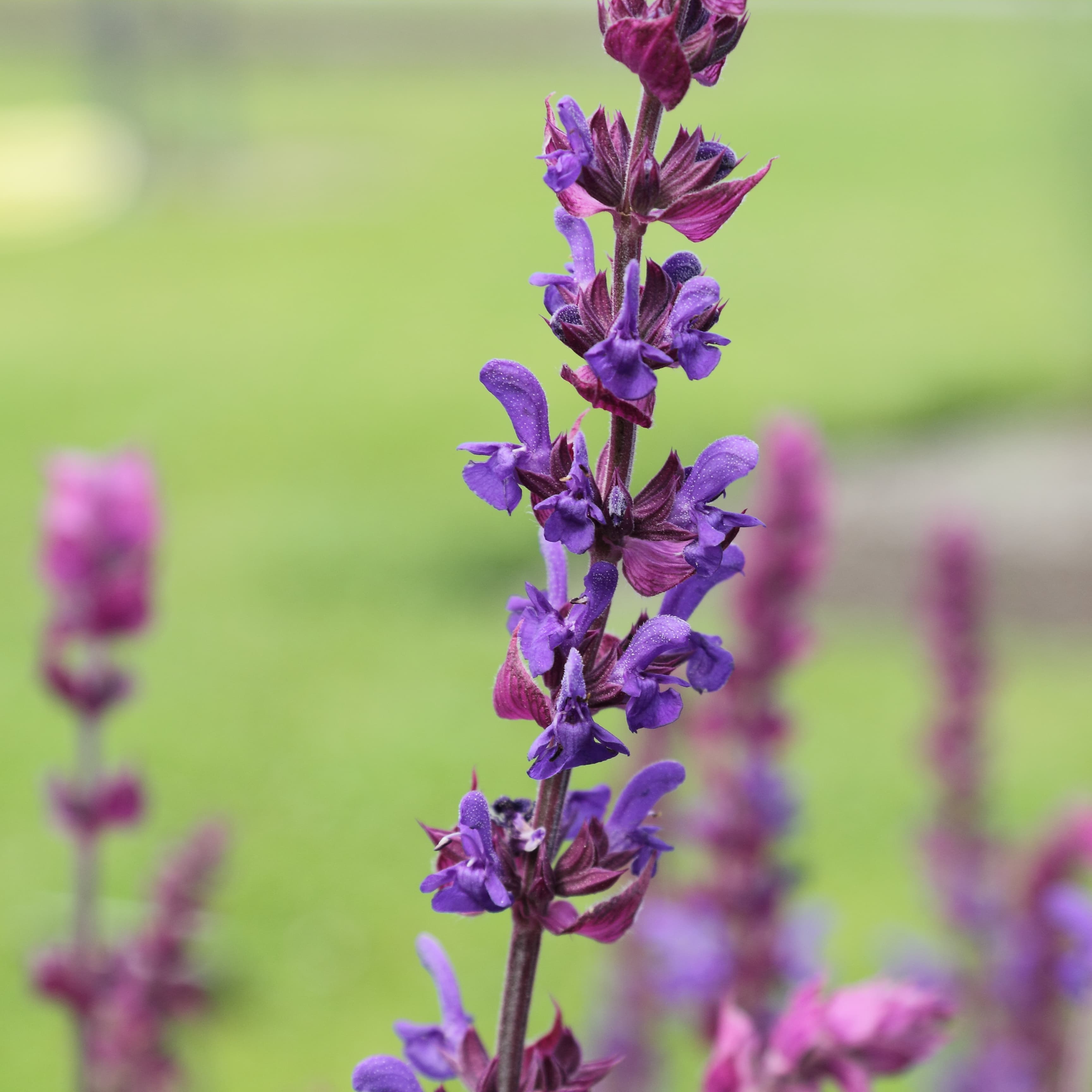
What to do this March
Salvia nemorosa 'Caradonna' thrives in full sun and well-drained soil, making it ideal for sunny borders, gravel gardens, and Mediterranean-style plantings. It tolerates sandy, loamy, and chalky soils but dislikes heavy clay or waterlogged conditions. If your soil is heavy, dig in plenty of grit or sharp sand before planting to improve drainage. Plant pot-grown specimens in March, April, September, or October. Spring planting gives the roots time to establish before summer, while autumn planting works well in milder areas where the soil stays workable. Space plants 35 cm apart to allow for their mature spread of 30–40 cm and to ensure good air circulation, which helps prevent mildew. Dig a hole slightly larger than the root ball and set the plant at the same depth it was growing in its pot—planting too deep can lead to stem rot. Backfill with the excavated soil, firm gently with your hands, and water in thoroughly to settle the roots and eliminate air pockets. Avoid adding compost or manure at planting time; 'Caradonna' prefers lean soil and too much fertility encourages floppy growth at the expense of flowers. After planting, water regularly for the first few weeks until you see new growth, then reduce frequency. This salvia has low water needs once established and is remarkably drought-tolerant. A light mulch of gravel or grit around the base looks attractive, suppresses weeds, and keeps the crown dry over winter, reducing the risk of rot in wet spells.
Once established, Salvia nemorosa 'Caradonna' is a low-maintenance perennial that tolerates drought and poor soil. Water newly planted salvias regularly through their first growing season, but mature plants need watering only during prolonged dry spells in summer. Overwatering or planting in damp soil leads to root rot and weak, disease-prone growth. Feed sparingly in March with a light scattering of general-purpose granular fertiliser or a handful of blood, fish, and bone around the base of each plant. Avoid high-nitrogen feeds, which produce lush foliage at the expense of flowers and make stems flop. In lean, well-drained soil, 'Caradonna' develops sturdy, upright stems and the deepest purple flower colour. On richer ground it may need staking, which rather defeats the point of this naturally compact cultivar. This salvia is fully hardy across zones 4a–9a and needs no winter protection in temperate Europe. The crown survives hard frosts, and new shoots emerge reliably in spring. A gravel mulch around the base helps keep the crown dry in wet winters, which is more of a threat than cold. Pests are rarely a problem. Slugs and snails may nibble young shoots in spring; check regularly and remove by hand or use organic pellets if necessary. Powdery mildew can appear on the foliage in late summer, especially in crowded plantings with poor air flow. Ensure proper spacing, avoid overhead watering, and cut back affected growth promptly. Otherwise, 'Caradonna' is remarkably trouble-free and will reward you with months of vertical purple spikes and aromatic foliage that bees adore.