Balkan Sage in November: monthly care
Month-by-month care — Salvia nemorosa 'Caradonna'
In November your balkan Sage needs attention: prune.
- Prune
What to do this November
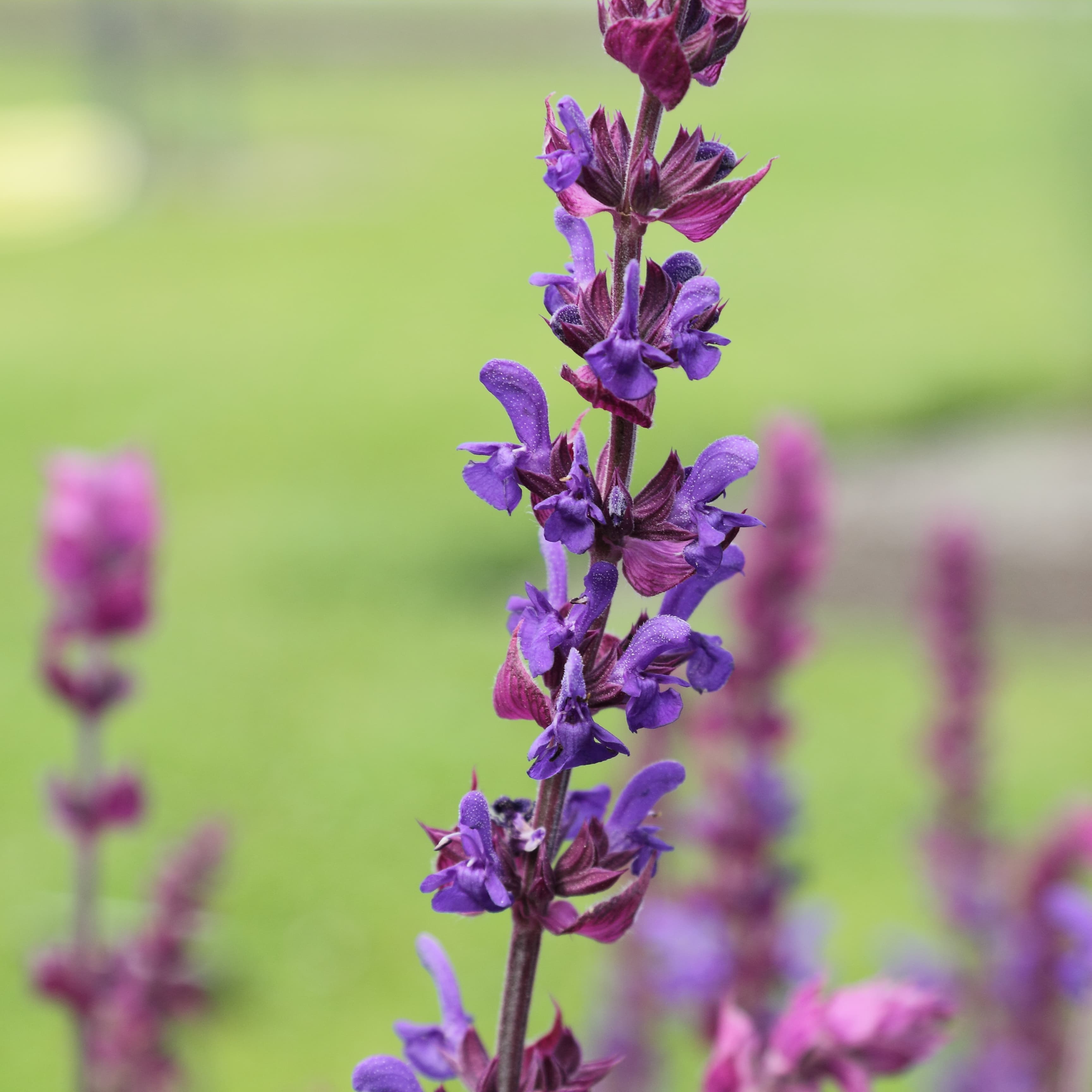
Salvia nemorosa 'Caradonna' benefits from two main pruning sessions each year: one in summer and one in late autumn. The timing and technique directly affect flowering performance and plant longevity. The first prune comes in July, after the initial flush of purple flower spikes has faded. Cut back the spent stems to just above a pair of healthy leaves, usually about halfway down the plant. This deadheading encourages a strong second flush of blooms in late summer and early autumn, extending the display by several weeks. Use clean, sharp secateurs or garden shears for this job. If you leave the faded spikes in place, the plant will set seed and stop producing new flowers. The second prune takes place in November, once flowering has completely finished and the foliage begins to look tatty. Cut the entire plant back to a low mound of basal foliage, leaving around 5–10 cm of stem above ground level. This autumn tidy-up prevents the old stems from rotting over winter and keeps the plant compact. Some gardeners prefer to leave the skeletal stems standing for winter structure and wildlife, then cut back in early spring instead—both approaches work, though autumn pruning reduces the risk of fungal problems in wet winters. Avoid cutting into old, woody growth at the base; salvia produces new shoots from this crown each spring. Every three to four years the clump may become congested or die out in the centre. At that point, lift and divide in spring rather than relying on pruning alone.