Bergenia 'Bressingham Ruby' in May: monthly care
Month-by-month care — Bergenia 'Bressingham Ruby'
In May your bergenia 'Bressingham Ruby' needs attention: prune and watch the bloom.
- Prune
- Blooms
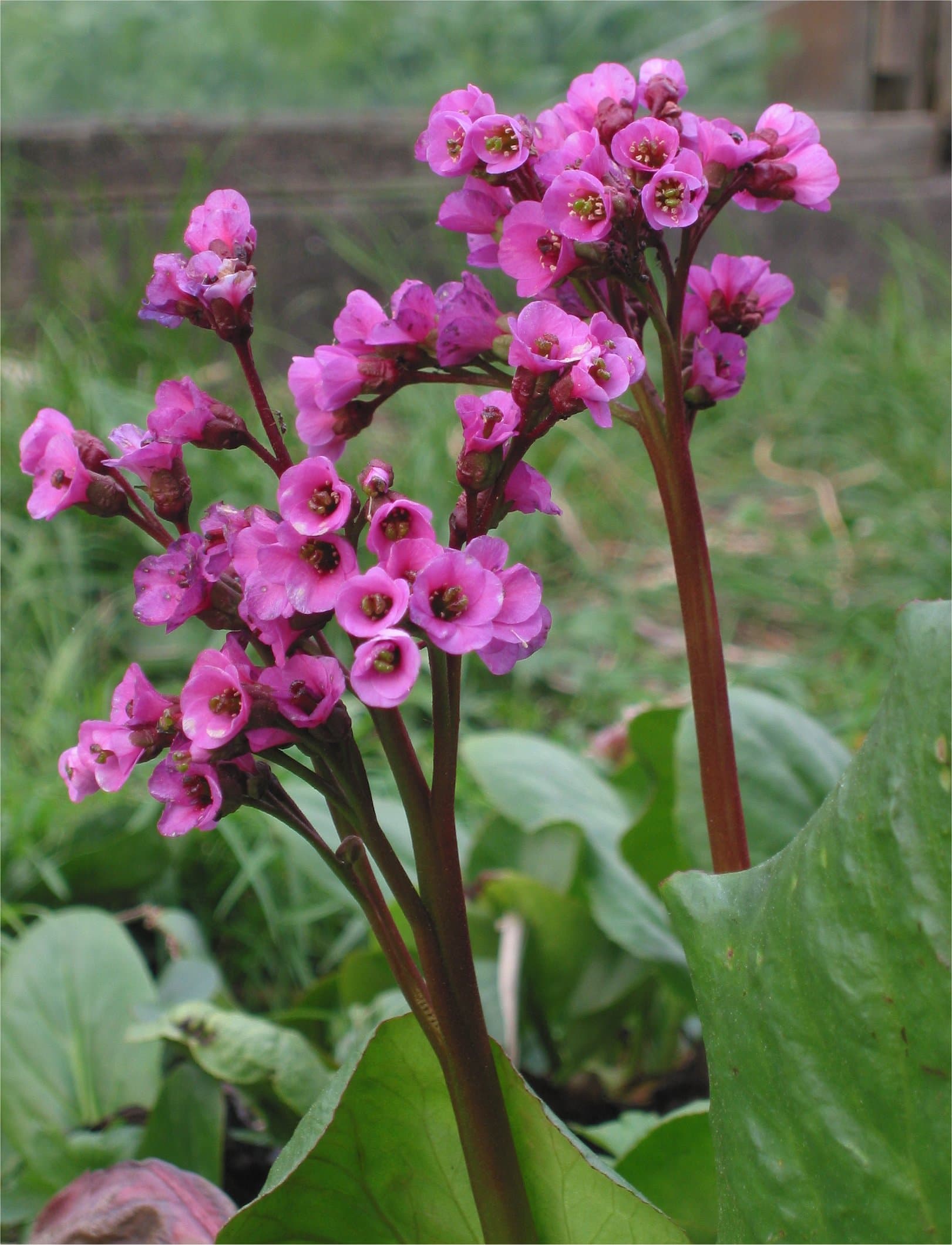
What to do this May
Bergenia 'Bressingham Ruby' requires very little pruning, but a light tidy-up in April or May keeps it looking its best. The main task is removing old, tatty leaves that have been damaged by winter weather or have simply aged. Because this cultivar is evergreen, the large, leathery leaves persist year-round, but older foliage can become brown-edged, torn, or unsightly by spring. In April or May, once the risk of hard frost has passed and new growth is emerging, cut away any damaged or dead leaves at the base using secateurs or a sharp knife. Work close to the crown but take care not to damage the emerging flower stems or fresh young leaves. If the clump has become congested or flowering has declined, this is also the time to lift and divide it. Dig up the whole plant, tease or cut the rhizomes apart into sections with healthy roots and shoots, and replant the vigorous outer portions, discarding the woody centre. After flowering finishes in late spring, you can deadhead the spent flower stems by cutting them back to the base. This isn't essential for the plant's health but improves appearance and prevents energy going into seed production. Avoid autumn or winter pruning of the foliage; even battered leaves provide some protection to the crown in cold weather, and the bronze-red winter colour of 'Bressingham Ruby' is part of its ornamental appeal.
Bergenia 'Bressingham Ruby' is low-maintenance once established. Water needs are moderate; during spring and summer, water during prolonged dry spells, especially on sandy soils. In autumn and winter the plant is largely self-sufficient, relying on rainfall. Overwatering or waterlogged conditions can cause root rot, so ensure soil drains freely. Feed in March or April as new growth begins. A single application of a balanced granular fertiliser (such as blood, fish and bone or a general-purpose feed) scattered around the base and lightly worked into the soil is sufficient. Alternatively, top-dress with a 3 cm layer of garden compost or well-rotted manure. Avoid high-nitrogen feeds, which promote soft leaf growth at the expense of flowers and winter colour. No further feeding is needed through the year. Mulch annually in spring to conserve moisture and suppress weeds, keeping mulch clear of the crown. Bergenia is generally pest- and disease-free, but vine weevil larvae can occasionally damage roots; if plants wilt unexpectedly, check for white grubs in the soil and treat with a biological control (nematodes) in late summer. Leaf spot and root rot can occur in poorly drained or overcrowded conditions; improve drainage and thin congested clumps if necessary. No winter protection is needed; the plant is fully hardy and the evergreen foliage provides year-round structure. In colder spells the leaves turn deep maroon-red, adding winter interest. Remove any wind-damaged foliage in spring as described under pruning.