Bergenia 'Winterglut' in May: monthly care
Month-by-month care — Bergenia 'Winterglut'
In May your bergenia 'Winterglut' needs attention: prune and watch the bloom.
- Prune
- Blooms
What to do this May
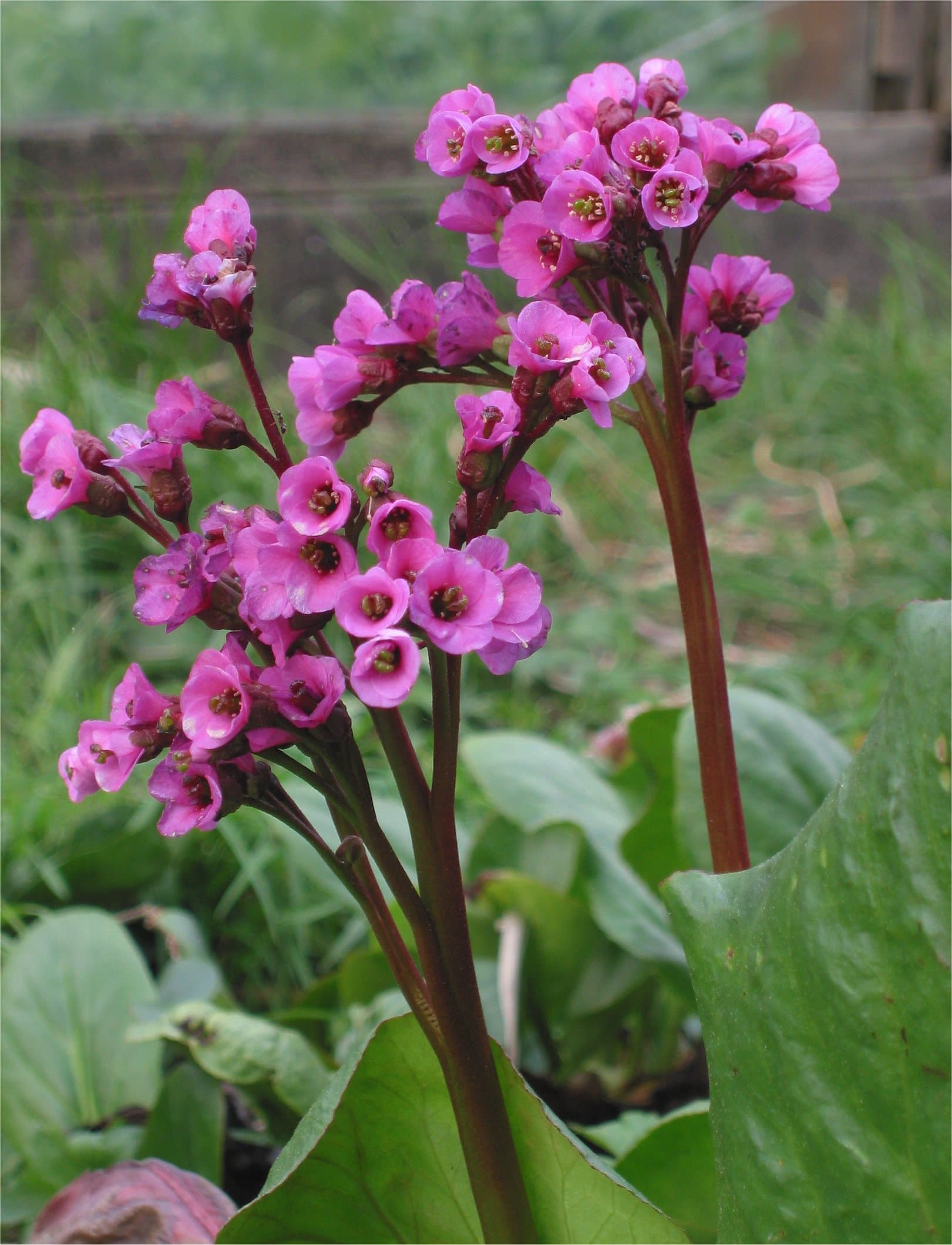
Bergenia 'Winterglut' requires very little pruning, which is part of its appeal as a low-maintenance evergreen perennial. The main task is tidying rather than cutting back hard. In May or June, after the spring flowering has finished, remove the spent flower stems by cutting them back to the base of the plant. Use secateurs or sharp scissors and cut cleanly just above the foliage rosette. This prevents the plant from putting energy into seed production and keeps it looking neat. The leathery evergreen leaves are the plant's main ornamental feature, especially in winter when they turn deep burgundy-red in cold weather. However, older outer leaves naturally become tatty, scorched, or damaged over time. Remove these in late spring—May or June is ideal—by cutting or pulling them away at the base where they join the rhizome. This encourages fresh new growth and improves air circulation around the crown, reducing the risk of fungal issues. Avoid autumn or winter pruning of the foliage. Those older leaves, even if slightly battered, provide valuable protection to the crown during cold snaps and contribute to the plant's winter display. If your bergenia has become congested or the centre looks woody and unproductive after several years, you can lift and divide the whole clump in early autumn. Replant healthy outer sections with vigorous rhizomes and discard the tired centre. This rejuvenates flowering and foliage quality without any complicated cutting techniques.
Once established, Bergenia 'Winterglut' is remarkably undemanding. Water moderately during the growing season, ensuring the soil doesn't dry out completely during prolonged dry spells in spring and summer. The thick rhizomes store some moisture, so the plant tolerates short droughts well, but consistent moisture encourages lush foliage and better flowering. In autumn and winter, natural rainfall is usually sufficient. Feed in March or April as new growth begins. Scatter a general-purpose granular fertiliser such as blood, fish and bone or a balanced slow-release feed around the base of the plant and lightly fork it into the soil surface. Avoid high-nitrogen feeds, which promote soft leafy growth at the expense of flowers and good winter colour. One application per year is enough; bergenia is not a heavy feeder. This cultivar is fully hardy to zone 3, so overwintering in temperate Europe presents no problems. The evergreen leaves provide year-round interest, turning striking shades of red and purple in cold weather—one of the plant's key attractions. No protection is needed. Refresh the mulch layer in late autumn to suppress weeds and protect the shallow rhizomes from hard frosts, though this is more about tidiness than necessity. Bergenia is generally pest- and disease-free. Occasionally, vine weevil larvae may nibble the rhizomes if the plant is in a container or very dry soil; look for notched leaf edges and wilting. Leaf spot fungi can appear in very wet, humid conditions, causing brown blotches on older leaves—simply remove affected foliage. Slugs rarely bother the tough, leathery leaves.