Bigroot geranium in April: monthly care
Month-by-month care — Geranium macrorrhizum
In April your bigroot geranium needs attention: plant / sow and fertilise.
- Plant / sow
- Fertilise
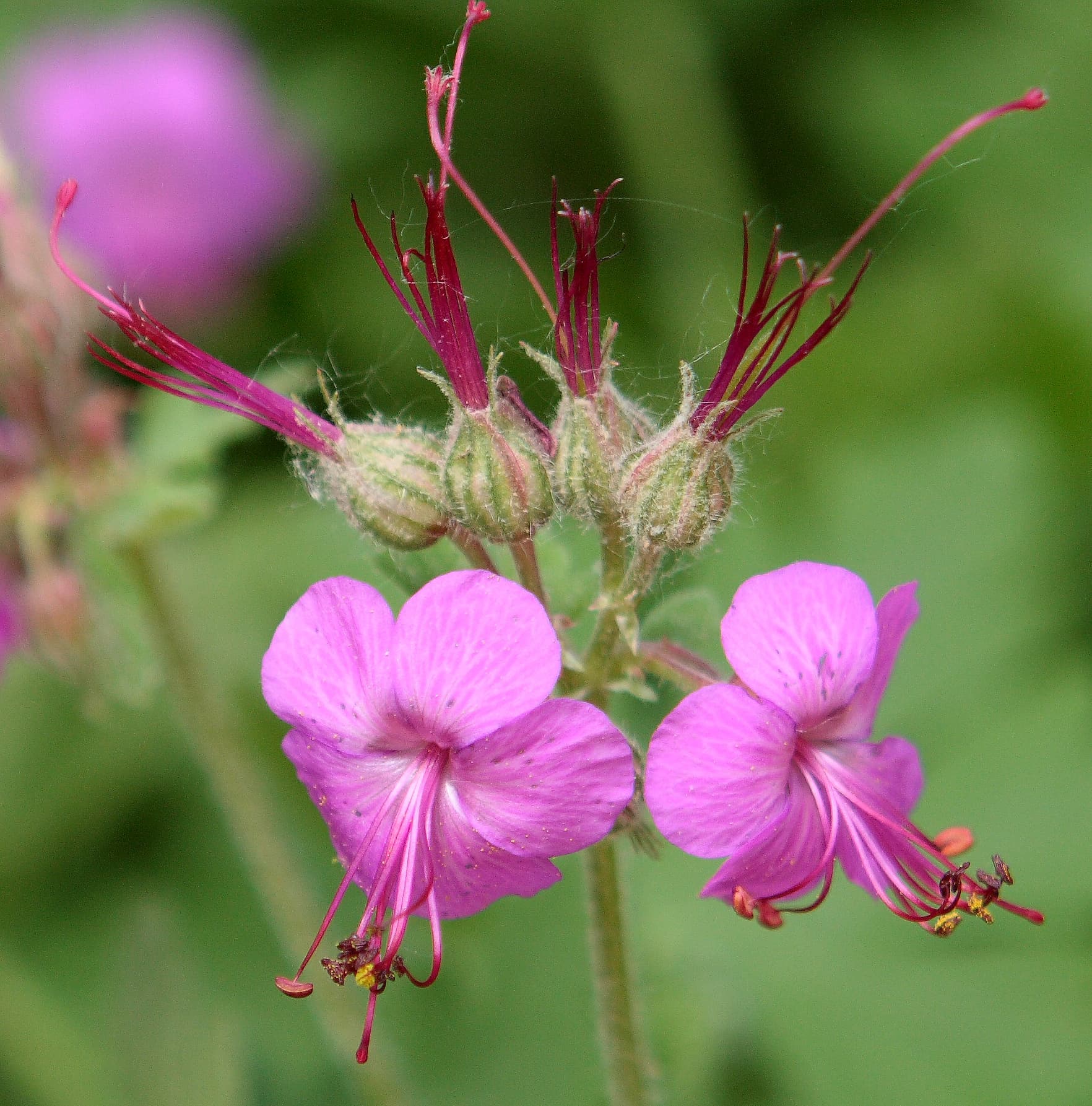
What to do this April
Geranium macrorrhizum thrives in partial or full shade, making it an excellent choice for the trickier spots under trees or along north-facing borders. It tolerates a wide range of soils—sandy, loam, or chalky—provided drainage is reasonable. Before planting, clear the area of perennial weeds and dig in a little garden compost or well-rotted manure to improve soil structure, though this geranium is not fussy and will manage in poorer ground. Plant in March, April or May for spring planting, or in September and October for autumn planting. Autumn planting allows the roots to establish over winter, but spring planting works perfectly well if the soil is workable and not waterlogged. Space plants 40 cm apart; they spread steadily by rhizomes and will knit together into weed-suppressing ground cover within a couple of seasons. Dig a planting hole slightly wider than the root ball and set the plant so the crown sits at soil level—don't bury it. Firm the soil gently around the roots to eliminate air pockets, then water in thoroughly even though this species has low water needs once established. A light mulch of leaf mould or composted bark around (but not over) the crown helps retain moisture and suppress weeds while the plants settle in. Geranium macrorrhizum establishes quickly and needs little fuss; just keep an eye on watering during the first few weeks if conditions are dry, especially for spring plantings.
Once established, Geranium macrorrhizum is remarkably undemanding. Its low water requirement means you rarely need to irrigate except during prolonged summer drought, and even then it will usually recover without intervention. Newly planted specimens benefit from watering during their first spring and summer if rainfall is scarce, but after that the rhizomes store moisture efficiently. Feed lightly in March or April with a general-purpose granular fertiliser such as blood, fish and bone or a balanced slow-release feed scattered around the base of the clump. Avoid high-nitrogen feeds, which promote soft, lush growth at the expense of flowers. One feed per year is sufficient; this is not a hungry plant. A top-dressing of garden compost or leaf mould in early spring also helps, especially on poorer soils, and doubles as a mulch to suppress weeds. Geranium macrorrhizum is fully hardy (zone 4–8) and needs no winter protection in temperate Europe. Its evergreen foliage persists through winter, though it may look a little battered by March—simply trim it back as described in the pruning section. Pests and diseases are rare. Occasionally vine weevil larvae may nibble the rhizomes, causing wilting; check for them if plants decline unexpectedly. Powdery mildew can appear in dry summers on congested clumps, but good air circulation and avoiding overhead watering usually prevent it. Otherwise, this geranium is trouble-free, spreading steadily to form fragrant, weed-proof ground cover with minimal input from you.