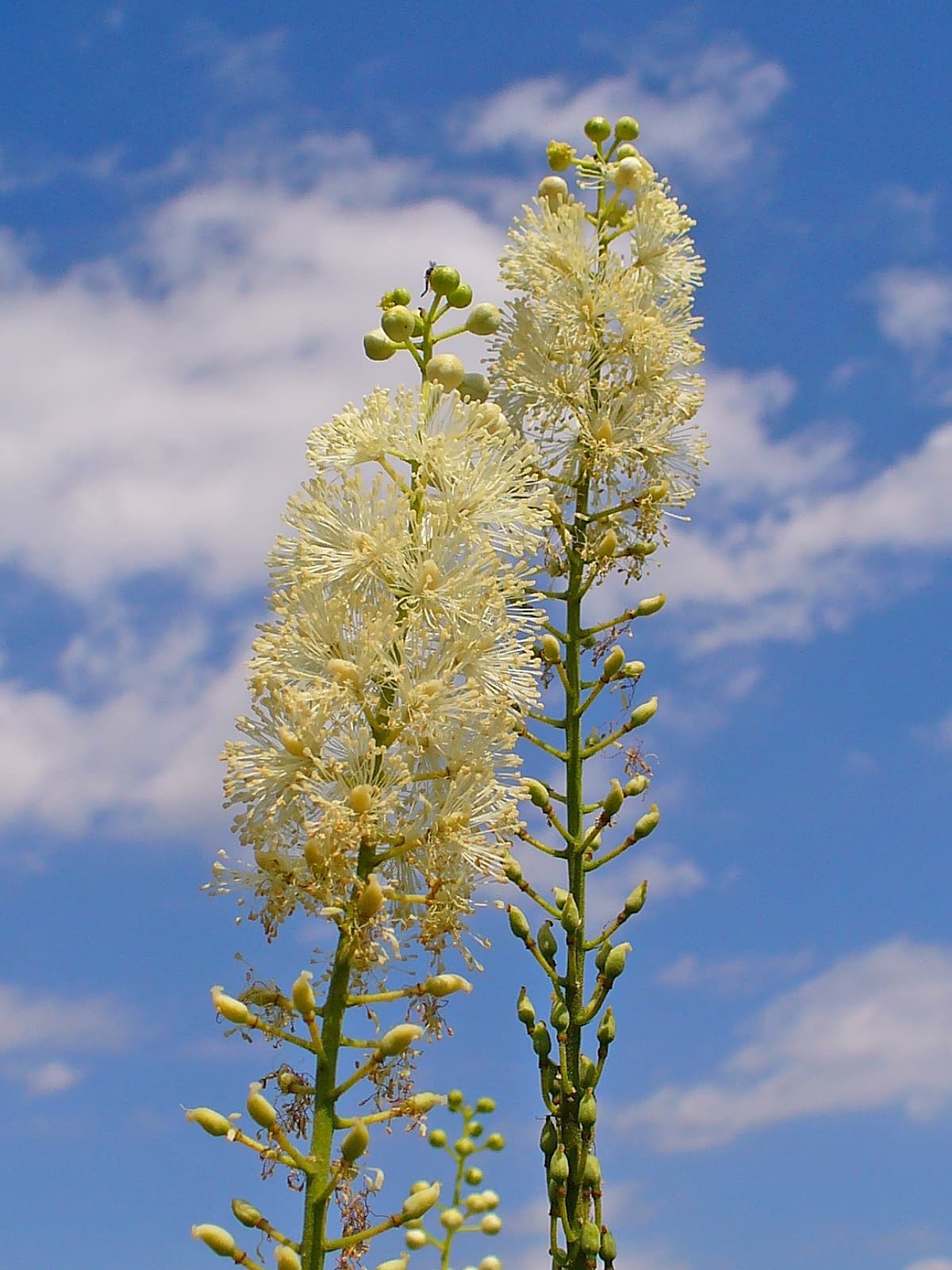
Black cohosh
Cimicifuga racemosa
Dutch: Zilverkaars
Zilverkaars (Cimicifuga racemosa) is a perennial from the Ranunculaceae family that grows up to 200cm tall. This plant thrives in partial shade to shade and requires low maintenance. Blooms in summer and late summer with white flowers and attracts bees and butterflies.
150–200 cm
50–70 cm
partial shade, full shade
moderate
loam, clay soil
low maintenance
summer, late summer
white
Ecologische waarde
Verzorgingskalender
| Taak | Jan | Feb | Mrt | Apr | Mei | Jun | Jul | Aug | Sep | Okt | Nov | Dec |
|---|---|---|---|---|---|---|---|---|---|---|---|---|
| 🌱Planten | ||||||||||||
| ✂️Snoeien | ||||||||||||
| 💧Bemesten |
Care tips
Planting
Cimicifuga racemosa, commonly known as black cohosh or bugbane, thrives in partial to full shade, making it an excellent choice for woodland gardens or shady borders. It prefers moisture-retentive loam or clay soil enriched with organic matter. Before planting, dig in plenty of well-rotted compost or leaf mould to improve soil structure and water retention, as this perennial dislikes drying out. Plant in March, April, September, or October when the soil is workable and temperatures are mild. Dig a hole roughly twice the width of the root ball and deep enough so the crown sits at soil level—planting too deep can lead to rot. Space plants 60 cm apart to allow for their mature spread of 50–70 cm and to ensure good air circulation around the tall flower spikes, which can reach 150–200 cm. After planting, firm the soil gently around the roots to eliminate air pockets, then water thoroughly to settle the plant in. Apply a 5–7 cm layer of organic mulch such as composted bark or leaf mould around the base, keeping it clear of the crown itself. This mulch conserves moisture, suppresses weeds, and gradually improves soil fertility as it breaks down. Cimicifuga is slow to establish and may take a year or two to reach full vigour, so patience is essential. Avoid disturbing the roots once planted, as it resents transplanting. In exposed sites, consider staking taller specimens early in the season to prevent wind damage to the elegant flower spikes that appear in summer and late summer.
Pruning
Cimicifuga racemosa requires minimal pruning, which is one reason it's valued as a low-maintenance perennial. The main task is tidying up spent growth rather than shaping or controlling size. Prune in March or November, depending on your preference and garden style. Many gardeners leave the tall, dried flower spikes standing over winter. The architectural seed heads provide structure and interest in the dormant garden and offer food and shelter for wildlife. If you take this approach, cut back all the old stems to ground level in March, just as new growth begins to emerge. Use clean, sharp secateurs or loppers to slice through the hollow stems cleanly, removing them entirely to make way for fresh foliage. Alternatively, tidy the plant in November after the first hard frosts have blackened the foliage. Cut back spent stems to within a few centimetres of the ground. This approach keeps borders looking neat through winter but sacrifices the ornamental value of the seed heads. Whichever timing you choose, remove all old stems and any damaged or diseased foliage. There's no need for complex pruning techniques—simply cut the whole plant back hard. Cimicifuga flowers on new growth produced in spring, so you won't affect flowering by cutting back in late winter or early spring. During the growing season, deadhead spent flower spikes if you want to keep the plant looking tidy, though this isn't necessary for the health of the plant. If self-seeding is unwanted, remove faded flowers before seed sets. Otherwise, leave pruning to the designated months and enjoy this undemanding perennial.
Maintenance
Cimicifuga racemosa is a low-maintenance perennial once established, but consistent moisture is key to success. Water regularly during dry spells, especially in spring and summer when the plant is in active growth and flowering. The soil should remain evenly moist but not waterlogged—clay and loam soils help retain moisture naturally, but check weekly during prolonged dry periods. In autumn and winter, reduce watering as growth slows, though the roots should never dry out completely. Feed in March or April as new shoots emerge. Apply a balanced slow-release granular fertiliser around the base of the plant, or use well-rotted compost or manure as a mulch, which feeds the soil as it breaks down. Avoid high-nitrogen feeds, which promote soft, leafy growth at the expense of flowers. A single spring feed is usually sufficient for the season. Refresh the mulch layer each spring to conserve moisture, suppress weeds, and maintain soil fertility. A 5 cm layer of organic material such as leaf mould or composted bark is ideal. Cimicifuga is fully hardy in zones 3–8 and requires no special winter protection in temperate Europe. The crown will die back completely in autumn, re-emerging reliably each spring. Pests are rarely a problem, though slugs and snails may nibble emerging shoots in spring—use organic pellets or barriers if damage is severe. The plant is generally disease-free, though powdery mildew can occasionally appear on foliage in dry conditions; maintaining consistent soil moisture helps prevent this. Divide clumps only if absolutely necessary, as Cimicifuga dislikes root disturbance and can take several seasons to recover.
More about this plant
Combines well with
Related guides
Black cohosh in your garden design?
Make a free garden design with AI advice. Our AI knows Black cohosh and 130+ other plants.
Start free design