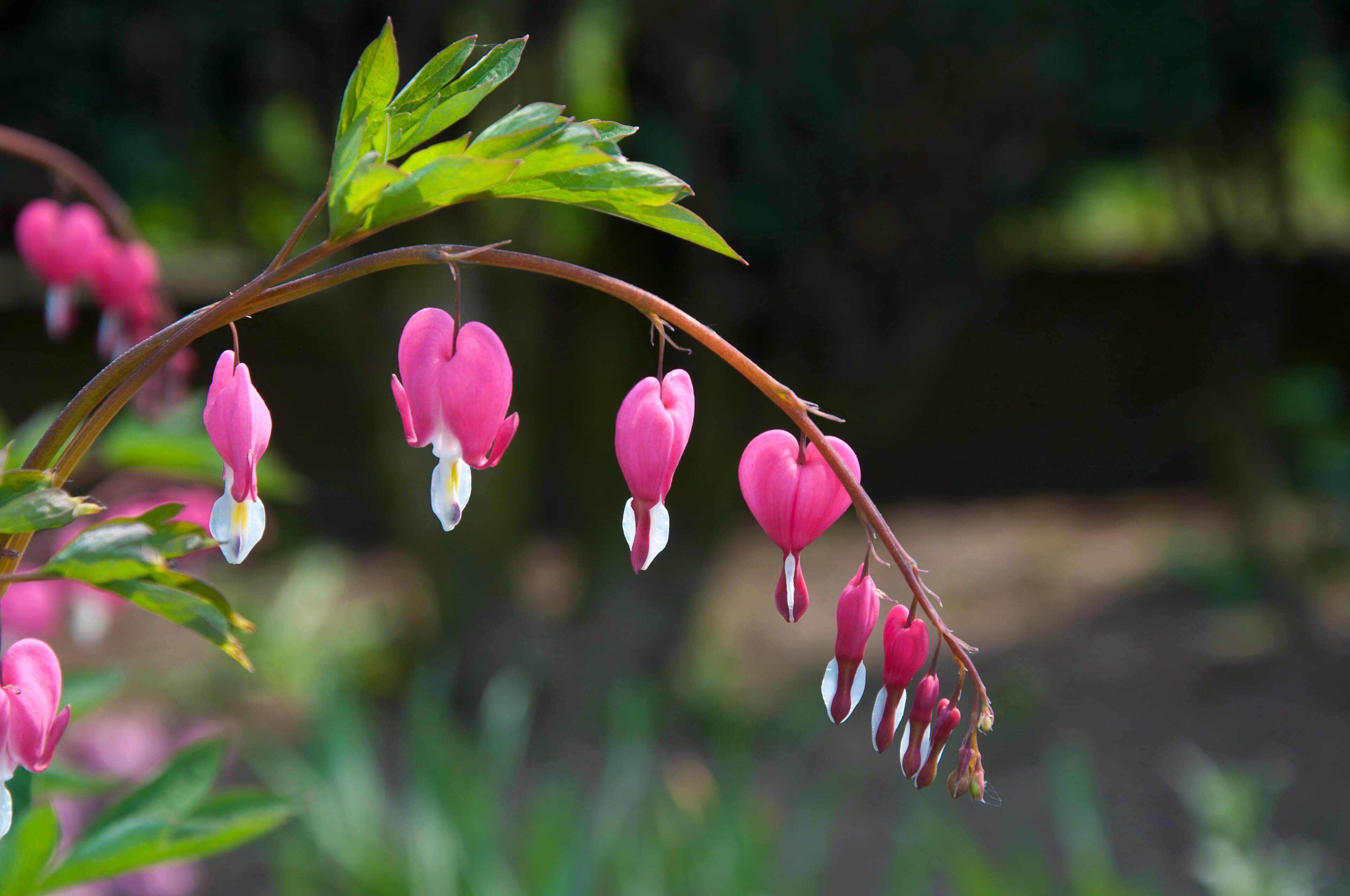
Bleeding heart
Dicentra spectabilis
Dutch: Gebroken hartje
Gebroken hartje (Dicentra spectabilis) is a perennial from the Papaveraceae family that grows up to 90cm tall. This plant thrives in partial shade to shade and requires low maintenance. Blooms in spring and late spring and early summer with pink, white flowers and attracts bees.
60–90 cm
45–60 cm
partial shade, full shade
moderate
loam, clay soil
low maintenance
spring, late spring, early summer
pink, white
Ecologische waarde
Verzorgingskalender
| Taak | Jan | Feb | Mrt | Apr | Mei | Jun | Jul | Aug | Sep | Okt | Nov | Dec |
|---|---|---|---|---|---|---|---|---|---|---|---|---|
| 🌱Planten | ||||||||||||
| ✂️Snoeien | ||||||||||||
| 💧Bemesten |
Care tips
Planting
Dicentra spectabilis, commonly known as bleeding heart, thrives in partial to full shade and prefers a cool, sheltered spot away from hot afternoon sun. Choose a position under deciduous trees or on the north side of a building where the soil stays reasonably moist. The plant tolerates loam and clay soils well, but the ground must be moisture-retentive yet free-draining; heavy clay benefits from the addition of well-rotted compost or leaf mould to improve structure and prevent waterlogging. Plant bare-root crowns or pot-grown specimens in March, April, September, or October. Autumn planting is often ideal because the soil is still warm and autumn rains help establishment, but spring planting works equally well if you water attentively during dry spells. Dig a hole roughly twice the width of the root ball and deep enough so the crown sits just below the soil surface—about 2–3 cm deep. Space plants 45 cm apart to allow for their arching spread of 45–60 cm at maturity. After planting, firm the soil gently around the roots to eliminate air pockets, then water thoroughly to settle everything in. Apply a 5 cm layer of organic mulch such as garden compost, leaf mould, or well-rotted manure around the base, keeping it clear of the crown itself to prevent rot. This mulch conserves moisture, suppresses weeds, and enriches the soil as it breaks down. Bleeding heart emerges early in spring, so mark the spot if planting in autumn to avoid accidentally disturbing the crown before shoots appear. No staking is needed; the stems are self-supporting despite their graceful, arching habit.
Pruning
Dicentra spectabilis does not require traditional pruning in the way shrubs do, but it does need tidying as its foliage naturally dies back in summer. The plant flowers from spring into early summer, and by July or August the leaves often turn yellow and collapse, especially if the weather has been warm and dry. This summer dormancy is completely normal—bleeding heart is a spring ephemeral that retreats underground once its growing season ends. In July or August, once the foliage has yellowed and withered, cut all stems down to ground level using secateurs or garden shears. Remove the dead growth entirely rather than leaving it to rot on the soil surface, as decaying foliage can harbour slugs and fungal spores. There is no need to cut back green, healthy foliage earlier in the season; let the leaves photosynthesize for as long as they remain functional, as this feeds the rootstock for next year's display. If your plant is in a cooler, shadier spot with consistent moisture, the foliage may persist a little longer into late summer, but the principle remains the same: remove it once it has clearly died back. After cutting down, the crown will remain dormant until the following spring. Mark the location if the area will be cultivated or replanted, so you don't accidentally damage the dormant roots. No other pruning, shaping, or deadheading is necessary. Spent flower stems can be snipped off after blooming if you prefer a tidier appearance, but this is purely cosmetic and does not affect the plant's health or performance.
Maintenance
Bleeding heart has moderate water needs and performs best when the soil stays consistently moist, particularly during its active growth and flowering period from early spring through to early summer. Water regularly during dry spells in spring, applying enough to soak the root zone rather than sprinkling lightly. Once the foliage begins to yellow in midsummer, watering can stop entirely as the plant enters dormancy. In autumn and winter, natural rainfall is usually sufficient. Feed in March or April as new shoots emerge, using a balanced granular fertiliser such as blood, fish and bone or a general-purpose feed like Growmore, scattered around the base at the rate recommended on the packet. Alternatively, apply a 3–5 cm layer of well-rotted compost or manure as a mulch; this feeds the soil gently and helps retain moisture. Avoid high-nitrogen feeds, which promote lush foliage at the expense of flowers. A single spring feed is enough; bleeding heart is not a heavy feeder. The plant is fully hardy to zone 3 and needs no winter protection in temperate Europe. The crown will survive hard frosts underground without issue. Mulching in autumn with leaf mould or compost helps insulate roots and improves soil structure, but is not essential for survival. Slugs and snails can damage emerging shoots in early spring, so check regularly and use organic pellets, copper tape, or hand-picking if necessary. Bleeding heart is otherwise largely pest- and disease-free. Powdery mildew may appear on foliage in hot, dry summers, but since the leaves die back naturally soon after, it rarely warrants treatment. Overall, maintenance is minimal once the plant is established.
More about this plant
Combines well with
Related guides
Bleeding heart in your garden design?
Make a free garden design with AI advice. Our AI knows Bleeding heart and 130+ other plants.
Start free design