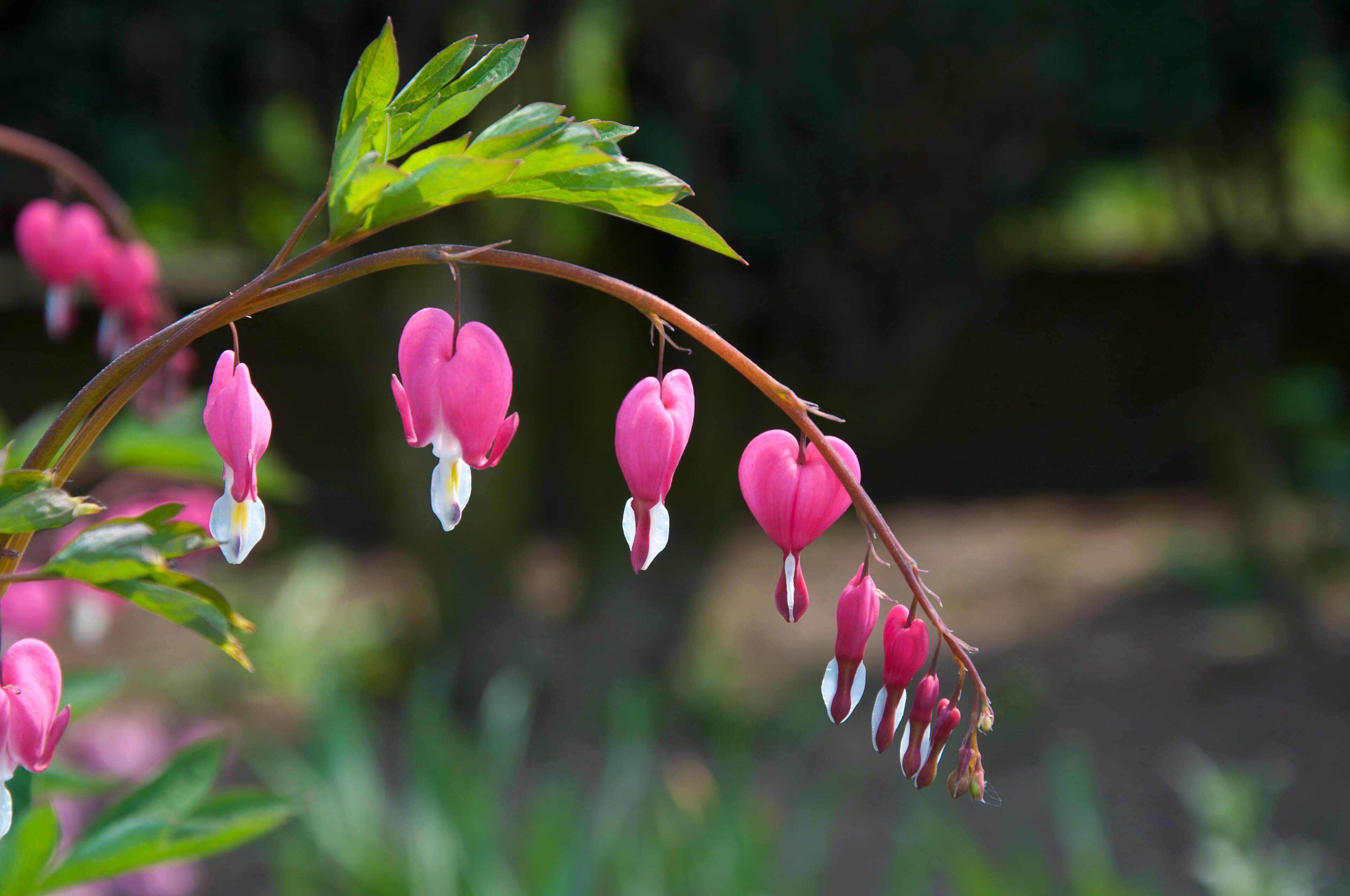
Growing Bleeding heart in a pot
For balcony, patio or terrace — Dicentra spectabilis
bleeding heart grows well in a pot of at least Ø 36 cm (37 L capacity), in a position with partial shade or full shade. Watering: every 2 days in summer, once every 2 weeks in winter.
Which pot?
Ø 36 cm
~ 37 L potting soil
Give the plant room with a pot slightly wider than the current rootball, with matching depth.
Watering
every 2 days
once every 2 weeks
Always use a pot with drainage holes. Water dries out faster in pots — or the plant drowns. Check weekly with your finger: only water when the top 2 cm of soil is dry.
Pot care
Bleeding heart has moderate water needs and performs best when the soil stays consistently moist, particularly during its active growth and flowering period from early spring through to early summer. Water regularly during dry spells in spring, applying enough to soak the root zone rather than sprinkling lightly. Once the foliage begins to yellow in midsummer, watering can stop entirely as the plant enters dormancy. In autumn and winter, natural rainfall is usually sufficient. Feed in March or April as new shoots emerge, using a balanced granular fertiliser such as blood, fish and bone or a general-purpose feed like Growmore, scattered around the base at the rate recommended on the packet. Alternatively, apply a 3–5 cm layer of well-rotted compost or manure as a mulch; this feeds the soil gently and helps retain moisture. Avoid high-nitrogen feeds, which promote lush foliage at the expense of flowers. A single spring feed is enough; bleeding heart is not a heavy feeder. The plant is fully hardy to zone 3 and needs no winter protection in temperate Europe. The crown will survive hard frosts underground without issue. Mulching in autumn with leaf mould or compost helps insulate roots and improves soil structure, but is not essential for survival. Slugs and snails can damage emerging shoots in early spring, so check regularly and use organic pellets, copper tape, or hand-picking if necessary. Bleeding heart is otherwise largely pest- and disease-free. Powdery mildew may appear on foliage in hot, dry summers, but since the leaves die back naturally soon after, it rarely warrants treatment. Overall, maintenance is minimal once the plant is established.
Pot-specific tip: add slow-release fertiliser pellets in March — potting soil exhausts much faster than open ground.


