Bushy aster in May: monthly care
Month-by-month care — Aster dumosus
In May your bushy aster needs attention: plant / sow and fertilise.
- Plant / sow
- Fertilise
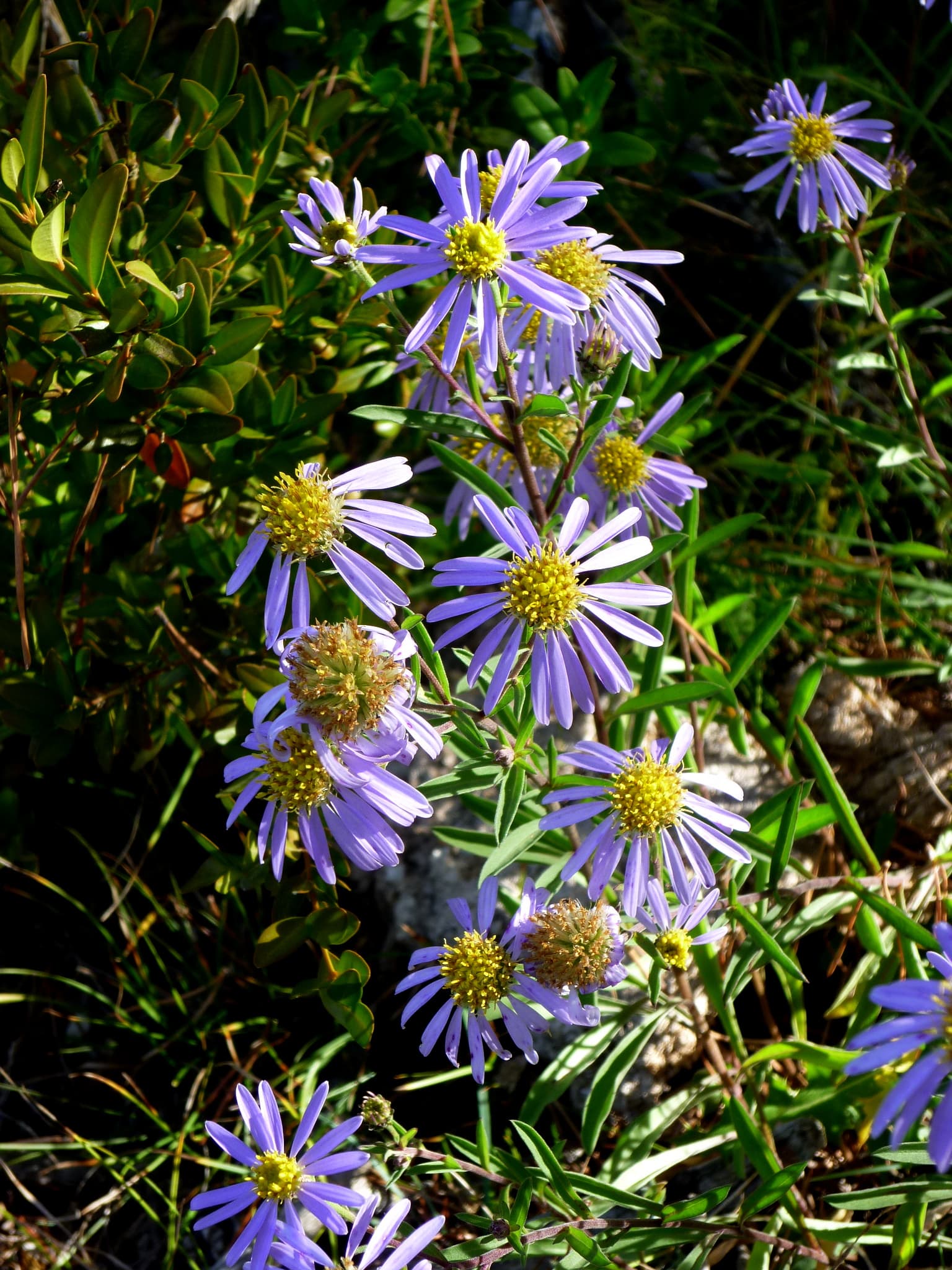
What to do this May
Aster dumosus thrives in full sun or partial shade, though flowering is most prolific in a sunny spot with at least five to six hours of direct light daily. It tolerates a wide range of soils—loam, clay, or sandy—provided drainage is reasonable. Heavy clay benefits from working in some grit or compost to prevent winter waterlogging, while sandy soils appreciate organic matter to retain moisture during dry spells. Plant container-grown asters in March, April, or May for establishment before summer, or in September and October when cooler, damper weather reduces transplant stress. Bare-root divisions are best planted in spring. Dig a hole slightly wider than the root ball and set the crown at soil level—planting too deep encourages rot. Space plants 30 cm apart; they will knit together by their second season to form a low, bushy carpet. After planting, water thoroughly to settle the roots and eliminate air pockets. A 5 cm layer of garden compost or well-rotted manure around (but not touching) the crown helps retain moisture and suppress weeds. In exposed sites or on very light soils, a spring mulch is especially useful. Newly planted asters need regular watering through their first summer—check weekly and water deeply if the top few centimetres of soil are dry. Established clumps are more drought-tolerant but still appreciate consistent moisture during bud formation in late summer. Avoid overhead watering in autumn, as wet foliage increases the risk of mildew on this otherwise robust perennial.
Once established, Aster dumosus is undemanding. Water during prolonged dry spells in summer, especially from July onwards when buds are forming; a thorough soak once a week is better than frequent shallow watering. In autumn and winter, natural rainfall is usually sufficient, and the plant is fully dormant by December. Reduce watering if your soil is heavy clay and prone to sitting wet. Feed in April or May as new shoots emerge. A general-purpose granular fertiliser such as blood, fish and bone, applied at a handful per square metre and lightly forked in, supports healthy growth without promoting excessive soft foliage. Avoid high-nitrogen feeds, which encourage lush leaves at the expense of flowers and increase susceptibility to mildew. A second, lighter feed in early July can boost late-season performance, but it is not essential. Powdery mildew is the most common problem, particularly in dry summers or where air circulation is poor. Lower leaves develop a white, powdery coating from August onwards. It rarely kills the plant but looks unsightly. Ensure adequate spacing, avoid overhead watering, and remove affected foliage. Mulching in spring helps maintain even soil moisture, which reduces stress and mildew incidence. Aster dumosus is fully hardy in zones 4–8 and needs no winter protection in temperate Europe. Slugs occasionally nibble emerging shoots in early spring; scatter organic pellets or use barriers if damage is severe. Otherwise, this dwarf aster is remarkably trouble-free, rewarding neglect with a reliable autumn display of purple, pink, white, or blue daisies when much of the garden is winding down.