Bushy aster in November: monthly care
Month-by-month care — Aster dumosus
In November your bushy aster needs attention: prune and watch the bloom.
- Prune
- Blooms
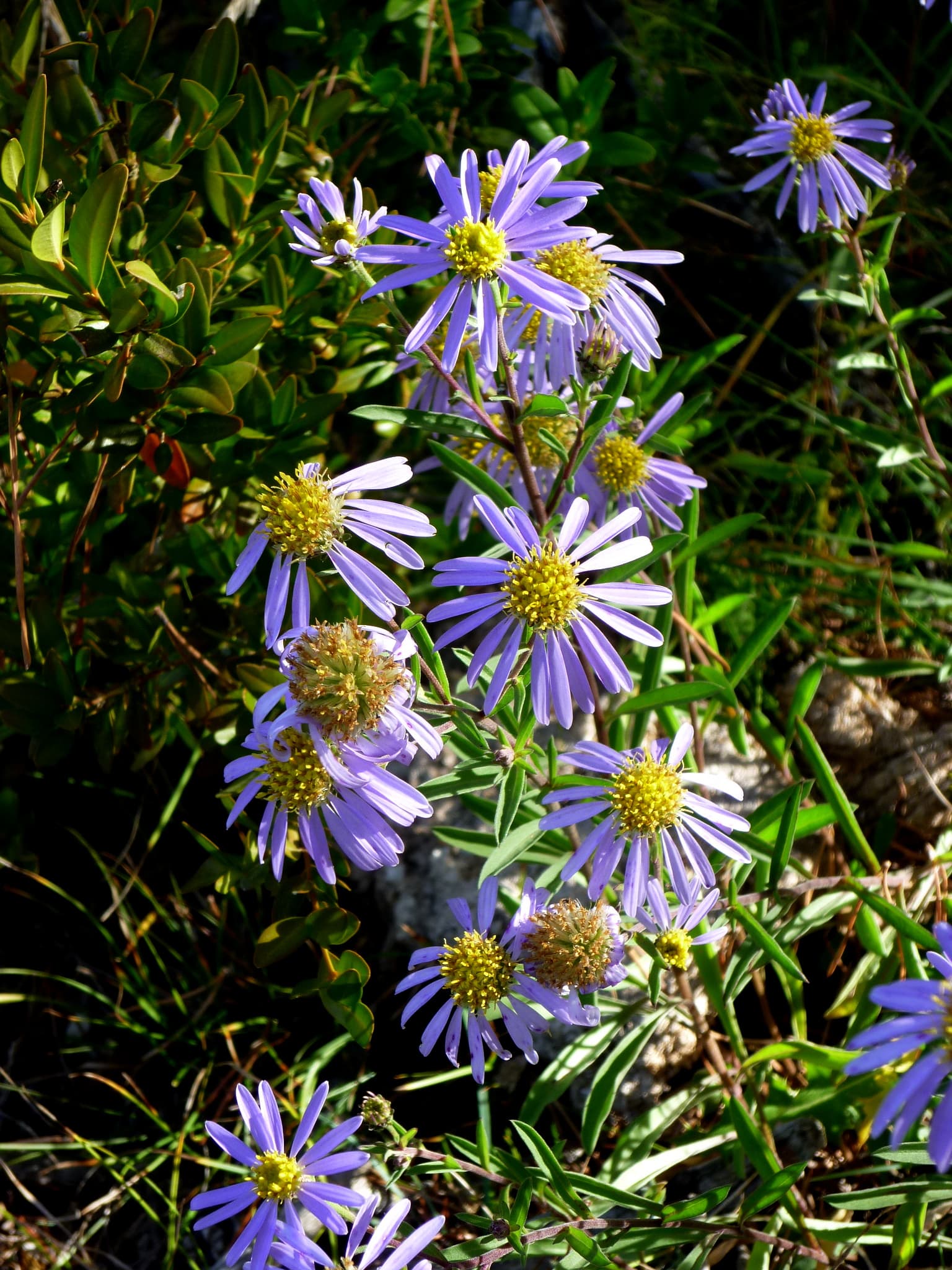
What to do this November
Aster dumosus requires minimal pruning, but a little attention keeps plants compact and floriferous. The main task is cutting back spent top growth after flowering finishes or once frost has blackened the stems. You can do this in November, soon after blooming ends, or leave the seed heads for winter interest and structure and tidy up in March or April instead. Many gardeners prefer the spring approach: the dead stems offer a degree of frost protection to the crown and provide habitat for overwintering insects. Use secateurs or hedging shears to cut all stems down to around 5–10 cm above ground level. If your asters become leggy or open-centred by late spring, consider the "Chelsea chop"—cutting back half the stems by a third in late May. This delays flowering slightly on the pruned shoots but results in bushier growth, more flower buds, and a longer overall display. It also reduces the need for staking, though dumosus varieties are naturally compact and rarely flop. Deadheading individual spent blooms during the flowering season is not necessary; asters produce such a profusion of small flowers that it becomes impractical, and seed formation does not significantly sap the plant's energy. However, if mildew-affected leaves appear lower down during late summer, remove and bin them promptly to improve air circulation. Divide congested clumps every three to four years in March or April, replanting only the vigorous outer sections and discarding the woody centre. This rejuvenates flowering and prevents bare patches.
Once established, Aster dumosus is undemanding. Water during prolonged dry spells in summer, especially from July onwards when buds are forming; a thorough soak once a week is better than frequent shallow watering. In autumn and winter, natural rainfall is usually sufficient, and the plant is fully dormant by December. Reduce watering if your soil is heavy clay and prone to sitting wet. Feed in April or May as new shoots emerge. A general-purpose granular fertiliser such as blood, fish and bone, applied at a handful per square metre and lightly forked in, supports healthy growth without promoting excessive soft foliage. Avoid high-nitrogen feeds, which encourage lush leaves at the expense of flowers and increase susceptibility to mildew. A second, lighter feed in early July can boost late-season performance, but it is not essential. Powdery mildew is the most common problem, particularly in dry summers or where air circulation is poor. Lower leaves develop a white, powdery coating from August onwards. It rarely kills the plant but looks unsightly. Ensure adequate spacing, avoid overhead watering, and remove affected foliage. Mulching in spring helps maintain even soil moisture, which reduces stress and mildew incidence. Aster dumosus is fully hardy in zones 4–8 and needs no winter protection in temperate Europe. Slugs occasionally nibble emerging shoots in early spring; scatter organic pellets or use barriers if damage is severe. Otherwise, this dwarf aster is remarkably trouble-free, rewarding neglect with a reliable autumn display of purple, pink, white, or blue daisies when much of the garden is winding down.