Calendula in September: monthly care
Month-by-month care — Calendula officinalis
In September your calendula needs attention: plant / sow, harvest and watch the bloom.
- Plant / sow
- Harvest
- Blooms
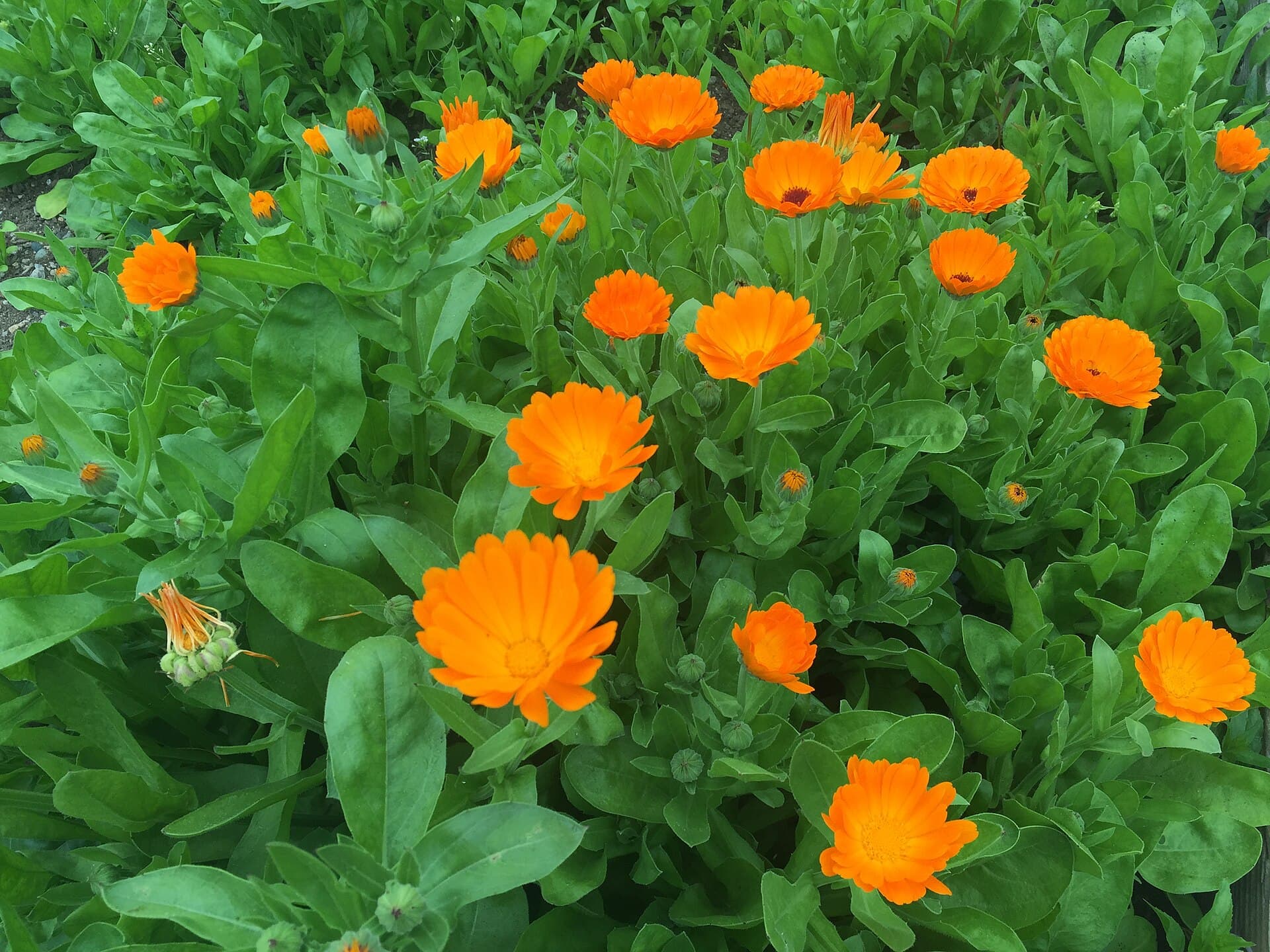
What to do this September
Calendula is a hardy annual that thrives in full sun or partial shade and tolerates a wide range of soil types, though it performs best in loam or sandy soil with good drainage. It's unfussy about fertility and actually flowers more profusely in moderately fertile ground than in overly rich soil. You can sow calendula directly outdoors from March through May for summer flowering, or in September for an early spring display the following year. Autumn-sown plants often overwinter successfully in zones 7–9 and produce stronger, earlier blooms. Prepare the soil by removing weeds and raking to a fine tilth. Sow seeds thinly, about 1 cm deep, either in drills or scattered in drifts. Calendula germinates readily in cool conditions—often within ten to fourteen days. Once seedlings have two or three true leaves, thin them to 25 cm apart to allow good air circulation and prevent mildew. You can transplant the thinnings if you handle them gently and water them in well. If you prefer to start plants indoors, sow in modules six to eight weeks before your last expected frost, then harden off and plant out after danger of severe frost has passed. Space transplants 25 cm apart. Water newly sown or transplanted calendula gently to settle the soil, but avoid waterlogging. A light mulch of garden compost helps retain moisture during establishment, though calendula's low water needs mean it copes well once settled. Staking is unnecessary; the bushy plants are self-supporting even in exposed sites.
Calendula is a low-maintenance annual with modest water and nutrient needs. Once established, it has low water requirements and tolerates dry spells well, making it ideal for sunny borders and containers. Water young plants regularly during their first few weeks, especially in dry spring weather, but after that you only need to water during prolonged drought. Overwatering or poorly drained soil can lead to root rot and mildew, so err on the side of caution. Feeding is not necessary. Calendula grows and flowers perfectly well without supplementary fertiliser, and rich soil or heavy feeding can result in lush foliage at the expense of flowers. If your soil is very poor or you're growing in containers, a single application of a balanced liquid feed in midsummer is more than sufficient, but most gardeners find it thrives on neglect. Calendula is generally trouble-free, but powdery mildew can appear in late summer, especially in crowded plantings or during humid weather. Ensure good spacing and air circulation, and remove affected leaves promptly. Aphids occasionally cluster on young shoots and buds; a strong jet of water or a spray of insecticidal soap usually resolves the problem. Slugs may nibble seedlings in spring, so protect young plants with grit or organic pellets if necessary. Calendula is fully hardy and requires no special overwintering care in zones 7–9. Autumn-sown plants will often survive mild winters and flower earlier the following year. A light mulch of compost in late autumn can help protect September sowings in colder gardens, but it's rarely essential.
Calendula is a low-maintenance annual with modest water and nutrient needs. Once established, it has low water requirements and tolerates dry spells well, making it ideal for sunny borders and containers. Water young plants regularly during their first few weeks, especially in dry spring weather, but after that you only need to water during prolonged drought. Overwatering or poorly drained soil can lead to root rot and mildew, so err on the side of caution. Feeding is not necessary. Calendula grows and flowers perfectly well without supplementary fertiliser, and rich soil or heavy feeding can result in lush foliage at the expense of flowers. If your soil is very poor or you're growing in containers, a single application of a balanced liquid feed in midsummer is more than sufficient, but most gardeners find it thrives on neglect. Calendula is generally trouble-free, but powdery mildew can appear in late summer, especially in crowded plantings or during humid weather. Ensure good spacing and air circulation, and remove affected leaves promptly. Aphids occasionally cluster on young shoots and buds; a strong jet of water or a spray of insecticidal soap usually resolves the problem. Slugs may nibble seedlings in spring, so protect young plants with grit or organic pellets if necessary. Calendula is fully hardy and requires no special overwintering care in zones 7–9. Autumn-sown plants will often survive mild winters and flower earlier the following year. A light mulch of compost in late autumn can help protect September sowings in colder gardens, but it's rarely essential.