Caring for Calendula
Complete guide — Calendula officinalis
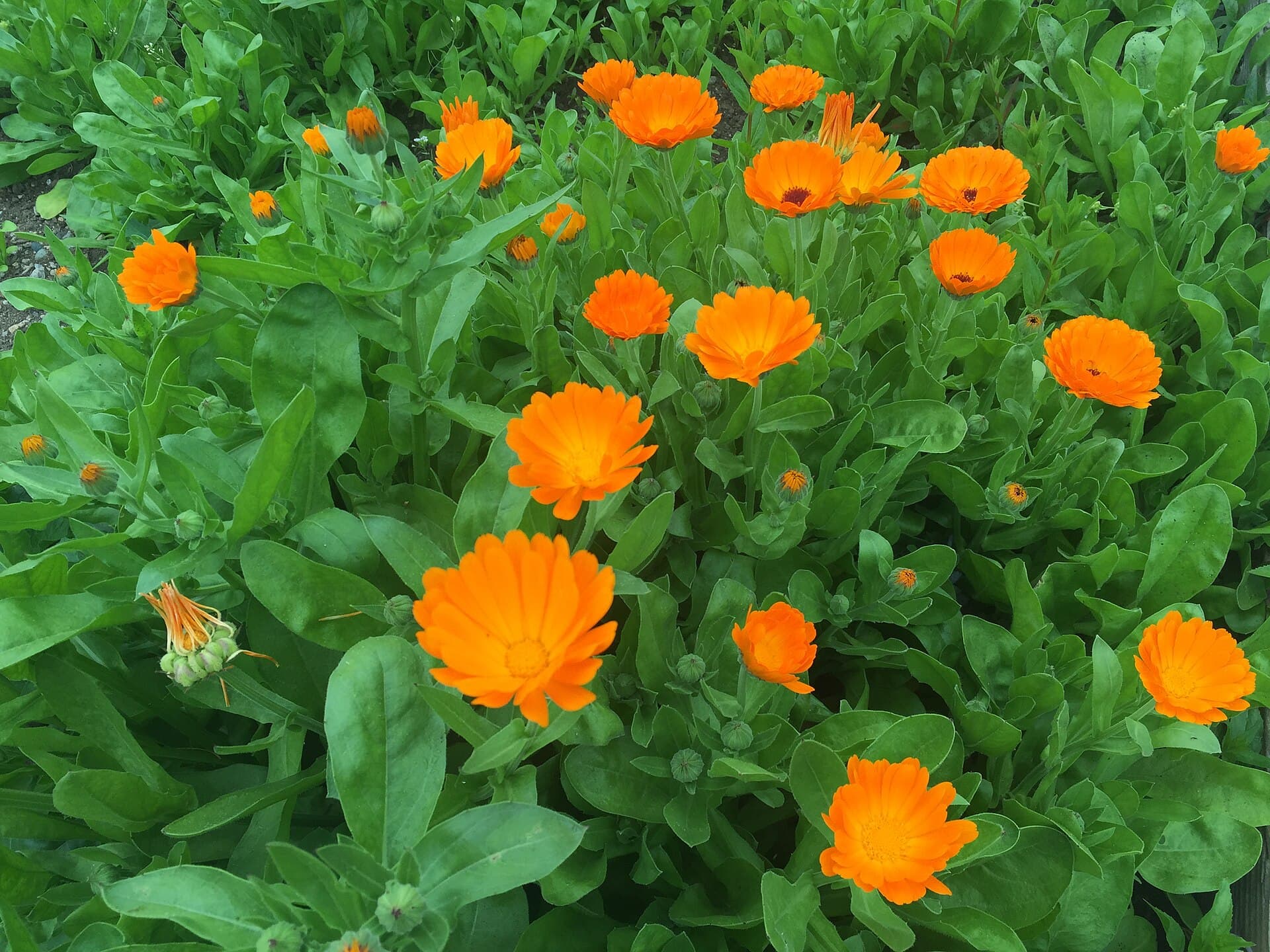
calendula needs low maintenance, a position in full sun or partial shade on loam / sandy soil and low water needs.
Position
full sun, partial shade
loam, sandy soil
low water needs
Year-round care
Calendula is a low-maintenance annual with modest water and nutrient needs. Once established, it has low water requirements and tolerates dry spells well, making it ideal for sunny borders and containers. Water young plants regularly during their first few weeks, especially in dry spring weather, but after that you only need to water during prolonged drought. Overwatering or poorly drained soil can lead to root rot and mildew, so err on the side of caution. Feeding is not necessary. Calendula grows and flowers perfectly well without supplementary fertiliser, and rich soil or heavy feeding can result in lush foliage at the expense of flowers. If your soil is very poor or you're growing in containers, a single application of a balanced liquid feed in midsummer is more than sufficient, but most gardeners find it thrives on neglect. Calendula is generally trouble-free, but powdery mildew can appear in late summer, especially in crowded plantings or during humid weather. Ensure good spacing and air circulation, and remove affected leaves promptly. Aphids occasionally cluster on young shoots and buds; a strong jet of water or a spray of insecticidal soap usually resolves the problem. Slugs may nibble seedlings in spring, so protect young plants with grit or organic pellets if necessary. Calendula is fully hardy and requires no special overwintering care in zones 7–9. Autumn-sown plants will often survive mild winters and flower earlier the following year. A light mulch of compost in late autumn can help protect September sowings in colder gardens, but it's rarely essential.