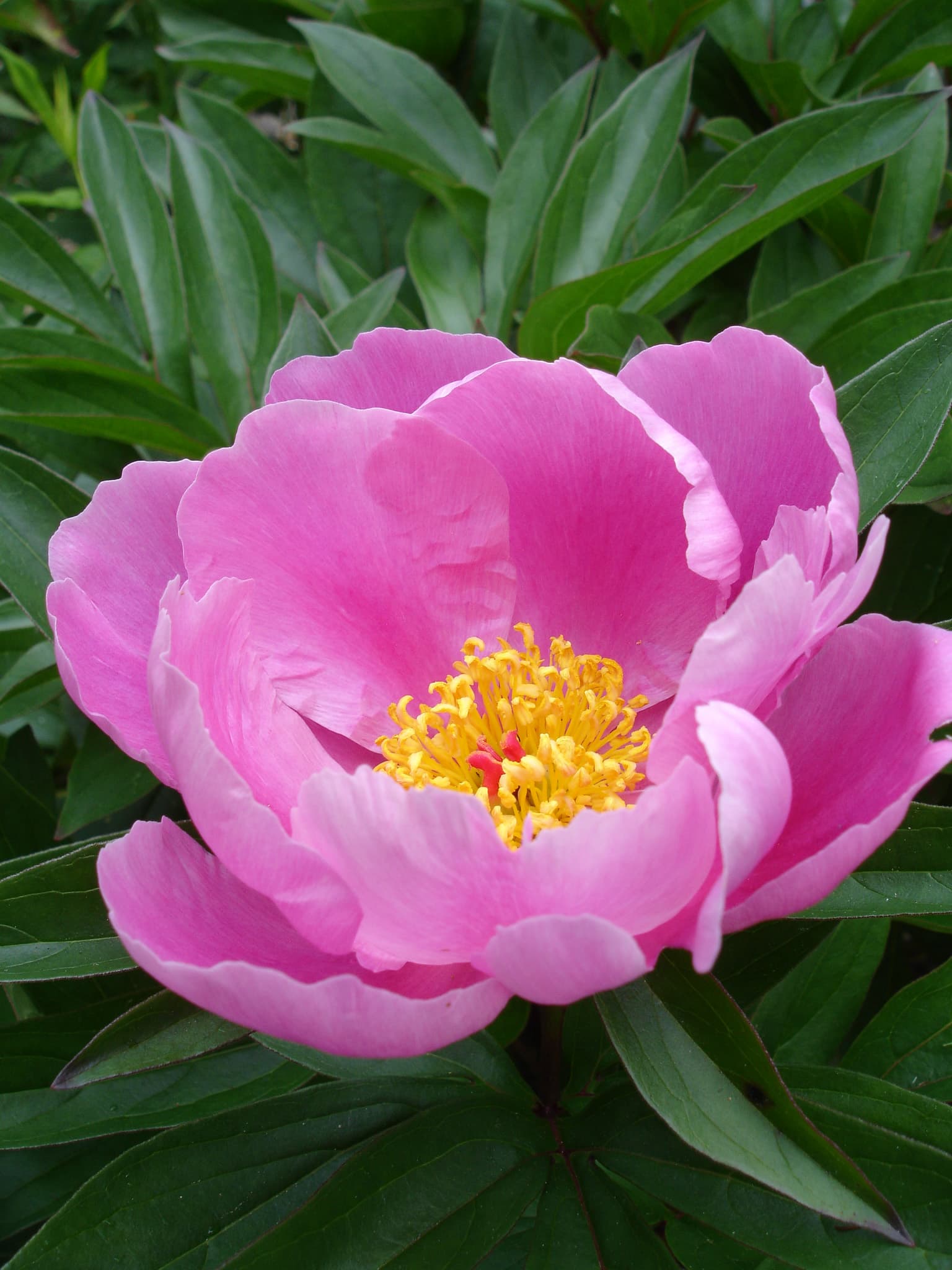
Growing Chinese peony 'Karl Rosenfield' in a pot
For balcony, patio or terrace — Paeonia lactiflora 'Karl Rosenfield'
chinese peony 'Karl Rosenfield' grows well in a pot of at least Ø 48 cm (87 L capacity), in a position with full sun or partial shade. Watering: every 2 days in summer, once every 2 weeks in winter.
Which pot?
Ø 48 cm
~ 87 L potting soil
Give the plant room with a pot slightly wider than the current rootball, with matching depth.
Watering
every 2 days
once every 2 weeks
Always use a pot with drainage holes. Water dries out faster in pots — or the plant drowns. Check weekly with your finger: only water when the top 2 cm of soil is dry.
Pot care
Water 'Karl Rosenfield' moderately during dry spells, particularly in spring as buds develop and during flowering. Peonies prefer consistent moisture but dislike sitting in wet soil, so check that drainage remains good year-round. In summer, water deeply once a week if rainfall is scarce; in autumn and winter, natural rainfall is usually sufficient in temperate climates. Avoid overhead watering, which can encourage botrytis and other fungal problems—water at the base instead. Feed in March and April as new shoots emerge. Apply a balanced granular fertiliser (such as blood, fish and bone) or a general-purpose feed around the base of the plant, scratching it lightly into the soil surface. A second, lighter feed immediately after flowering helps build strong roots for the following year, though it is not essential. Avoid high-nitrogen fertilisers, which promote lush foliage at the expense of flowers. Peonies are fully hardy in zones 3–8 and need no winter protection in temperate Europe. In fact, they require a cold dormant period to flower well. Mulch lightly in late autumn with garden compost or well-rotted manure, keeping it away from the crown to prevent rot. The main pest concern is peony wilt, a fungal disease causing stems to collapse suddenly. Remove and destroy affected growth immediately. Ants are often seen on buds but cause no harm—they're attracted to the sugary sap and may even help buds open. Slugs occasionally damage young shoots in spring; use organic pellets or barriers if necessary. Staking may be needed in exposed sites, as the heavy double blooms can weigh down stems, especially after rain.
Pot-specific tip: add slow-release fertiliser pellets in March — potting soil exhausts much faster than open ground.


