Growing Chinese peony 'Sarah Bernhardt' in a pot
For balcony, patio or terrace — Paeonia lactiflora 'Sarah Bernhardt'
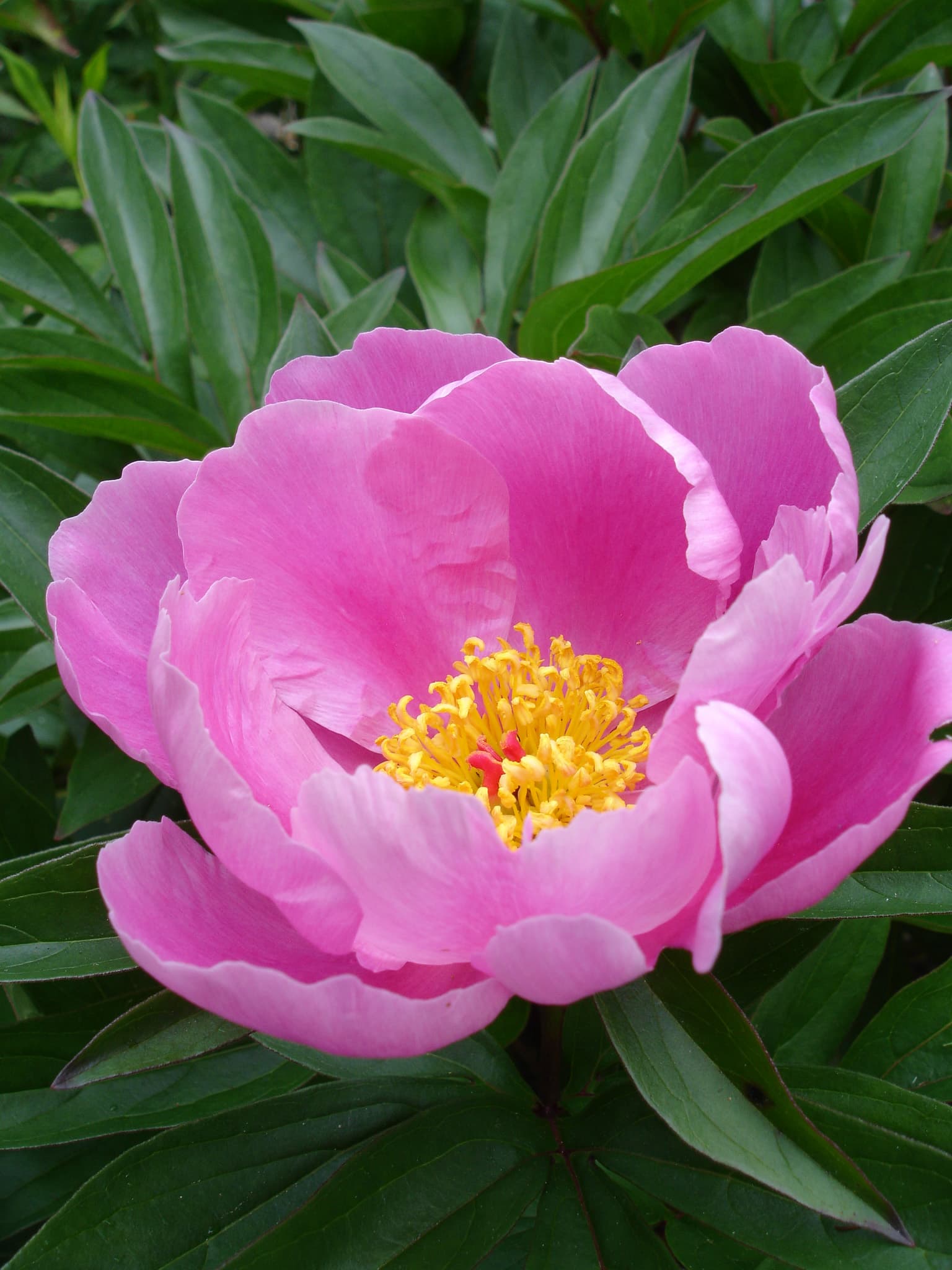
chinese peony 'Sarah Bernhardt' grows well in a pot of at least Ø 54 cm (124 L capacity), in a position with full sun or partial shade. Watering: every 2 days in summer, once every 2 weeks in winter.
Which pot?
Ø 54 cm
~ 124 L potting soil
Give the plant room with a pot slightly wider than the current rootball, with matching depth.
Watering
every 2 days
once every 2 weeks
Always use a pot with drainage holes. Water dries out faster in pots — or the plant drowns. Check weekly with your finger: only water when the top 2 cm of soil is dry.
Pot care
Water 'Sarah Bernhardt' regularly during dry spells in spring and early summer when the plant is growing rapidly and forming buds. Peonies have a moderate water need and prefer consistent moisture, but avoid waterlogging. Once flowering finishes, reduce watering unless the weather is exceptionally dry; established plants are fairly drought-tolerant by midsummer. In autumn and winter, natural rainfall is usually sufficient. Feed in March and April as new shoots emerge. Scatter a generous handful of blood, fish and bone or a balanced general-purpose granular fertiliser around the base of each plant, keeping it clear of the crown itself. A second, lighter feed immediately after flowering helps replenish the plant. In early spring, top up the mulch with a 3–5 cm layer of well-rotted compost or manure, again avoiding direct contact with the crown to prevent rot. Paeonia lactiflora is fully hardy to zone 3 and needs no winter protection in temperate Europe. The crown will sit dormant underground until spring. The main pest to watch for is peony wilt, a fungal disease that causes shoots to collapse and buds to brown and fail. Remove and bin affected stems immediately, cutting right back to ground level. Good autumn hygiene—removing all top growth in October or November—greatly reduces the risk. Ants are often seen on buds in spring; they're harmless, feeding on nectar, and need no control. Slugs occasionally damage emerging shoots in early spring, so scatter slug pellets or use barriers if this becomes a problem.
Pot-specific tip: add slow-release fertiliser pellets in March — potting soil exhausts much faster than open ground.


