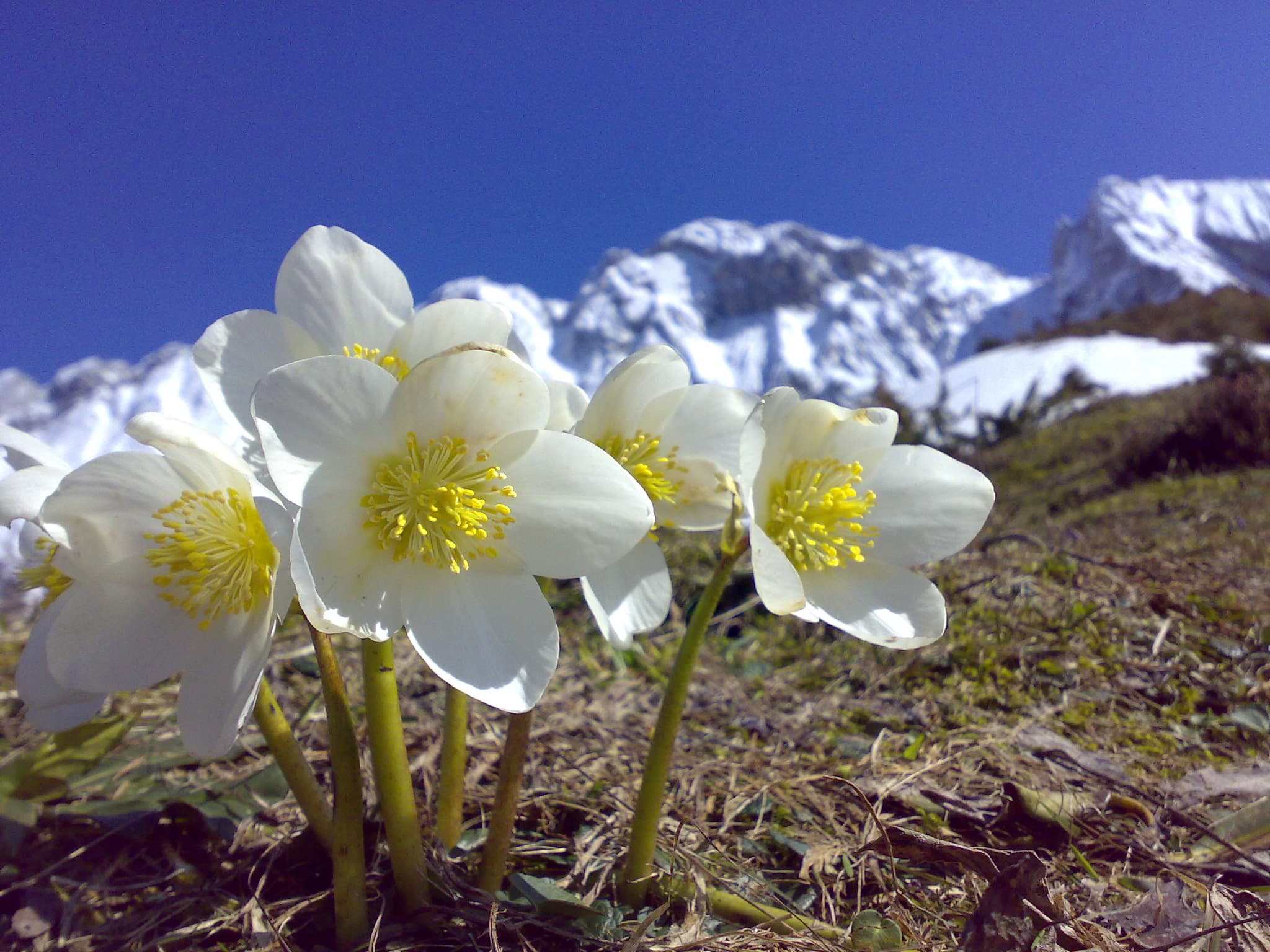
Christmas rose
Helleborus niger
Dutch: Kerstroosje
Kerstroosje (Helleborus niger) is a evergreen perennial from the Ranunculaceae family that grows up to 30cm tall. This plant thrives in partial shade to shade and requires low maintenance. Blooms in winter and early spring with white flowers and attracts bees.
20–30 cm
30–45 cm
partial shade, full shade
moderate
loam, clay soil, chalky soil
low maintenance
winter, early spring
white
Ecologische waarde
Verzorgingskalender
| Taak | Jan | Feb | Mrt | Apr | Mei | Jun | Jul | Aug | Sep | Okt | Nov | Dec |
|---|---|---|---|---|---|---|---|---|---|---|---|---|
| 🌱Planten | ||||||||||||
| ✂️Snoeien | ||||||||||||
| 💧Bemesten |
Care tips
Planting
Helleborus niger, the Christmas rose, thrives in partial to full shade, making it ideal for planting beneath deciduous trees, along north-facing walls, or in woodland-style borders. It tolerates a range of soils—loam, clay, and chalky conditions—but demands good drainage and prefers neutral to alkaline pH. Avoid waterlogged sites, as the roots are prone to rot. Plant in March, April, September, or October, when the soil is workable and temperatures are mild. Autumn planting is often best, giving roots time to establish before winter flowering begins. Dig a hole roughly twice the width of the root ball and deep enough so the crown sits level with the soil surface; planting too deep can inhibit flowering. Space plants 40 cm apart to allow for their eventual spread of 30–45 cm. Before planting, work in plenty of organic matter—well-rotted compost or leaf mould—to improve soil structure and moisture retention, especially in heavy clay. On very heavy ground, incorporate grit to aid drainage. If your soil is acidic, a handful of garden lime mixed into the planting hole will help. After planting, water thoroughly to settle the roots and eliminate air pockets. Apply a 5 cm layer of mulch around the base—leaf mould or composted bark works well—but keep it clear of the crown to prevent rot. Water regularly during the first growing season to help establishment, particularly in dry spells. Christmas roses are slow to settle in and may take a year or two to flower reliably, so patience is essential. Avoid moving established plants, as they resent root disturbance.
Pruning
Helleborus niger requires very little pruning, but a light tidy in April or May will keep plants looking their best and reduce disease risk. The main task is removing old, tatty foliage rather than cutting back stems in the traditional sense. In late April or early May, once flowering has finished and new leaves begin to emerge, cut away the previous year's evergreen foliage at the base. These older leaves often become weather-beaten, spotted with fungal leaf spot, or simply look tired after winter. Removing them improves air circulation around the crown, reduces the spread of disease, and allows the fresh spring foliage to shine. Use clean, sharp secateurs and cut each leaf stem as close to the base as possible without damaging the crown or emerging flower buds. If you notice blackened, diseased, or slug-damaged leaves at any time of year, remove them promptly to prevent problems spreading. Similarly, cut off spent flower stems once the seed heads have finished if you don't want self-sown seedlings, though many gardeners leave them for winter interest or to allow natural propagation. Avoid heavy pruning or cutting into woody crowns; Christmas roses grow slowly from a central rootstock and won't regenerate vigorously if cut back hard. Never prune in autumn or winter, as the evergreen leaves protect the crown and emerging flower buds from frost and wet. The timing in late spring is deliberate: it coincides with the plant's natural growth cycle, minimising stress and maximising the display of clean, healthy foliage through summer and into the next flowering season.
Maintenance
Christmas roses are low-maintenance once established, but consistent care ensures healthy foliage and reliable winter blooms. Water moderately throughout the year, keeping the soil evenly moist but never waterlogged. During dry spells in spring and summer, water deeply once a week; in autumn and winter, natural rainfall is usually sufficient unless conditions are exceptionally dry. Mulch annually in early spring with a 3–5 cm layer of leaf mould or well-rotted compost to retain moisture, suppress weeds, and feed the soil, but keep mulch away from the crown. Feed in March and April as new growth begins. Apply a balanced slow-release granular fertiliser or a top-dressing of well-rotted manure or compost around the base of the plant. Avoid high-nitrogen feeds, which promote lush foliage at the expense of flowers. A second light feed after flowering in late spring supports the development of next year's buds. Helleborus niger is hardy to zone 3 and requires no winter protection in temperate Europe. The evergreen foliage and emerging flower buds tolerate frost and snow without damage. However, in very exposed sites, a temporary cloche or pane of glass over the flowers will protect the blooms from rain and mud splash, keeping them pristine for display. Watch for aphids on young growth in spring; wash them off with water or use an insecticidal soap if necessary. Hellebore leaf spot—dark blotches on older leaves—is common but rarely serious; remove affected foliage promptly. Slugs and snails can damage emerging flowers and leaves, especially in mild, wet winters, so use organic pellets or barriers if needed. Avoid disturbing the roots; Christmas roses dislike being moved or divided.
More about this plant
Combines well with
Related guides
Christmas rose in your garden design?
Make a free garden design with AI advice. Our AI knows Christmas rose and 130+ other plants.
Start free design