Growing Common peony in a pot
For balcony, patio or terrace — Paeonia officinalis
common peony grows well in a pot of at least Ø 54 cm (124 L capacity), in a position with full sun or partial shade. Watering: every 2 days in summer, once every 2 weeks in winter.
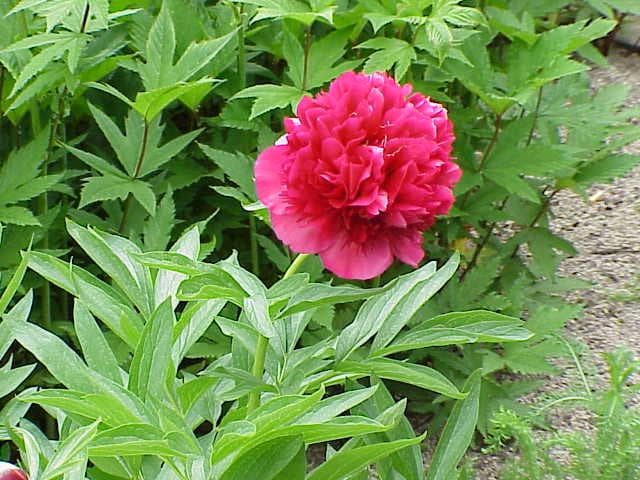
Which pot?
Ø 54 cm
~ 124 L potting soil
Give the plant room with a pot slightly wider than the current rootball, with matching depth.
Watering
every 2 days
once every 2 weeks
Always use a pot with drainage holes. Water dries out faster in pots — or the plant drowns. Check weekly with your finger: only water when the top 2 cm of soil is dry.
Pot care
Paeonia officinalis has moderate water needs and tolerates clay soils well, but consistent moisture during spring—when buds are forming and opening—is important for strong flowering. Water deeply during dry spells in April and May, aiming for the root zone rather than wetting the foliage, which can encourage fungal problems. Once flowering finishes, the plant is more drought-tolerant, though prolonged summer dryness on light soils may stress it. In autumn and winter, natural rainfall is usually sufficient; avoid waterlogging. Feed in March and April as new shoots emerge. Scatter a general-purpose granular fertiliser such as blood, fish and bone or Growmore around the base of the plant, or apply a low-nitrogen feed like bonemeal if growth is already lush. A spring mulch of well-rotted manure or compost, kept clear of the crown, provides slow-release nutrients and helps retain moisture. Avoid high-nitrogen feeds, which promote soft, leafy growth at the expense of flowers. Paeonia officinalis is fully hardy to zone 3 and needs no winter protection in temperate Europe. The crown dies back completely and re-emerges reliably each spring. The main pest to watch for is peony wilt (Botrytis paeoniae), a fungal disease causing stems to collapse and buds to brown and fail. Remove and destroy affected growth immediately, cutting back to healthy tissue. Good air circulation, autumn hygiene, and avoiding overhead watering reduce risk. Ants are often seen on buds but cause no harm—they're attracted to nectar and may even help buds open. Slugs occasionally damage emerging shoots in spring; use organic pellets or barriers if necessary.
Pot-specific tip: add slow-release fertiliser pellets in March — potting soil exhausts much faster than open ground.


