Coral bells 'Caramel' in March: monthly care
Month-by-month care — Heuchera 'Caramel'
In March your coral bells 'Caramel' needs attention: plant / sow and prune.
- Plant / sow
- Prune
What to do this March
Heuchera 'Caramel' thrives in partial shade or full sun, though in hotter gardens a spot with morning sun and afternoon shade will prevent leaf scorch and keep the caramel-orange foliage at its best. It tolerates a range of soils but performs most reliably in well-drained loam or sandy soil that doesn't sit wet in winter. Heavy clay should be improved with grit and organic matter before planting. Plant in March, April or May for establishment before summer, or in September and October so roots can settle before winter. Dig a hole slightly wider than the root ball and set the crown at soil level—burying it too deeply invites rot. Space plants 35 cm apart; this allows each clump to develop its full spread of 30–40 cm without crowding neighbours. Heucheras are often used as edging or ground cover, so consistent spacing gives a neat, even effect. Water thoroughly after planting to settle soil around the roots, then keep the ground lightly moist for the first few weeks while the plant establishes. A 3–5 cm mulch of garden compost or composted bark around (but not touching) the crown helps retain moisture, suppress weeds, and insulate roots through winter. Heuchera 'Caramel' is evergreen, so the foliage remains visible year-round; good initial planting and mulching will keep it looking tidy from the start. Avoid planting in waterlogged spots or deep shade, where growth becomes leggy and the distinctive leaf colour fades.
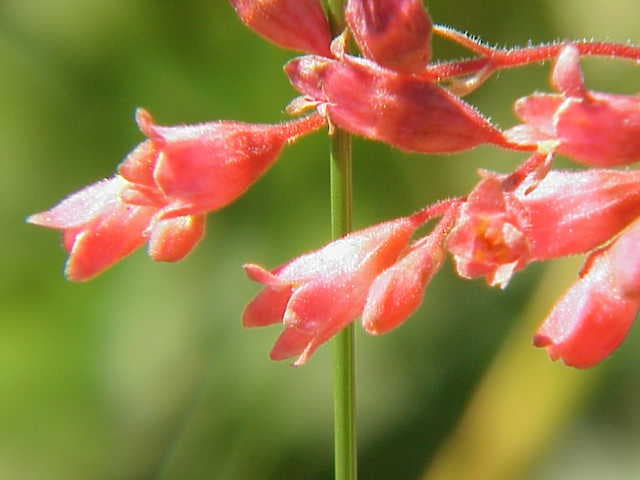
Heuchera 'Caramel' requires very little pruning, but a tidy-up in early spring keeps it looking fresh and encourages strong new growth. In March or April, before the main flush of foliage emerges, remove any tatty, winter-damaged or discoloured leaves by cutting them off at the base with secateurs or sharp scissors. Although evergreen, some outer leaves naturally deteriorate over winter, especially after frost or wet spells, so this spring grooming is the main "pruning" task. If flower stems appear in late spring or early summer—typically airy sprays of small white or pink blooms—you can leave them for pollinators or cut them back once they fade. Removing spent flower stalks at the base prevents the plant wasting energy on seed and keeps the focus on the ornamental foliage, which is the real star of this cultivar. Deadheading is optional but worthwhile if you want a neater appearance. Every three to four years, older heucheras can become woody at the base and start to lift out of the soil, exposing the crown. This isn't pruning in the traditional sense, but in March or April you should lift the clump, trim away any dead or woody sections with a sharp knife, and replant the healthy portions at the correct depth, firming them in well. This rejuvenates the plant and prevents the crown drying out. No other cutting back is needed; avoid shearing the whole plant, as this damages the evergreen rosette and spoils its natural shape.