Coral bells in May: monthly care
Month-by-month care — Heuchera micrantha
In May your coral bells needs attention: plant / sow and watch the bloom.
- Plant / sow
- Blooms
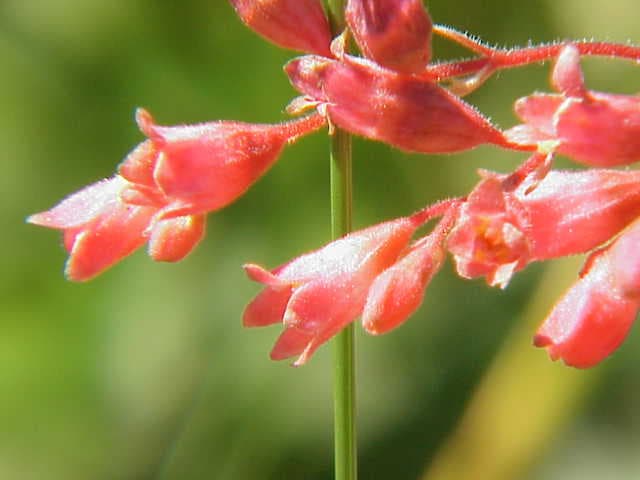
What to do this May
Heuchera micrantha thrives in partial shade or full shade, making it ideal for woodland gardens, shaded borders, or north-facing beds where many other perennials struggle. It tolerates a range of soil types but performs best in well-drained loam or sandy soil that doesn't become waterlogged in winter. Before planting, dig over the soil to a spade's depth and incorporate a generous amount of organic matter such as garden compost or well-rotted manure to improve both drainage and fertility. Plant in March, April or May for spring planting, or in September and October for autumn establishment. Space plants 35 cm apart to allow for their mature spread of 30–40 cm. Dig a hole slightly larger than the root ball and position the crown at soil level—planting too deeply can lead to rot, while planting too high exposes the roots. Firm the soil gently around the roots to eliminate air pockets. Water thoroughly immediately after planting to settle the soil and help roots establish. Apply a 5 cm layer of mulch around the base, keeping it clear of the crown itself, to retain moisture and suppress weeds. In exposed sites, the evergreen foliage can suffer wind scorch, so choose a sheltered spot if possible. Heuchera micrantha is fully hardy to zone 4, so winter cold is rarely an issue in temperate Europe. New plants establish more reliably in spring when soil temperatures are rising, but autumn planting works well if the ground isn't too wet or heavy.
Heuchera micrantha has moderate water needs and prefers consistent moisture without waterlogging. Water regularly during the first growing season to help roots establish, particularly in dry spells. Once established, it tolerates short dry periods but performs best when the soil doesn't dry out completely in summer. In shaded positions, natural rainfall is often sufficient except during prolonged drought. Reduce watering in autumn and winter when growth slows, and avoid overhead watering which can mark the evergreen foliage. Feed in March or April as new growth emerges, using a balanced general-purpose fertiliser such as blood, fish and bone or a slow-release granular feed scattered around the base at the manufacturer's recommended rate. A second, lighter feed in April can boost foliage quality, but avoid overfeeding—too much nitrogen produces lush leaves prone to disease and reduces the intensity of any purple or bronze tones in the foliage. Top up mulch annually in spring to suppress weeds and retain moisture. Heuchera micrantha is evergreen and fully hardy, requiring no special winter protection in temperate Europe. The foliage may look tired by late winter, but the plant will refresh itself in spring. Vine weevil is the most common pest; adult beetles notch leaf edges while the larvae feed on roots and can kill plants. Check for signs in late summer and consider using biological controls (nematodes) if you spot damage. Powdery mildew can occasionally affect foliage in dry conditions with poor air circulation—remove affected leaves and improve spacing. Rust and leaf spot are rare but more likely in overcrowded or poorly drained sites.