Growing Cosmos in a pot
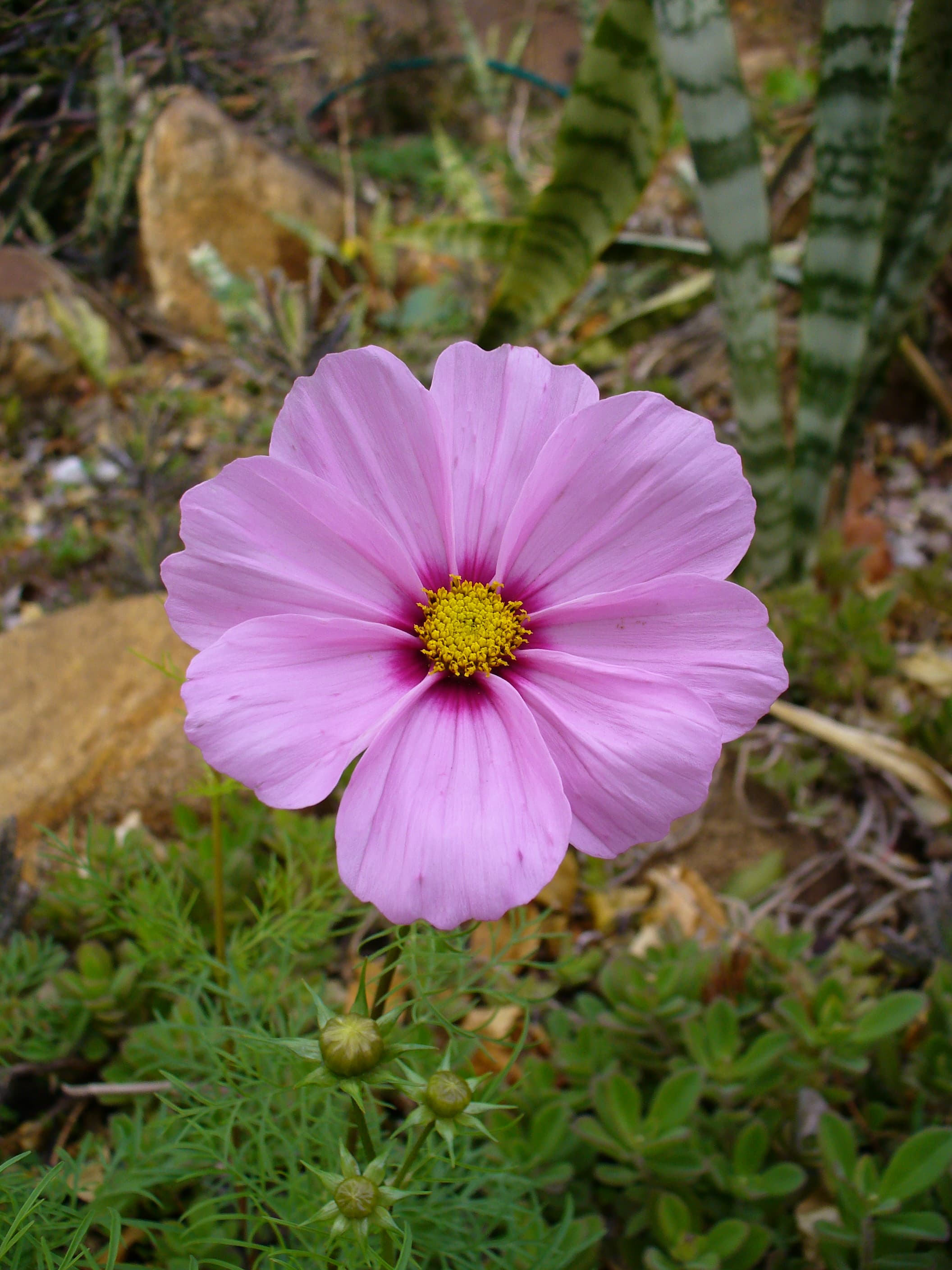
For balcony, patio or terrace — Cosmos bipinnatus
cosmos grows well in a pot of at least Ø 36 cm (37 L capacity), in a position with full sun. Watering: 1-2x per week in summer, only when dry in winter.
Which pot?
Ø 36 cm
~ 37 L potting soil
Give the plant room with a pot slightly wider than the current rootball, with matching depth.
Watering
1-2x per week
only when dry
Always use a pot with drainage holes. Water dries out faster in pots — or the plant drowns. Check weekly with your finger: only water when the top 2 cm of soil is dry.
Pot care
Cosmos is genuinely low-maintenance and thrives on neglect. Water sparingly, only during prolonged dry spells in summer, and even then only if plants show signs of real stress such as wilting in the evening. Overwatering or planting in heavy, moisture-retentive soil can lead to weak, floppy growth and fewer flowers. Once established, cosmos is remarkably drought-tolerant thanks to its deep taproot. Feeding is not necessary and actively discouraged. Applying fertiliser, especially nitrogen-rich formulas, results in tall, leafy plants with disappointing flower production. The plant evolved in poor Mexican soils and performs best when left to fend for itself in lean conditions. If your soil is very poor, a single light application of a balanced general fertiliser at planting time is the absolute maximum. Cosmos is rarely troubled by pests or diseases. Aphids occasionally cluster on young shoot tips in early summer; a strong jet of water or a spray of dilute washing-up liquid usually resolves the problem. Slugs and snails may nibble seedlings in wet springs, so protect young plants with grit, copper tape, or organic pellets until they're 15–20 cm tall. Powdery mildew can appear on foliage in late summer during humid weather, but it rarely affects flowering and can be ignored. No overwintering care is needed, as cosmos is a frost-tender annual. However, if you allow some seed heads to self-sow, you may find volunteer seedlings appearing the following spring—though they'll usually flower later than deliberately sown plants.
Pot-specific tip: add slow-release fertiliser pellets in March — potting soil exhausts much faster than open ground.