Caring for Cotton lavender
Complete guide — Santolina chamaecyparissus
cotton lavender needs low maintenance, a position in full sun on sandy soil / loam / chalky soil and low water needs.
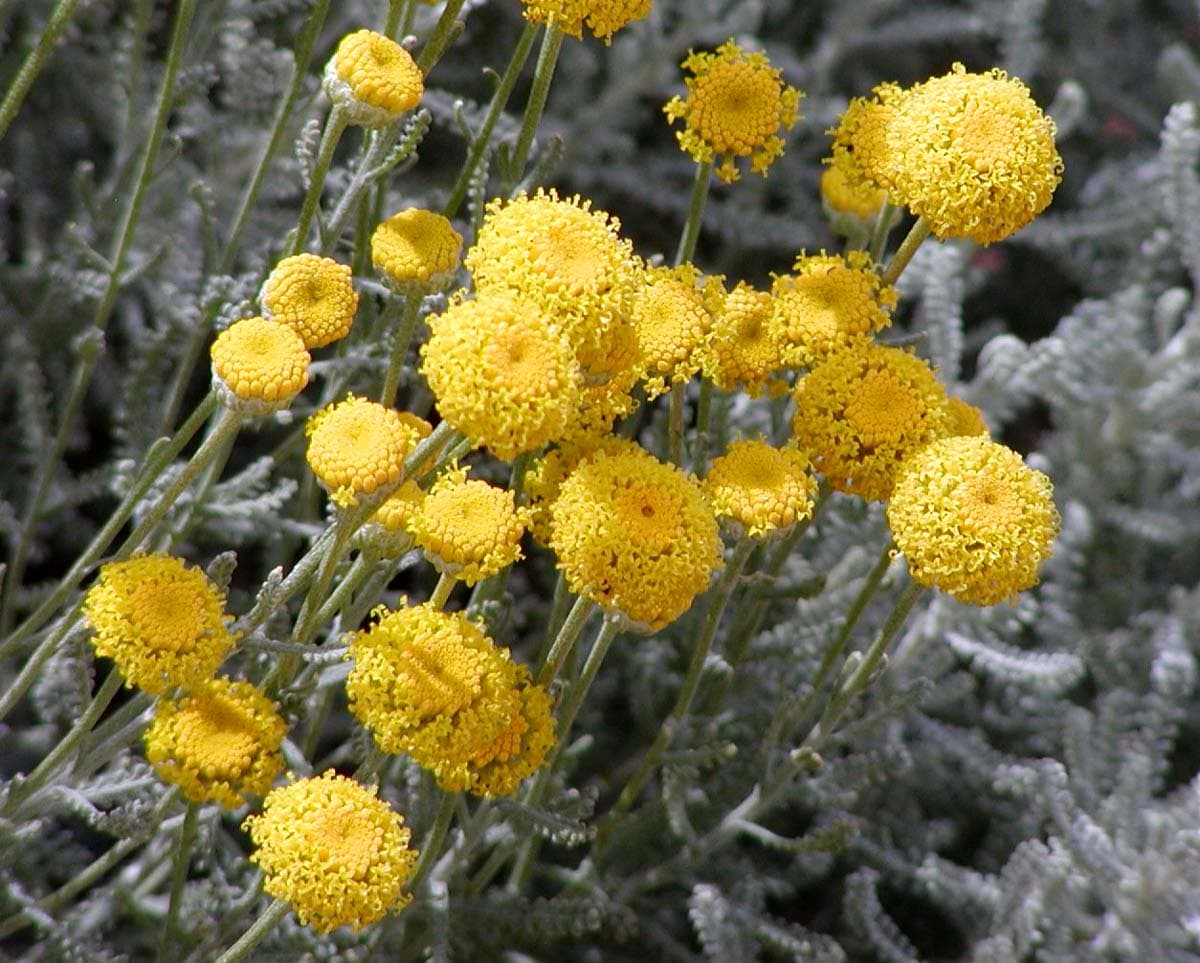
Position
full sun
sandy soil, loam, chalky soil
low water needs
Feeding
Feed in April.
Year-round care
Cotton lavender is a low-maintenance shrub once established, demanding little water or feeding. Water newly planted specimens during prolonged dry spells in their first summer, but thereafter irrigation is rarely necessary. Established plants tolerate drought remarkably well and actually perform better in dry conditions; overwatering or poorly drained soil leads to root rot and fungal problems. In typical British and Irish summers, rainfall is usually sufficient. If you do water during extreme drought, do so sparingly and avoid wetting the foliage. Feed lightly in April with a general-purpose granular fertiliser or a handful of blood, fish, and bone scattered around the base. Cotton lavender evolved on poor Mediterranean soils and does not need rich feeding—excessive nitrogen produces lush, floppy growth that is vulnerable to frost and disease. A single spring feed is ample; avoid feeding after midsummer, as soft late growth is prone to winter damage. Cotton lavender is evergreen and hardy in zones 6–9, but prolonged wet winters can cause problems, particularly on heavy soils. Good drainage is more critical to survival than cold tolerance. In exposed gardens or colder zones, a gravel mulch helps protect the base, and planting in a sheltered, south-facing spot improves winter resilience. Pests are rare, though aphids occasionally cluster on new shoots in spring; a strong jet of water usually dislodges them. The main disease risk is root or stem rot in waterlogged conditions. Ensure excellent drainage and avoid mulching with moisture-retentive materials. Remove any dead or diseased stems promptly. Cotton lavender's aromatic foliage deters most pests, making it a trouble-free choice for sunny, well-drained gardens.


