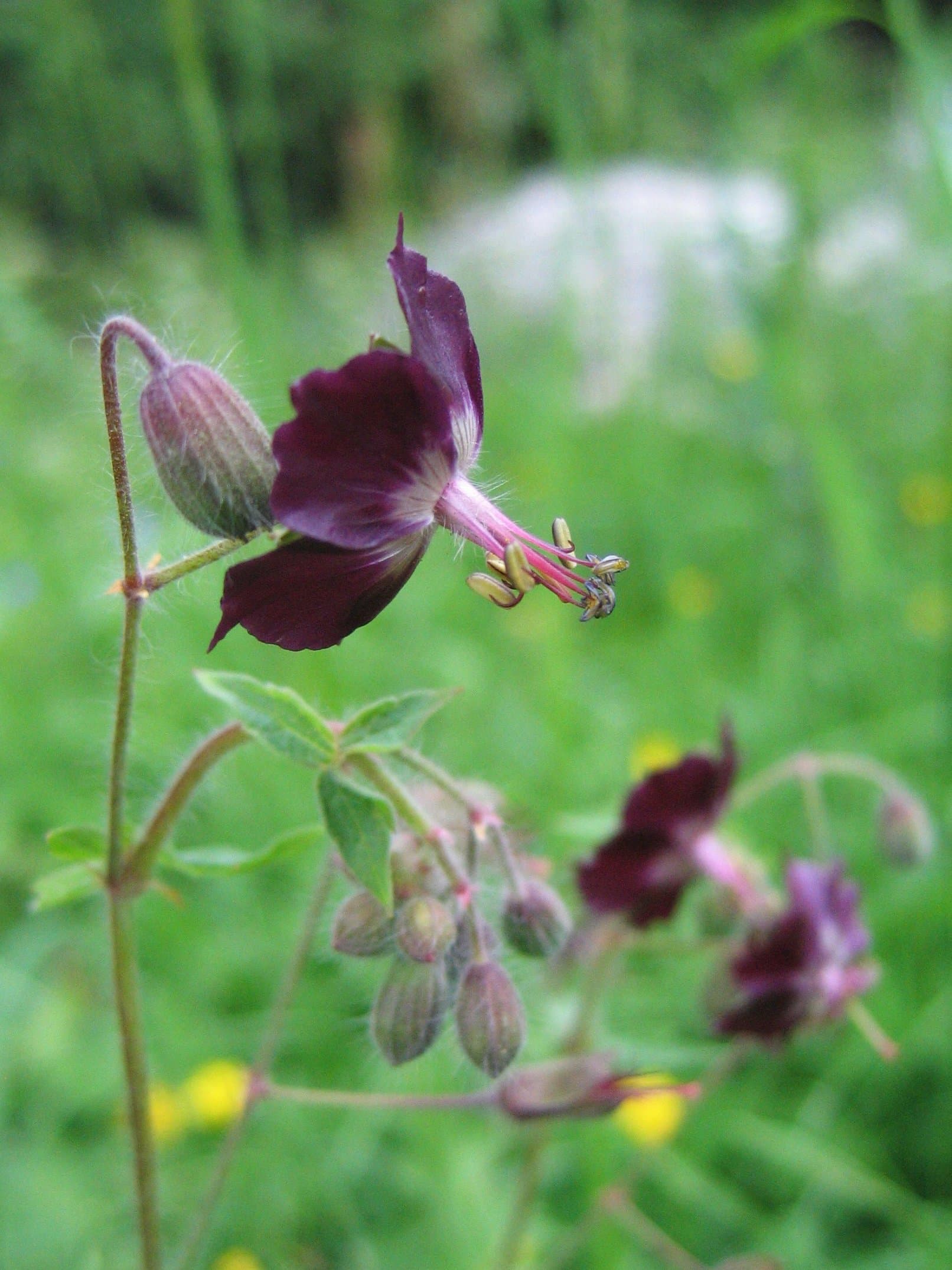
Dusky cranesbill
Geranium phaeum
Dutch: Ooievaarsbek (Geranium phaeum)
Ooievaarsbek (Geranium phaeum) (Geranium phaeum) is a perennial from the Geraniaceae family that grows up to 80cm tall. This plant thrives in partial shade to shade and requires low maintenance. Blooms in late spring and early summer with purple flowers and attracts bees and butterflies.
40–80 cm
40–60 cm
partial shade, full shade
moderate
loam, clay soil
low maintenance
late spring, early summer
purple
Ecologische waarde
Verzorgingskalender
| Taak | Jan | Feb | Mrt | Apr | Mei | Jun | Jul | Aug | Sep | Okt | Nov | Dec |
|---|---|---|---|---|---|---|---|---|---|---|---|---|
| 🌱Planten | ||||||||||||
| ✂️Snoeien | ||||||||||||
| 💧Bemesten |
Care tips
Planting
Geranium phaeum, commonly known as dusky cranesbill or mourning widow, thrives in partial to full shade, making it an excellent choice for woodland gardens, north-facing borders, or beneath deciduous trees. Plant in March, April, September, or October when the soil is workable and temperatures are mild. This hardy geranium prefers loam or clay soil that retains moisture without becoming waterlogged. Before planting, dig over the area to a spade's depth and incorporate well-rotted compost or leaf mould to improve soil structure and fertility, particularly if your soil is heavy clay. Space plants 45 cm apart to allow for their mature spread of 40–60 cm. Dig a planting hole slightly larger than the root ball, ensuring the crown of the plant sits at the same level it was growing in the pot—neither too deep nor proud of the soil surface. Firm the soil gently around the roots to eliminate air pockets, which can cause the roots to dry out. Water thoroughly immediately after planting to settle the soil and help roots establish. Apply a 5 cm layer of organic mulch such as composted bark or leaf mould around the base, keeping it clear of the crown to prevent rot. This mulch will suppress weeds, retain moisture, and gradually improve soil quality as it breaks down. Autumn planting allows roots to establish over winter, giving plants a head start in spring. Spring-planted geraniums will need more attentive watering during their first summer. Check new plants regularly during dry spells in their first growing season, watering when the top few centimetres of soil feel dry.
Pruning
Geranium phaeum requires minimal pruning, which is part of its appeal as a low-maintenance perennial. The main pruning task falls in July or August, after the main flush of late spring and early summer flowering has finished. At this point, cut back the entire plant to around 10–15 cm above ground level using sharp secateurs or garden shears. This encourages a fresh mound of attractive foliage and often stimulates a modest second flush of flowers in late summer or early autumn. If you prefer to keep the plant looking tidy throughout summer, you can deadhead spent flower stems individually as they fade, cutting back to just above a leaf node. However, this is not essential for the plant's health—Geranium phaeum will not become invasive through self-seeding in the way some other hardy geraniums can, and the seed heads are fairly inconspicuous. In late autumn or early spring, remove any tatty, frost-damaged, or yellowing foliage to keep the plant looking presentable and to reduce potential hiding places for pests. This is light tidying rather than formal pruning. Geranium phaeum is semi-evergreen in mild winters, so you may find healthy foliage persisting through the colder months, which can be left in place. Avoid cutting back too hard or too late in autumn, as this can remove the overwintering foliage that helps protect the crown. The July–August cutback is the key intervention, keeping your dusky cranesbill compact, healthy, and floriferous without demanding much of your time.
Maintenance
Geranium phaeum is a robust, low-maintenance perennial once established. Water moderately, keeping the soil evenly moist but not saturated. In spring and early summer, water during dry spells if rainfall is scarce, particularly if your plant is in a shadier spot where tree roots compete for moisture. By late summer and autumn, reduce watering frequency as the plant becomes dormant. Established plants are reasonably drought-tolerant but perform best with consistent moisture, especially in clay or loam soils that hold water well. Feed in March or April as new growth emerges. Apply a balanced granular fertiliser such as blood, fish and bone or a general-purpose slow-release feed, scattering a small handful around the base of each plant and lightly forking it into the soil surface. Avoid high-nitrogen feeds, which promote leafy growth at the expense of flowers. A spring mulch of garden compost or well-rotted manure will also provide gentle, sustained nutrition. Geranium phaeum is fully hardy in zones 4–8 and requires no special winter protection in temperate Europe. The crown will survive hard frosts, and semi-evergreen foliage often persists through mild winters. Simply clear away any damaged leaves in early spring. Pests and diseases are rarely a problem. Slugs and snails may nibble young foliage in spring, so check regularly and use organic controls if necessary. Vine weevil can occasionally attack the roots; if plants wilt unexpectedly, inspect for white grubs in the root zone. Powdery mildew can appear in very dry conditions, but good soil moisture and adequate spacing usually prevent this. Refresh mulch annually in spring to suppress weeds and conserve moisture.
More about this plant
Combines well with
Related guides
Dusky cranesbill in your garden design?
Make a free garden design with AI advice. Our AI knows Dusky cranesbill and 130+ other plants.
Start free design