Caring for Dwarf goat's beard
Complete guide — Aruncus aethusifolius
dwarf goat's beard needs low maintenance, a position in partial shade or full shade on loam / clay soil and moderate.
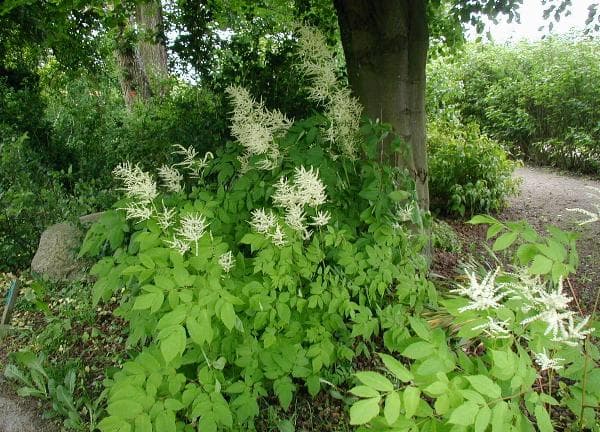
Position
partial shade, full shade
loam, clay soil
moderate
Feeding
Feed in March and April.
Year-round care
Aruncus aethusifolius is a reliably low-maintenance perennial once established. Water regularly during the first growing season to help roots settle in, especially in dry spells. After that, it tolerates short periods of drought thanks to its woodland origins, but performs best with consistent moisture. In summer, water deeply during prolonged dry weather—once a week is usually sufficient if there's no rain. Clay and loam soils retain moisture well, so avoid overwatering, which can lead to root rot. Feed in March or April as new growth emerges. A general-purpose granular fertiliser such as blood, fish and bone, or a balanced slow-release feed, scattered around the base and lightly worked into the soil, is ideal. A single spring feed is enough; this isn't a heavy feeder. Top up the mulch layer each spring with garden compost or leaf mould to suppress weeds, conserve moisture, and add organic matter as it breaks down. Aruncus aethusifolius is fully hardy in zones 4–8 and needs no winter protection in temperate Europe. The top growth dies back completely, and the plant re-emerges reliably each spring. Mulching helps insulate roots in colder winters, but it's not essential. Pests and diseases are rare. Slugs and snails may nibble young shoots in spring, so check regularly and use organic pellets, barriers, or hand-picking if damage occurs. Sawfly larvae occasionally feed on the foliage in summer, leaving skeletonised leaves; remove affected foliage and larvae by hand. Powdery mildew can appear in very dry conditions, but good soil moisture usually prevents it.


