When to plant Dwarf goat's beard?
Best month and method — Aruncus aethusifolius
Plant your dwarf goat's beard in March, April, September and October — the optimal month is usually September.
You're in the planting season right now — a good moment to start.
Spacing
35 cm
≈ 8 plants
For an X m² border, calculate: X × 8 plants.
Step by step: plant dwarf goat's beard
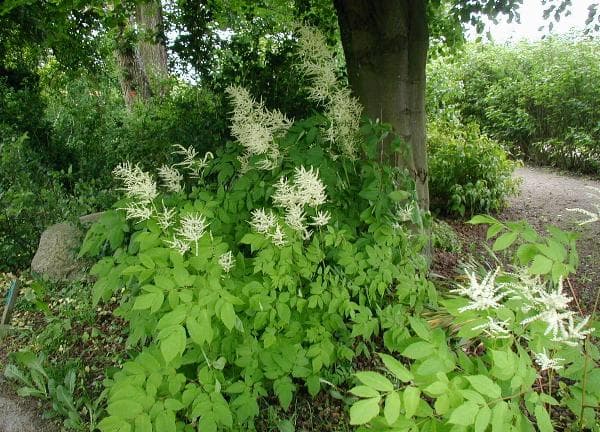
Aruncus aethusifolius, the dwarf goat's beard, thrives in partial to full shade, making it ideal for woodland gardens, shady borders, or the front of a shaded bed. It tolerates a range of soils but performs best in moisture-retentive loam or clay that doesn't dry out completely in summer. Avoid hot, dry spots or heavy sun, which will scorch the delicate foliage. Plant in March, April, September, or October when the soil is workable and temperatures are mild. Autumn planting gives roots time to establish before winter, while spring planting suits colder or wetter gardens. Prepare the site by digging in garden compost or well-rotted manure to improve moisture retention, especially if your soil is light or free-draining. Dig a planting hole slightly larger than the root ball and set the crown at the same level it was growing in the pot—burying it too deeply can lead to rot. Space plants 35 cm apart; this compact perennial will spread to 30–40 cm over time, forming neat, low clumps. Firm the soil gently around the roots to eliminate air pockets. Water thoroughly after planting to settle the soil and encourage root contact. Apply a 5 cm layer of organic mulch such as leaf mould, composted bark, or garden compost around the base, keeping it clear of the crown itself. This conserves moisture, suppresses weeds, and mimics the plant's natural woodland floor habitat. Keep the soil consistently moist for the first growing season while the roots establish, especially if planting in spring. Once settled, Aruncus aethusifolius is remarkably unfussy and drought-tolerant for a shade lover.


