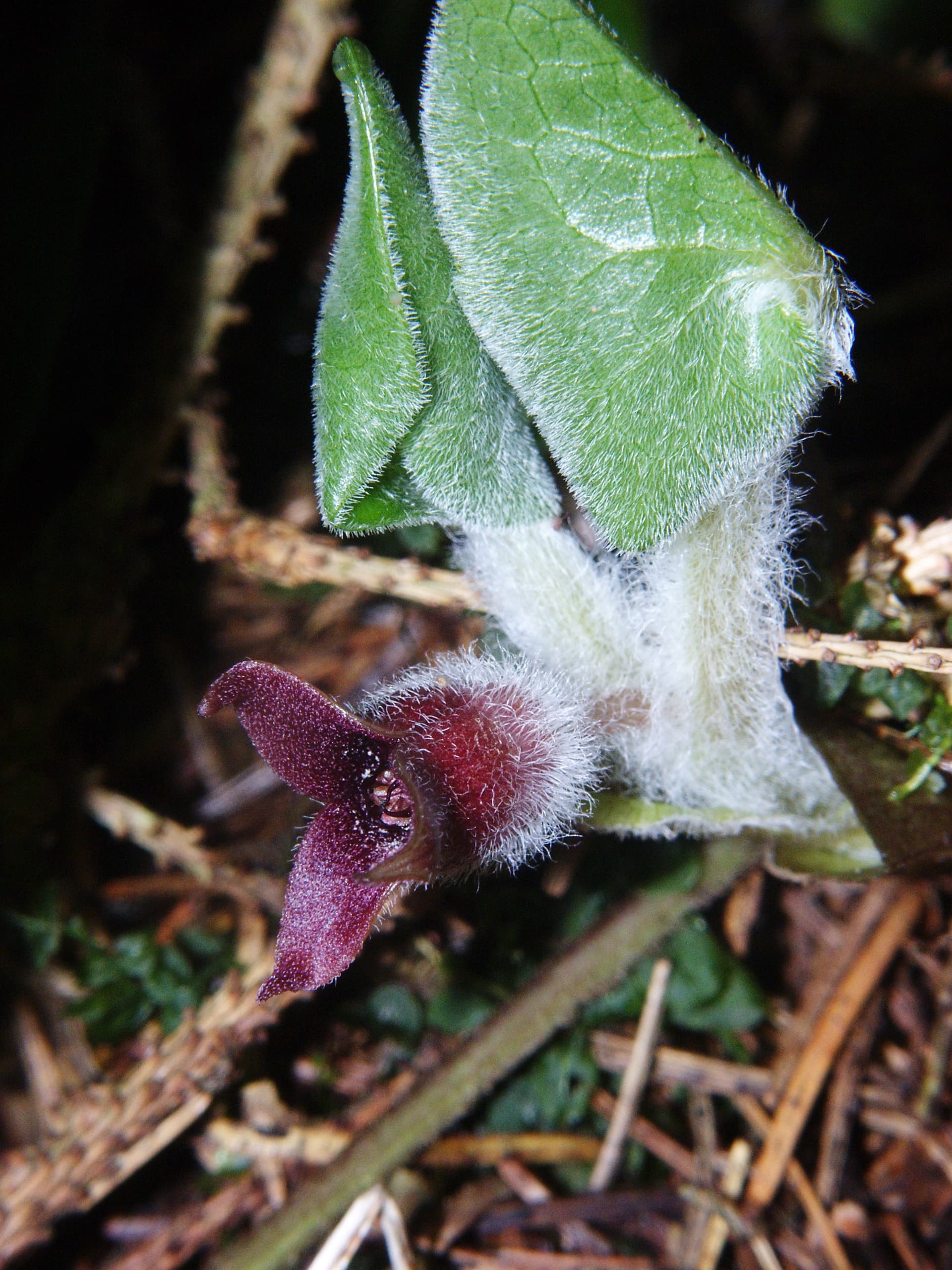
European wild ginger
Asarum europaeum
Dutch: Hazelwort
Hazelwort (Asarum europaeum) is a native to the Netherlands, evergreen perennial from the Aristolochiaceae family that grows up to 15cm tall. This plant thrives in shade to partial shade and requires low maintenance. Blooms in early spring and spring with purple flowers.
10–15 cm
20–40 cm
full shade, partial shade
moderate
loam, clay soil
low maintenance
early spring, spring
purple
Verzorgingskalender
| Taak | Jan | Feb | Mrt | Apr | Mei | Jun | Jul | Aug | Sep | Okt | Nov | Dec |
|---|---|---|---|---|---|---|---|---|---|---|---|---|
| 🌱Planten | ||||||||||||
| 💧Bemesten |
Care tips
Planting
Hazelwort thrives in full or partial shade, making it an excellent ground cover for the darkest corners of the garden where little else will grow. It prefers loam or clay soil that retains moisture without becoming waterlogged. Before planting, work in plenty of organic matter—leaf mould or well-rotted compost—to improve soil structure and moisture retention, particularly if your soil is heavy clay that tends to bake hard in summer. Plant hazelwort in March, April, September, or October when the soil is workable and temperatures are mild. Autumn planting is often ideal because the cooler, damper conditions help plants establish without stress. Space plants 25 cm apart to allow for their eventual spread of 20–40 cm; they will knit together over time to form a dense, evergreen carpet. Dig a planting hole slightly larger than the root ball and set each plant at the same depth it was growing in its pot—hazelwort has shallow, creeping rhizomes that should sit just below the soil surface. Firm the soil gently around the roots to eliminate air pockets, then water thoroughly to settle the plants in. After planting, apply a 3–5 cm layer of leaf mould or composted bark as mulch. This conserves moisture, suppresses weeds, and mimics the woodland floor conditions hazelwort enjoys in the wild. Keep the soil consistently moist for the first growing season while the plants establish their root systems. Hazelwort is slow to spread initially but will reward patience with glossy, kidney-shaped foliage that remains attractive year-round.
Pruning
Hazelwort requires no routine pruning. Its low, mat-forming habit and evergreen foliage mean there are no stems to cut back and no seasonal die-back to tidy. The plant naturally maintains a neat, ground-hugging profile of around 10–15 cm, and interference is generally unnecessary and often counterproductive. What hazelwort does benefit from is occasional grooming rather than pruning. In late winter or very early spring—before the small, bell-shaped purple flowers appear at ground level—check over the foliage and remove any leaves that have been damaged by winter weather, slugs, or foot traffic. Simply snip off tatty or browned leaves at the base with secateurs or pull them away gently by hand. This tidying keeps the planting looking fresh and allows you to spot the curious, ground-level flowers more easily when they emerge in early spring. If your hazelwort patch becomes too dense or starts to encroach beyond its allotted space, you can lift and divide clumps in early autumn or spring. Use a sharp spade to slice through the rhizomes, then replant divisions elsewhere or discard excess growth. This is more about managing spread than true pruning, but it's the main intervention the plant will ever need. Resist the temptation to shear or trim hazelwort as you might other ground covers. Its glossy, rounded leaves are its chief ornamental feature, and heavy-handed cutting will leave it looking bruised and sparse. A light touch—or better still, benign neglect—is the best approach for this undemanding woodland native.
Maintenance
Hazelwort is a low-maintenance perennial once established, but it does appreciate consistent moisture. Water regularly during dry spells in spring and summer, particularly in the first year. The moderate water need means the soil should stay evenly moist but never sodden; hazelwort tolerates clay soil well but will sulk if roots sit in standing water. In shaded positions moisture is usually retained naturally, so you'll rarely need to water except during prolonged drought. Feed lightly in March or April with a general-purpose granular fertiliser scattered around the base of the plants, or top-dress with a 2–3 cm layer of leaf mould or well-rotted compost. Hazelwort is a woodland plant adapted to lean soils enriched slowly by leaf litter, so avoid high-nitrogen feeds that promote soft, lush growth at the expense of the plant's natural hardiness and compact habit. Overwintering is straightforward: hazelwort is fully hardy to zone 4 and its evergreen leaves remain glossy through winter. No protection is needed, though a mulch of leaf mould in autumn helps insulate roots and replenishes organic matter. Pests and diseases are rare. Slugs and snails occasionally nibble the foliage, especially on young plants in damp shade, so use organic slug pellets or barriers if damage becomes unsightly. Vine weevil larvae can attack the rhizomes in container-grown specimens, though this is uncommon in open ground. Refresh mulch annually in autumn to suppress weeds and maintain soil moisture. Hazelwort spreads slowly via rhizomes and will eventually form a weed-proof mat, but patience is required—this is not a plant for instant ground cover.
More about this plant
Combines well with
Related guides
European wild ginger in your garden design?
Make a free garden design with AI advice. Our AI knows European wild ginger and 130+ other plants.
Start free design