Growing Feather Reed Grass in a pot
For balcony, patio or terrace — Calamagrostis × acutiflora 'Karl Foerster'
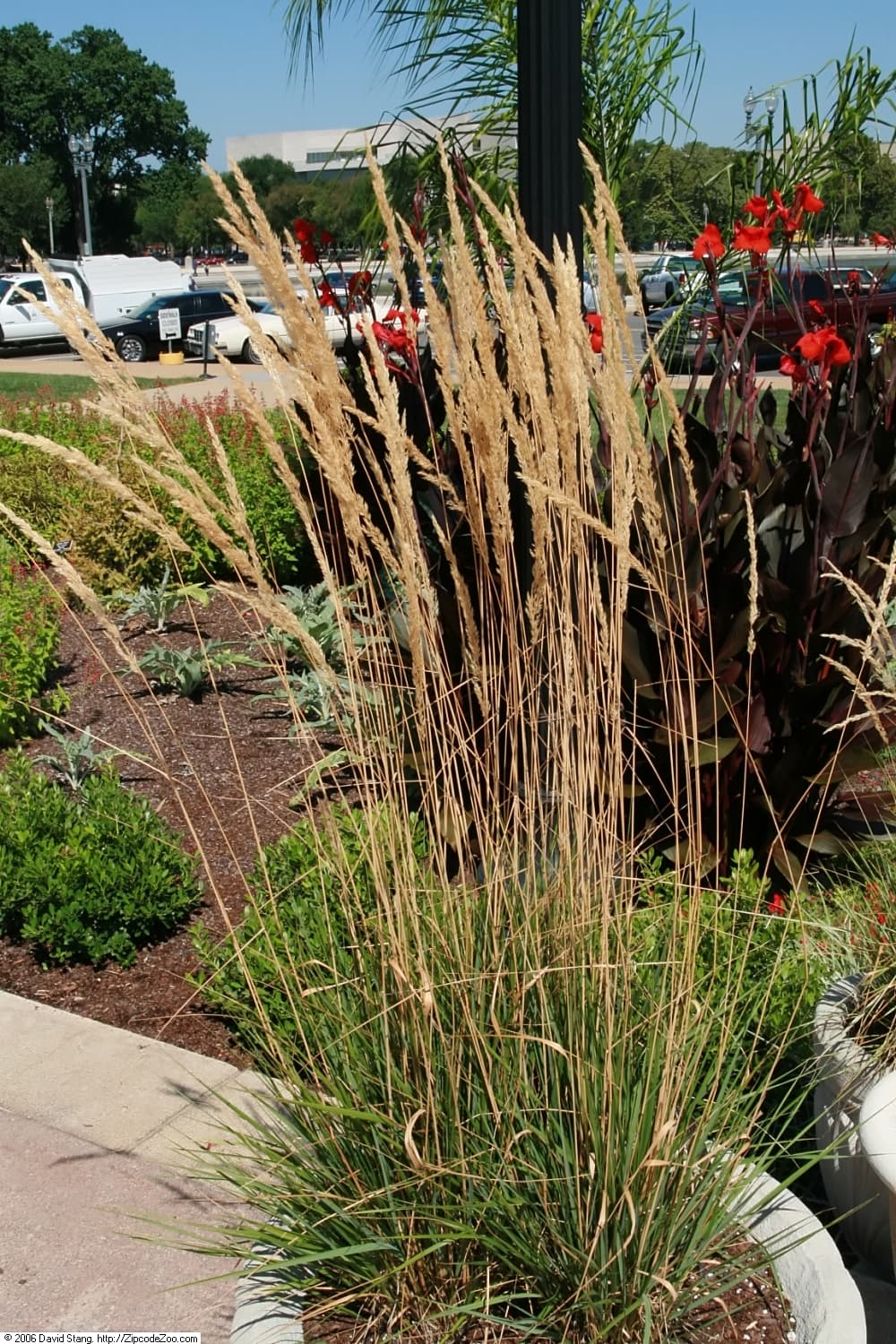
feather Reed Grass grows well in a pot of at least Ø 35 cm (34 L capacity), in a position with full sun or partial shade. Watering: every 2 days in summer, once every 2 weeks in winter.
Which pot?
Ø 35 cm
~ 34 L potting soil
Give the plant room with a pot slightly wider than the current rootball, with matching depth.
Watering
every 2 days
once every 2 weeks
Always use a pot with drainage holes. Water dries out faster in pots — or the plant drowns. Check weekly with your finger: only water when the top 2 cm of soil is dry.
Pot care
Feather reed grass is low-maintenance once established. Water regularly during the first growing season to help roots settle in, especially in dry spells. After that, it has moderate water needs and tolerates short periods of drought, though growth and flowering are better with consistent moisture during summer. In very dry summers, water deeply every couple of weeks rather than little and often. Avoid overwatering; this grass dislikes sitting in wet soil, particularly in winter. Feed once a year in April with a balanced general-purpose fertiliser or a slow-release granular feed scattered around the base of the clump. A light dressing of garden compost or well-rotted manure in spring also works well. Avoid high-nitrogen feeds, which can cause lush, floppy growth that's prone to flopping. 'Karl Foerster' is naturally upright and self-supporting, but overfed plants may lose this tidy habit. This grass is fully hardy to zone 4a, so overwintering in temperate Europe is straightforward. Leave the foliage standing until March; it needs no protection. Mulch lightly around the base in autumn if you wish, but keep mulch away from the crown to prevent rot. Pests and diseases are rare. Occasionally, rust (orange or brown pustules on leaves) can appear in humid conditions, but it's seldom serious—remove affected foliage and ensure good air circulation. Slugs and snails generally ignore the tough foliage. Clumps remain vigorous for years without division, though you can lift and divide in spring if they become congested or you want more plants.
Pot-specific tip: add slow-release fertiliser pellets in March — potting soil exhausts much faster than open ground.


