Fingerleaf rodgersia in April: monthly care
Month-by-month care — Rodgersia aesculifolia
In April your fingerleaf rodgersia needs attention: plant / sow and fertilise.
- Plant / sow
- Fertilise
What to do this April
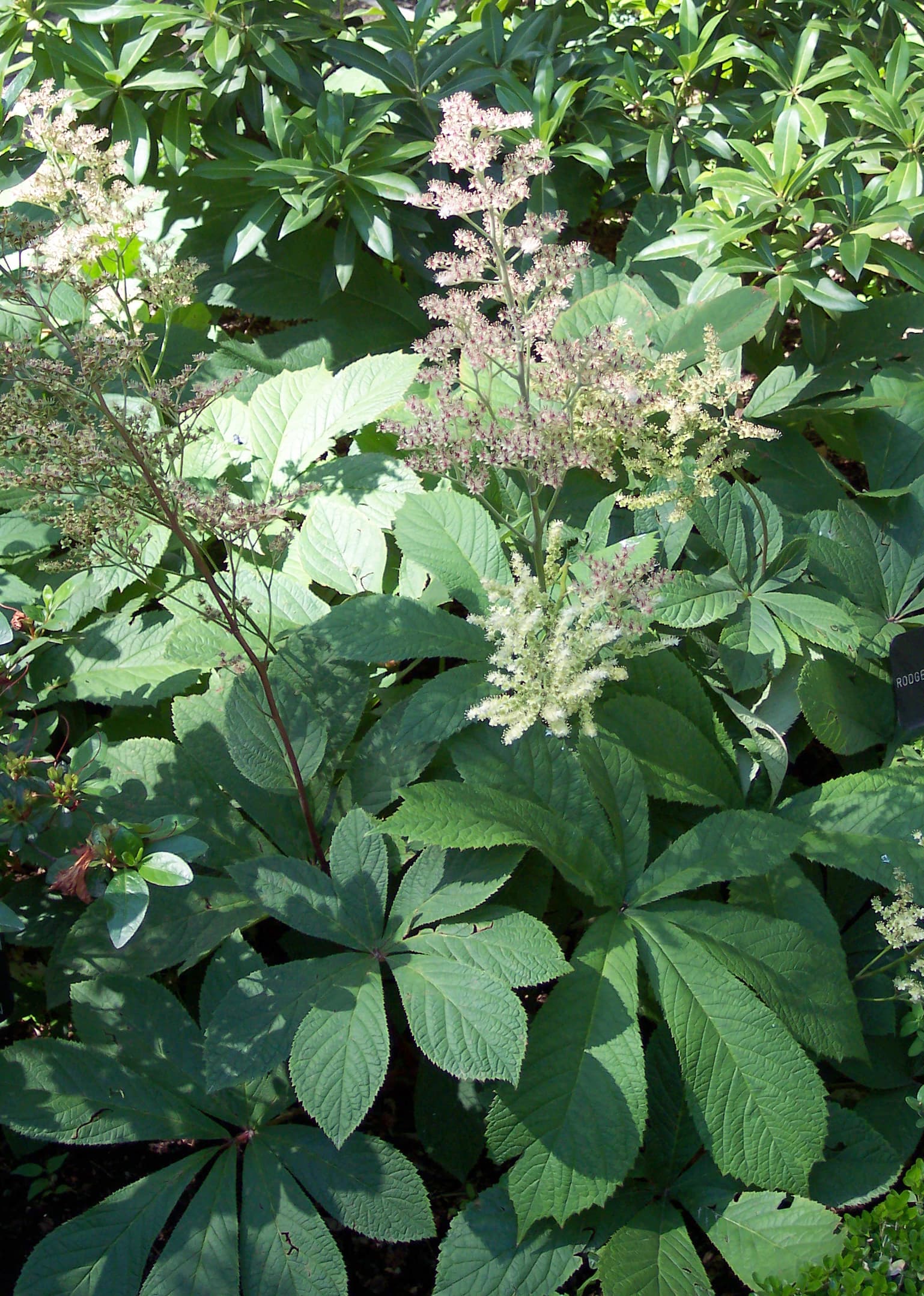
Rodgersia aesculifolia thrives in partial to full shade, making it ideal for woodland gardens, shady borders, or alongside ponds and streams. It will not tolerate hot, dry conditions or full sun, which scorches the bold, horse-chestnut-like foliage. Plant in March, April or May for spring establishment, or in September and October when autumn rains support root development. Choose a site with moisture-retentive soil. Rodgersia performs best in loam, clay or peat-based soils that hold water well but don't become waterlogged. Before planting, dig in plenty of organic matter—well-rotted compost, leaf mould or composted bark—to improve structure and moisture retention, especially if your soil is on the lighter side. Space plants 80 cm apart to allow for their substantial spread of 75–100 cm at maturity. Dig a planting hole roughly twice the width of the root ball and about the same depth. Position the crown so it sits level with the surrounding soil surface; planting too deep can lead to rot, while too shallow risks frost damage to the rhizomes. After planting, water thoroughly to settle the soil around the roots and eliminate air pockets. Apply a 5–8 cm layer of organic mulch—bark chips, leaf mould or garden compost—around the base, keeping it clear of the crown itself. This mulch conserves moisture, suppresses weeds and insulates the roots. Keep the soil consistently moist through the first growing season, watering during dry spells to help the plant establish a strong root system. Rodgersia is a long-lived perennial that will reward patience with dramatic foliage and elegant plumes of white flowers in early summer.
Rodgersia aesculifolia has high water needs and will not tolerate drought. Keep the soil consistently moist from spring through autumn, watering deeply during dry spells—especially in late spring and summer when the large leaves transpire heavily. In hot weather, check soil moisture twice a week and water generously if the top few centimetres feel dry. Plants growing in sunnier spots or free-draining soil need even more attention. Reduce watering in autumn as growth slows, but never let the roots dry out completely, even in winter. Feed in April and May to fuel the flush of foliage and flower stems. Apply a balanced slow-release granular fertiliser (such as blood, fish and bone or a general-purpose NPK) around the base of the plant, or use a liquid feed every three to four weeks during this period. Avoid high-nitrogen feeds later in summer, which promote soft growth vulnerable to frost. Mulch annually in late autumn or early spring with a 5 cm layer of organic matter—leaf mould, garden compost or well-rotted manure. This conserves moisture, suppresses weeds and enriches the soil as it breaks down, all of which suit rodgersia's woodland origins. Rodgersia is hardy in zones 5–8 and needs no special winter protection in temperate Europe, though a mulch layer insulates the rhizomes during hard frosts. The main pest is slugs and snails, which relish the emerging shoots in spring; use organic pellets, barriers or night-time patrols to protect new growth. Vine weevil larvae occasionally attack the rhizomes in containers. Rodgersia is generally disease-free, but prolonged wet conditions and poor air circulation can encourage leaf spot or crown rot—ensure good drainage and avoid overcrowding.