Fingerleaf rodgersia in November: monthly care
Month-by-month care — Rodgersia aesculifolia
In November your fingerleaf rodgersia needs attention: prune.
- Prune
What to do this November
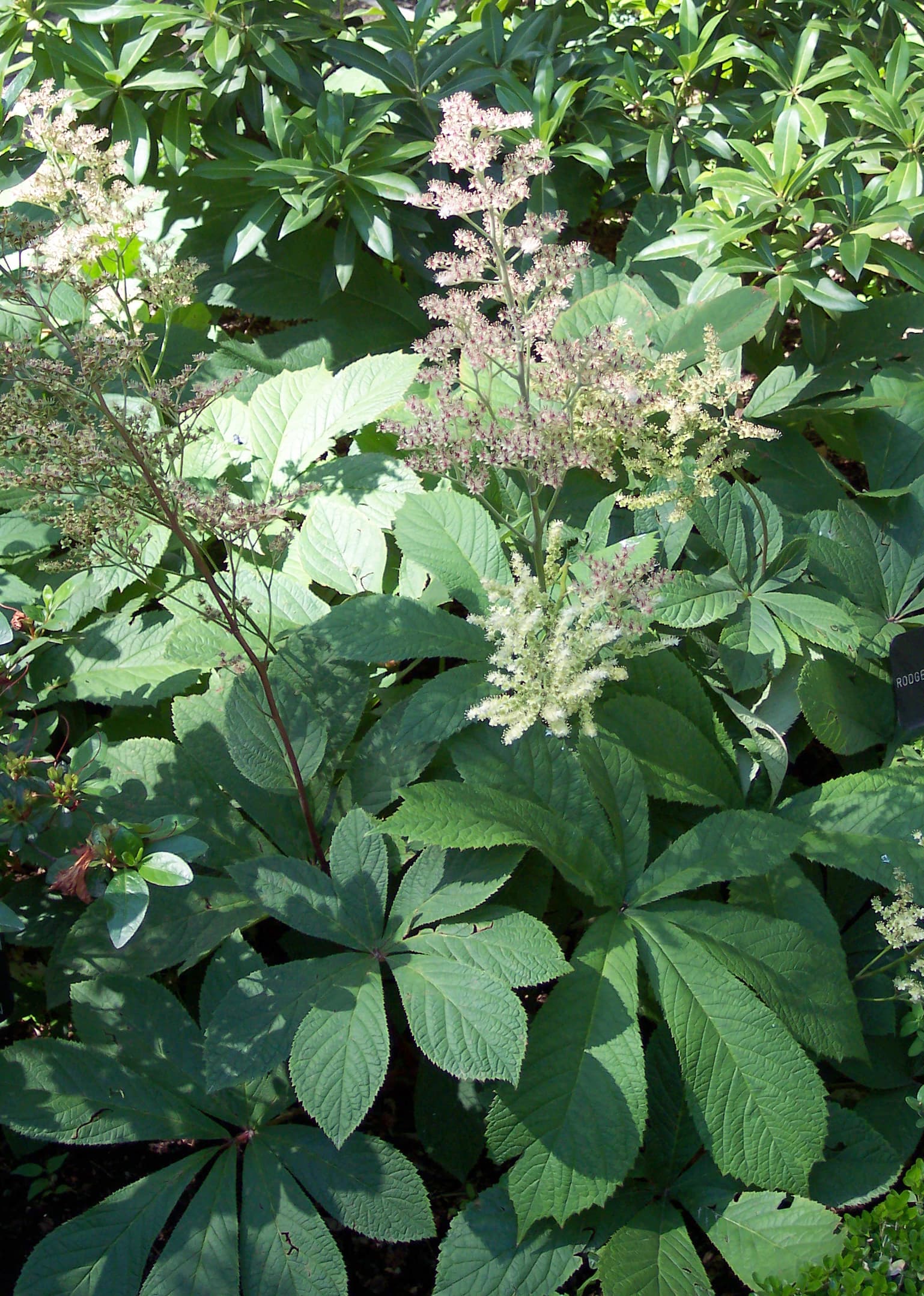
Rodgersia aesculifolia requires minimal pruning, but a couple of seasonal tidy-ups keep the plant looking its best and support vigorous growth. The main pruning windows are March and November, each serving a different purpose. In November, after the first frosts have blackened the foliage, cut back the spent flower stems and dying leaves to ground level. This autumn tidy prevents the soggy, decaying foliage from harbouring slugs and fungal diseases over winter. Use secateurs or a sharp knife to remove all top growth cleanly, leaving the crown and rhizomes protected by a fresh layer of mulch. If your garden is particularly exposed or you're in a colder pocket of zone 7, you can leave some of the dead foliage in place as natural insulation, then remove it in early spring instead. March is the ideal time for a final clear-up if you left foliage over winter, and to remove any remaining dead or damaged material before new growth emerges. Cut away old stems at the base, taking care not to damage the emerging shoots, which can be surprisingly brittle. This is also the moment to divide congested clumps if the plant has outgrown its space or flowering has declined—lift the rhizome carefully with a fork, split it into sections with at least one strong bud per piece, and replant immediately. Rodgersia does not need deadheading to prolong flowering, but you can remove spent flower spikes in late summer if you prefer a tidier appearance. The seed heads have some architectural interest, however, so many gardeners leave them standing until the November cut-back.