Flat sea holly 'Blue Hobbit' in April: monthly care
Month-by-month care — Eryngium planum 'Blue Hobbit'
In April your flat sea holly 'Blue Hobbit' needs attention: plant / sow and fertilise.
- Plant / sow
- Fertilise
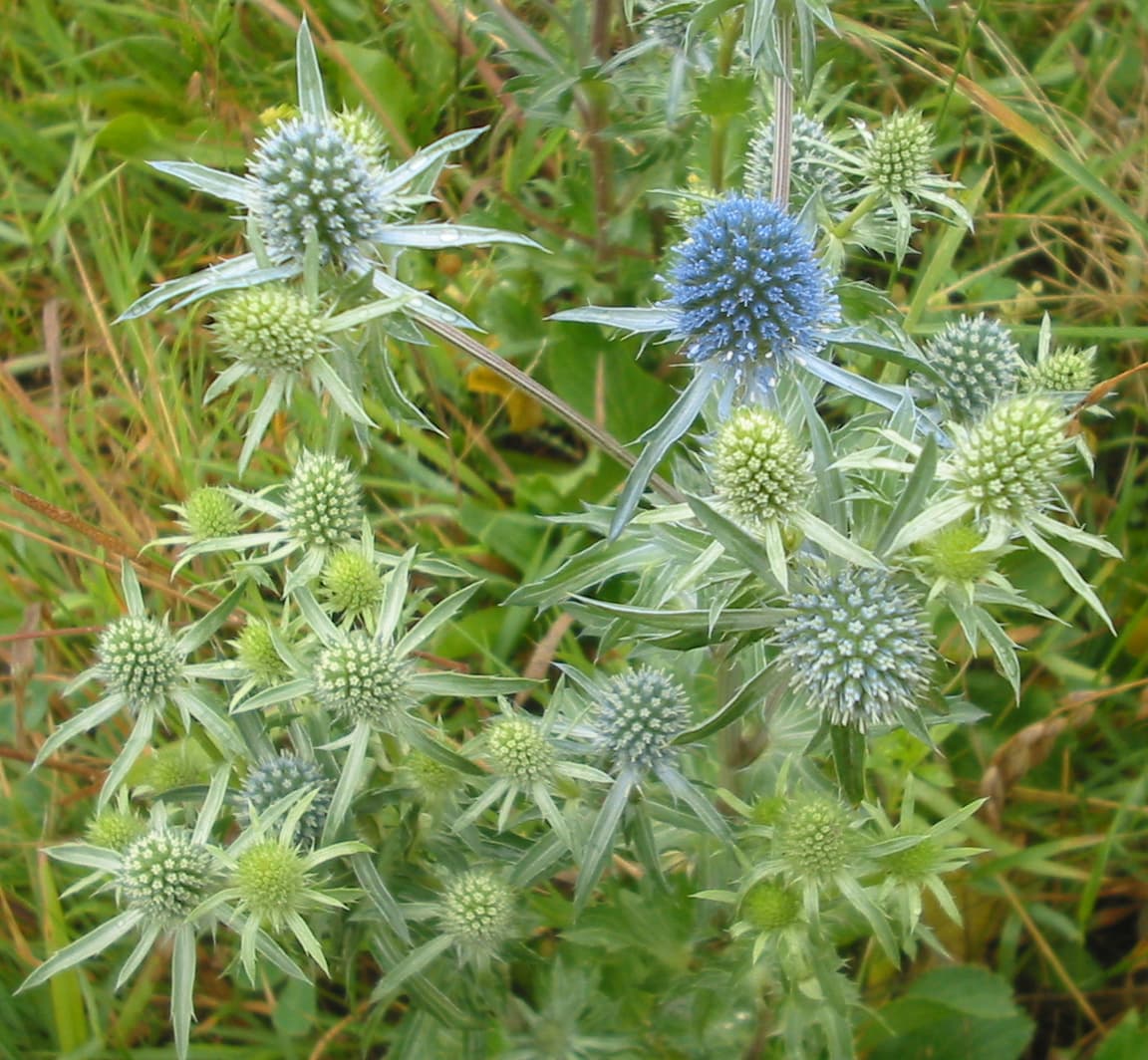
What to do this April
Eryngium planum 'Blue Hobbit' thrives in full sun and free-draining soil, making it ideal for gravel gardens, sunny borders, and Mediterranean-style plantings. It tolerates sandy, loamy, and chalky soils but abhors waterlogged conditions, so avoid heavy clay unless you improve drainage substantially. If your soil is prone to sitting wet, dig in plenty of grit or coarse sand before planting. Plant 'Blue Hobbit' in March, April, or May for establishment before summer, or in September and October when soil is still warm and autumn rains help roots settle in. Space plants 30 cm apart to allow for their compact spread of 25–35 cm. Dig a hole slightly larger than the root ball, set the crown at soil level—never bury it deeply—and backfill with the excavated soil mixed with a handful of grit if drainage is questionable. Water thoroughly immediately after planting to settle roots and eliminate air pockets, but thereafter be sparing. This eryngium is drought-tolerant once established and resents constant moisture. A thin mulch of gravel or fine grit around the crown improves drainage, suppresses weeds, and suits the plant's preference for sharp conditions. Avoid organic mulches like bark or compost, which retain too much moisture and can encourage crown rot. Staking is unnecessary; 'Blue Hobbit' is a sturdy, compact cultivar that stands well even in exposed sites. If planting in autumn, avoid feeding until the following spring to prevent soft growth before winter.
Once established, Eryngium planum 'Blue Hobbit' is exceptionally low-maintenance and thrives on neglect. Water only during prolonged dry spells in the first growing season to help roots establish; thereafter it tolerates drought admirably and needs no supplementary watering in most years. Overwatering or poorly drained soil is the main killer, so err on the dry side. Feed sparingly. In April or May, scatter a light dressing of general-purpose granular fertiliser (such as blood, fish and bone) around the base, or apply a single handful of slow-release pellets. Avoid high-nitrogen feeds, which produce lush foliage at the expense of flowers and reduce winter hardiness. On fertile soils, feeding may be unnecessary altogether; eryngiums perform well in lean conditions and can become floppy if overfed. 'Blue Hobbit' is fully hardy in zones 4–9 and requires no winter protection in temperate Europe. The crown is tough, but good drainage is critical during wet winters. If your soil is heavy, a top-dressing of grit around the crown in autumn helps prevent waterlogging and rot. Pests are rarely a problem. Slugs and snails occasionally nibble emerging shoots in spring; inspect regularly and remove by hand or use organic pellets if damage is severe. Powdery mildew can appear on foliage in hot, dry summers but seldom affects flowering; improve air circulation by spacing plants properly and avoid overhead watering. Aphids sometimes cluster on flower stems but are easily hosed off. Root rot is the only serious threat, caused by poor drainage rather than disease. Mulch lightly with gravel, not organic matter, to keep the crown dry and discourage fungal issues.