Flat sea holly 'Blue Hobbit' in March: monthly care
Month-by-month care — Eryngium planum 'Blue Hobbit'
In March your flat sea holly 'Blue Hobbit' needs attention: plant / sow and prune.
- Plant / sow
- Prune
What to do this March
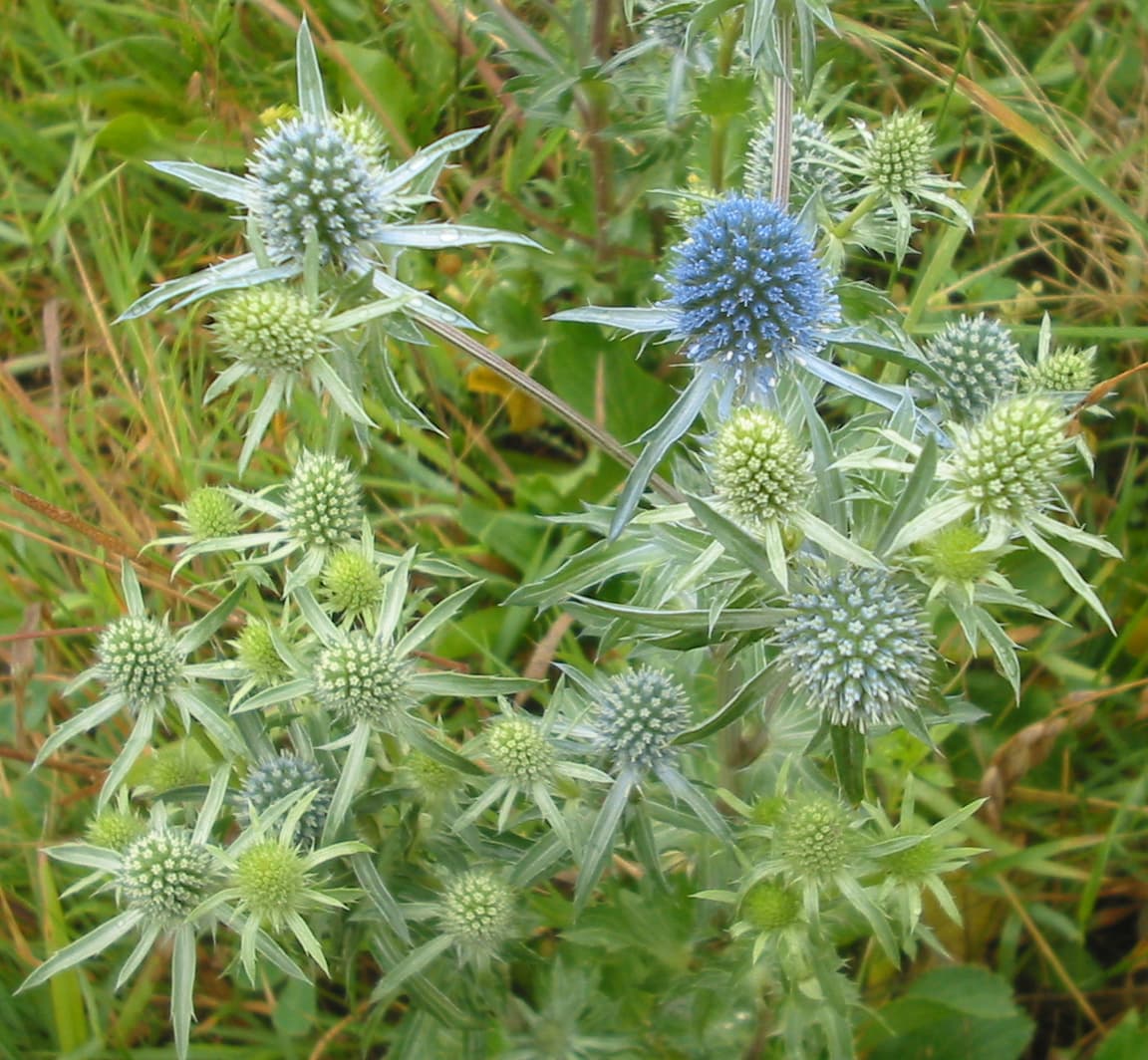
Eryngium planum 'Blue Hobbit' thrives in full sun and free-draining soil, making it ideal for gravel gardens, sunny borders, and Mediterranean-style plantings. It tolerates sandy, loamy, and chalky soils but abhors waterlogged conditions, so avoid heavy clay unless you improve drainage substantially. If your soil is prone to sitting wet, dig in plenty of grit or coarse sand before planting. Plant 'Blue Hobbit' in March, April, or May for establishment before summer, or in September and October when soil is still warm and autumn rains help roots settle in. Space plants 30 cm apart to allow for their compact spread of 25–35 cm. Dig a hole slightly larger than the root ball, set the crown at soil level—never bury it deeply—and backfill with the excavated soil mixed with a handful of grit if drainage is questionable. Water thoroughly immediately after planting to settle roots and eliminate air pockets, but thereafter be sparing. This eryngium is drought-tolerant once established and resents constant moisture. A thin mulch of gravel or fine grit around the crown improves drainage, suppresses weeds, and suits the plant's preference for sharp conditions. Avoid organic mulches like bark or compost, which retain too much moisture and can encourage crown rot. Staking is unnecessary; 'Blue Hobbit' is a sturdy, compact cultivar that stands well even in exposed sites. If planting in autumn, avoid feeding until the following spring to prevent soft growth before winter.
Eryngium planum 'Blue Hobbit' requires minimal pruning, but a tidy-up at the right time keeps plants healthy and looking their best. The main pruning window is March or November, and your choice depends on your garden style and local conditions. Many gardeners prefer to leave the steely blue flower heads standing through autumn and winter. They hold their structure well, look striking when rimed with frost, and provide seed for finches. If you take this approach, cut back all dead stems to ground level in March, just as new basal growth begins to emerge. Use secateurs or hand shears and remove everything down to a few centimetres above the crown. This prevents old foliage smothering fresh shoots and reduces hiding places for slugs. Alternatively, cut back in November after flowering finishes and foliage begins to collapse. This is sensible in mild, wet winters where decaying stems can encourage fungal problems or slug damage to the crown. Again, cut right down to the base, leaving the crown clean. Deadheading during the flowering season is optional. Removing spent stems encourages a few extra side shoots, but 'Blue Hobbit' flowers reliably without it, and the faded heads remain ornamental. If self-seeding is unwanted—though eryngiums are rarely invasive—snip off flower heads before seed ripens in late summer. No other pruning is needed. Eryngiums grow from a central crown and don't produce woody stems or require shaping. Simply clear away old top growth annually and the plant will regenerate reliably each spring.