Flat sea holly in November: monthly care
Month-by-month care — Eryngium planum
In November your flat sea holly needs attention: prune.
- Prune
What to do this November
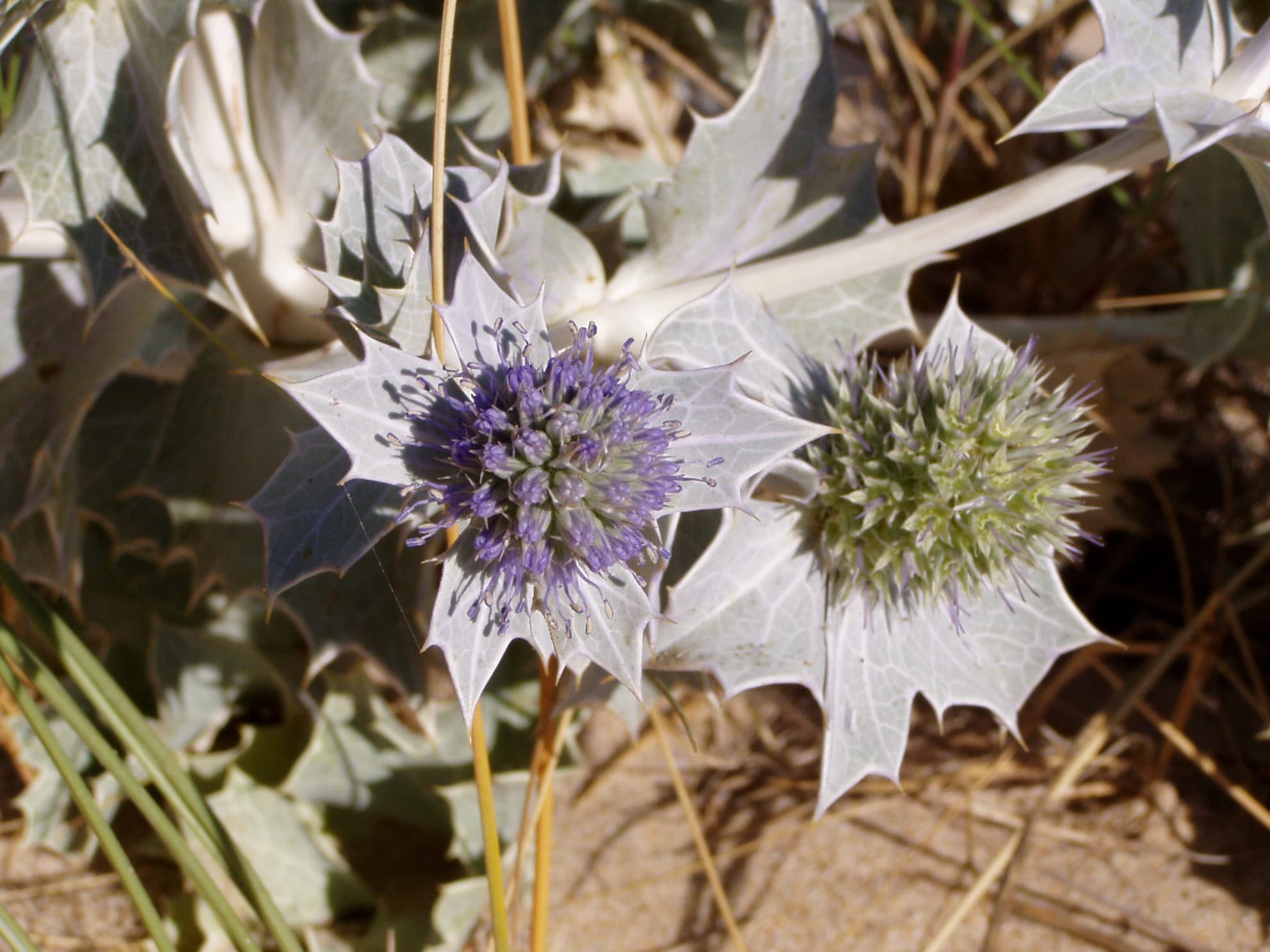
Eryngium planum requires very little pruning, and many gardeners leave the skeletal flower heads standing through winter for their architectural interest and value to seed-eating birds. The steely blue bracts and stems fade to attractive tawny browns that catch frost and look striking in low winter light. If you prefer a tidier appearance or want to prevent self-seeding, cut back the spent flower stems in November after flowering finishes. Use secateurs or hedge shears to remove the stems down to the basal rosette of leaves at ground level. This autumn tidy-up also reduces the risk of fungal diseases overwintering on dead foliage, though Eryngium planum is generally robust. Alternatively, delay pruning until March, just as new growth begins to emerge. This timing protects the crown through winter and provides habitat for overwintering insects. In early spring, cut away all the old brown stems and any tatty or frost-damaged basal leaves to make way for fresh foliage. Be careful not to damage the emerging shoots, which appear as spiny rosettes from the centre of the plant. Eryngium planum does not require deadheading during the flowering season unless you specifically want to prevent seed formation. The flowers are long-lasting and retain their colour well into late summer, so there's no need for regular maintenance cuts. The plant's natural habit is neat and clump-forming, and it does not spread aggressively or require division to maintain vigour. In fact, because of its deep taproot, division is difficult and often unsuccessful, so pruning remains a simple, once-yearly task at most.