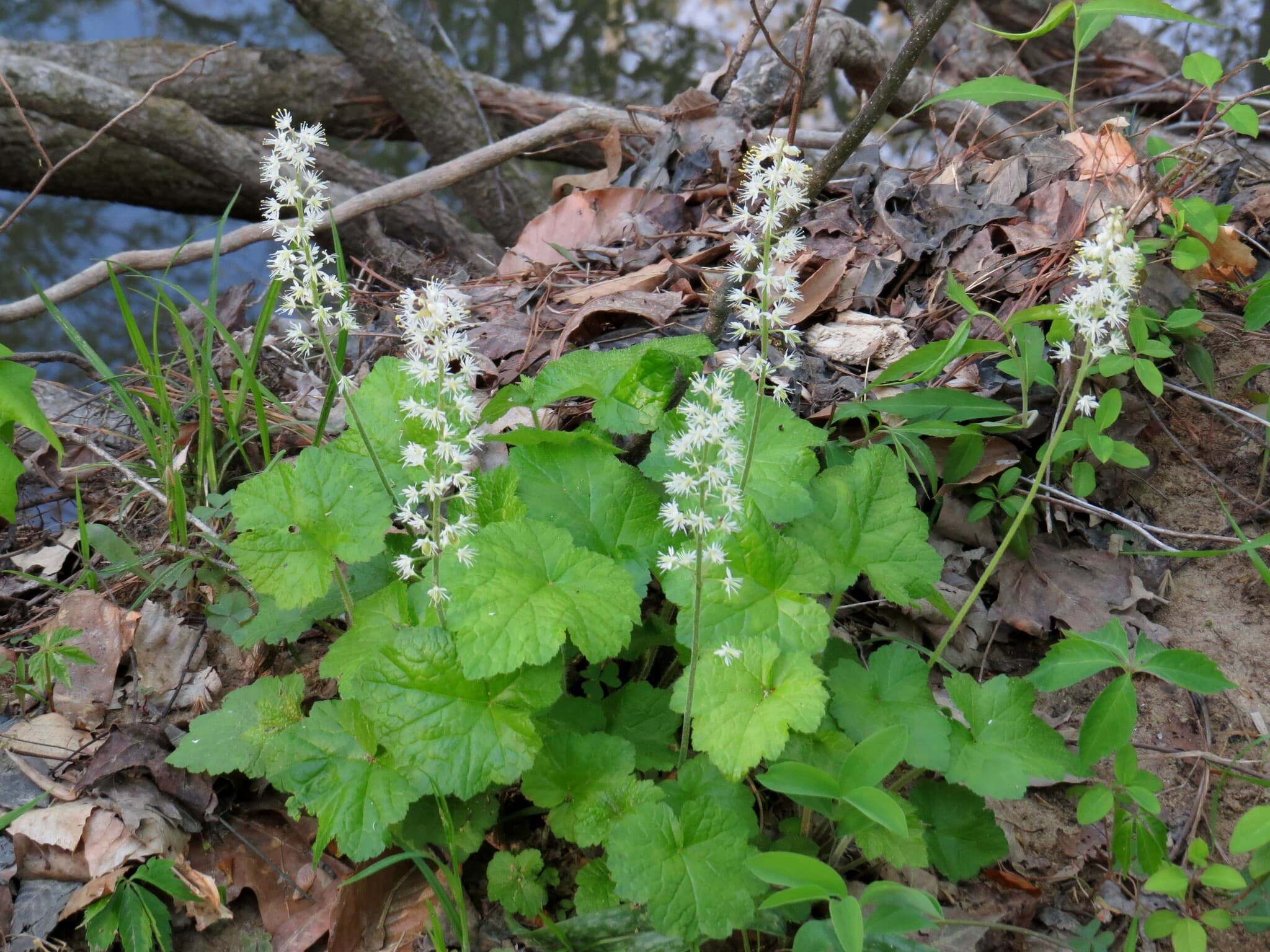
Foamflower 'Iron Butterfly'
Tiarella 'Iron Butterfly'
Dutch: Schuimbloem 'Iron Butterfly'
Schuimbloem 'Iron Butterfly' (Tiarella 'Iron Butterfly') is a evergreen perennial from the Saxifragaceae family that grows up to 30cm tall. This plant thrives in partial shade to shade and requires low maintenance. Blooms in spring and late spring with pink flowers and attracts bees.
20–30 cm
25–35 cm
partial shade, full shade
moderate
loam, peat soil
low maintenance
spring, late spring
pink
Ecologische waarde
Verzorgingskalender
| Taak | Jan | Feb | Mrt | Apr | Mei | Jun | Jul | Aug | Sep | Okt | Nov | Dec |
|---|---|---|---|---|---|---|---|---|---|---|---|---|
| 🌱Planten | ||||||||||||
| ✂️Snoeien | ||||||||||||
| 💧Bemesten |
Care tips
Planting
Tiarella 'Iron Butterfly' thrives in partial to full shade, making it ideal for woodland gardens, shaded borders, or beneath deciduous trees and shrubs. It dislikes hot, dry conditions and direct sun, which can scorch its attractive foliage. Choose a spot that remains cool and sheltered, particularly during summer. The soil should be moisture-retentive but well-drained, rich in organic matter. Loam or peat-based soils are ideal. Before planting, dig over the area and incorporate plenty of well-rotted compost or leaf mould to improve structure and fertility. If your soil is heavy clay, add grit or sharp sand to improve drainage; if it's sandy, work in extra organic matter to help retain moisture. Plant in March, April, September, or October when the soil is workable and temperatures are mild. Dig a hole slightly larger than the root ball, ensuring the crown of the plant sits level with the surrounding soil surface—planting too deep can lead to rot. Space plants 30 cm apart to allow for their eventual spread of 25–35 cm. After planting, water thoroughly to settle the soil around the roots and eliminate air pockets. Apply a 5 cm layer of organic mulch such as leaf mould, composted bark, or well-rotted compost around the base, keeping it clear of the crown itself. This mulch conserves moisture, suppresses weeds, and mimics the plant's natural woodland habitat. Keep the soil consistently moist during the first growing season to help the plant establish a strong root system.
Pruning
Tiarella 'Iron Butterfly' is evergreen and requires very little pruning in the traditional sense. Its deeply lobed, decorative foliage remains attractive throughout the year, and the plant naturally maintains a neat, compact habit without intervention. However, some light tidying in early spring will keep it looking its best. In March or April, before new growth begins in earnest, remove any foliage that has been damaged, browned, or tattered over winter. Use clean, sharp secateurs or simply pinch off tired leaves by hand at the base of the stem. This tidying allows light and air to reach the crown and makes way for fresh, vibrant foliage. Even though the plant is evergreen, older leaves naturally decline, and removing them improves overall appearance. After flowering finishes in late spring, deadhead the spent flower spikes by cutting them back to the base. While this isn't strictly necessary for the plant's health, it keeps the clump tidy and prevents energy being wasted on seed production, encouraging the foliage to remain the focal point. Simply snip the flowering stems close to the crown with secateurs. Every three to four years, if the clump becomes congested or flowering diminishes, you can lift and divide the plant in early spring. This rejuvenates vigour rather than being a pruning task, but it's the main intervention an established tiarella will need. Otherwise, this is a genuinely low-maintenance perennial that rewards you with minimal fuss.
Maintenance
Tiarella 'Iron Butterfly' has moderate water needs and prefers consistently moist soil, particularly during the growing season. Water regularly from spring through summer, especially during dry spells, as the shallow root system can suffer if allowed to dry out completely. In autumn and winter, natural rainfall is usually sufficient, but check occasionally during prolonged dry periods. Avoid waterlogging, which can cause crown rot, particularly in heavy soils. Feed in March and April as new growth emerges. Apply a balanced, slow-release granular fertiliser around the base of the plant, or use a top-dressing of well-rotted compost or leaf mould. This gentle feeding supports healthy foliage and flowering without encouraging excessive soft growth. Avoid high-nitrogen feeds, which promote leaves at the expense of flowers. Mulch annually in spring with organic matter such as leaf mould or composted bark to conserve moisture, suppress weeds, and enrich the soil as it breaks down. Keep mulch away from direct contact with the crown to prevent rot. Tiarella is hardy in zones 4–8 and requires no special winter protection in temperate Europe. Its evergreen foliage may look a little tired after harsh winters, but the plant will recover once spring arrives. Pests are rarely a problem, though slugs and snails can occasionally damage young foliage in damp conditions; use organic pellets, barriers, or hand-pick in the evening if necessary. Vine weevil larvae can attack the roots in container-grown plants, so check for signs of wilting. Diseases are uncommon, but ensure good air circulation and avoid overhead watering to minimise any risk of fungal issues in shaded, humid spots.
More about this plant
Combines well with
Related guides
Foamflower 'Iron Butterfly' in your garden design?
Make a free garden design with AI advice. Our AI knows Foamflower 'Iron Butterfly' and 130+ other plants.
Start free design