Foamflower in April: monthly care
Month-by-month care — Tiarella cordifolia
In April your foamflower needs attention: plant / sow and fertilise.
- Plant / sow
- Fertilise
What to do this April
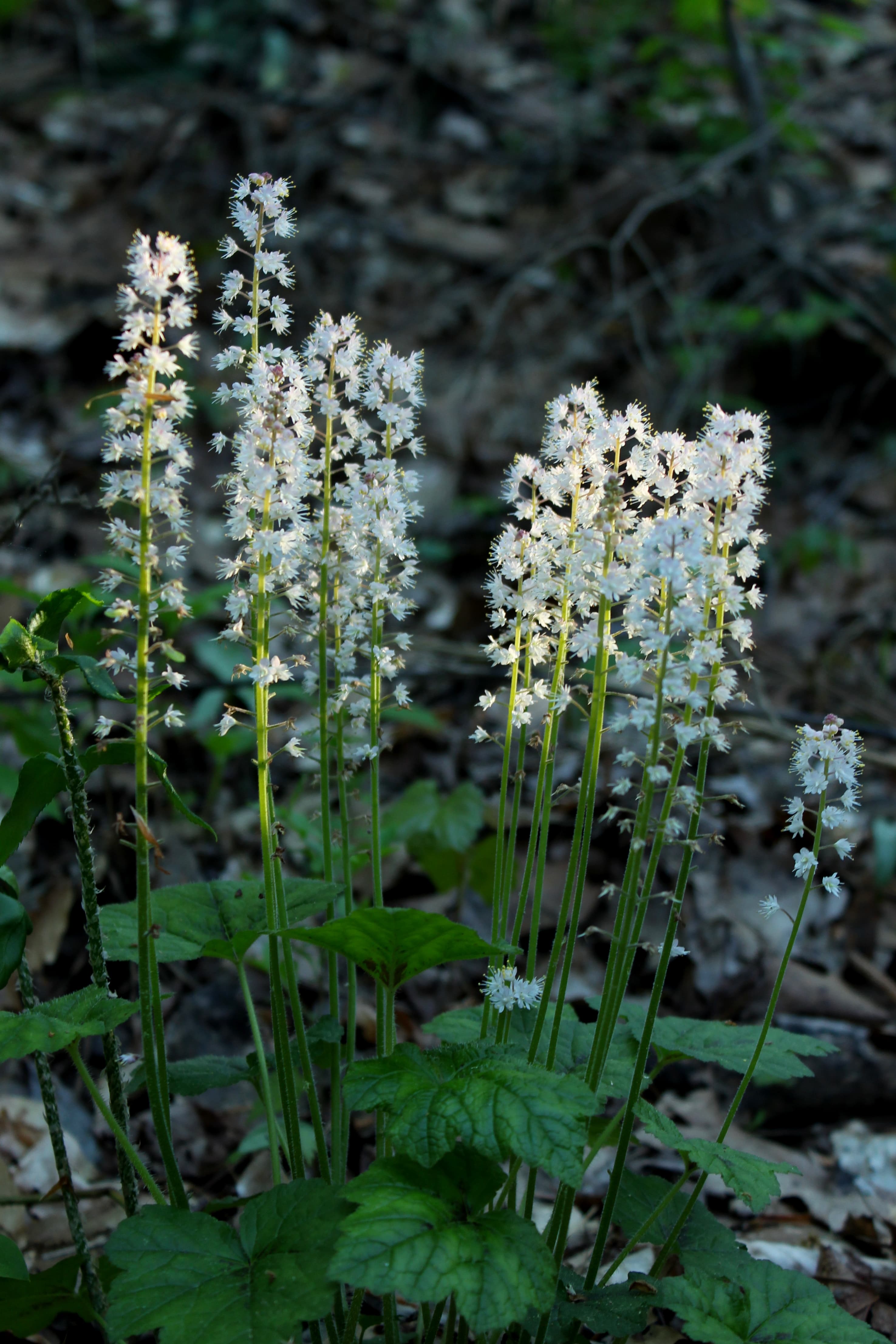
Tiarella cordifolia thrives in partial to full shade, making it ideal for woodland gardens, shady borders, or beneath deciduous trees and shrubs. It dislikes hot, direct sun, which can scorch the foliage and stress the plant. Plant in March, April, September, or October when the soil is workable and temperatures are mild. Autumn planting allows roots to establish before winter, while spring planting gives a full growing season ahead. Prepare the soil by incorporating plenty of organic matter—well-rotted compost, leaf mould, or peat—to create the moisture-retentive, humus-rich conditions foam flower prefers. The ideal soil is loam or peat-based, slightly acidic to neutral, and never waterlogged. Dig over the planting area to a spade's depth, removing weeds and breaking up any compacted patches. Space plants 30 cm apart to allow for their spreading habit; Tiarella spreads slowly by stolons to form attractive ground cover over time. Dig a planting hole slightly wider and as deep as the root ball. Position the plant so the crown sits level with the soil surface—planting too deep can lead to rot. Backfill with the improved soil, firming gently around the roots to eliminate air pockets. Water thoroughly after planting to settle the soil and help roots make contact with the surrounding earth. Apply a 5 cm layer of mulch—bark chips, leaf mould, or compost—around the base, keeping it clear of the crown itself. This conserves moisture, suppresses weeds, and mimics the forest-floor conditions Tiarella enjoys in its native North American woodlands.
Tiarella cordifolia is undemanding once established, but consistent moisture is key to keeping the foliage lush and healthy. Water regularly during the growing season, especially in dry spells, aiming to keep the soil evenly moist but never waterlogged. In shaded positions the soil tends to retain moisture longer, so check before watering—soggy conditions can lead to crown rot. In summer, water weekly if rainfall is scarce; in cooler months, natural rainfall is usually sufficient. Feed lightly in March or April as growth resumes. A general-purpose granular fertiliser scattered around the base, or a mulch top-up of well-rotted compost or leaf mould, provides all the nutrients foam flower needs. Avoid high-nitrogen feeds, which promote soft, lush growth at the expense of flowers. One feed per year is ample; over-feeding is unnecessary and can do more harm than good. Mulch annually in spring with organic matter to suppress weeds, conserve moisture, and enrich the soil as it breaks down. Keep mulch a few centimetres clear of the crown to prevent rot. Tiarella is fully hardy to zone 3, so overwintering in temperate European gardens is trouble-free. No protection is needed, though a layer of fallen leaves left in situ mimics natural woodland conditions and offers a little extra insulation. Pests are rarely a problem. Slugs and snails may nibble young foliage in spring, especially in damp, shady spots—use organic pellets, barriers, or hand-pick in the evening if damage is severe. Vine weevil can occasionally attack the roots; look for notched leaf edges and treat with biological controls if necessary. Powdery mildew may appear in very dry conditions or poor air circulation, but is uncommon if the plant is kept adequately watered.