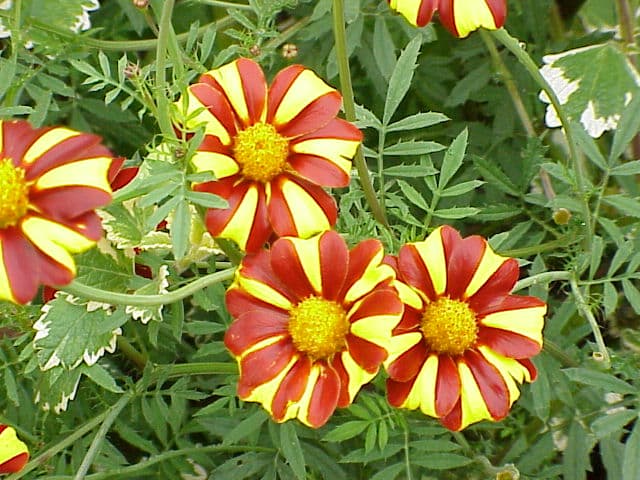
Growing French marigold in a pot
For balcony, patio or terrace — Tagetes patula
french marigold grows well in a pot of at least Ø 20 cm (6 L capacity), in a position with full sun. Watering: every 2 days in summer, once every 2 weeks in winter.
Which pot?
Ø 20 cm
~ 6 L potting soil
Give the plant room with a pot slightly wider than the current rootball, with matching depth.
Watering
every 2 days
once every 2 weeks
Always use a pot with drainage holes. Water dries out faster in pots — or the plant drowns. Check weekly with your finger: only water when the top 2 cm of soil is dry.
Pot care
French marigolds are low-maintenance once established and need only moderate watering. Water regularly during dry spells in summer, aiming for around 2–3 cm per week, but allow the soil surface to dry out between waterings. Overwatering or waterlogged soil encourages root rot and fungal problems. In wet summers, you may not need to water at all. Container-grown plants dry out faster and may need watering every couple of days in hot weather. Feeding is not necessary. French marigolds thrive in average to poor soil, and too much nitrogen produces lush foliage with few flowers. If your soil is very poor or plants are in pots, a single application of a balanced liquid feed in mid-summer can be beneficial, but avoid high-nitrogen fertilisers. Overwintering does not apply—French marigolds are annuals and will be killed by the first frost. Enjoy them from late spring until October or early November, then clear away the dead plants. Pests are generally few. Slugs and snails may nibble young seedlings in spring, so protect plants with grit, copper tape, or organic pellets until they are established. Aphids occasionally cluster on shoot tips; a strong jet of water or an insecticidal soap usually resolves the problem. Red spider mite can appear in hot, dry conditions, particularly on container plants—regular misting and adequate watering help prevent infestations. Diseases are rare if plants are well spaced and not overwatered. Powdery mildew can develop in crowded or humid conditions; remove affected leaves and improve air circulation. Botrytis (grey mould) may occur in prolonged wet weather—again, good spacing and prompt removal of dead flowers reduce the risk. A light mulch in early summer helps retain moisture and keeps roots cool, but keep mulch away from stems.
Pot-specific tip: add slow-release fertiliser pellets in March — potting soil exhausts much faster than open ground.