Globe daisy in May: monthly care
Month-by-month care — Globularia
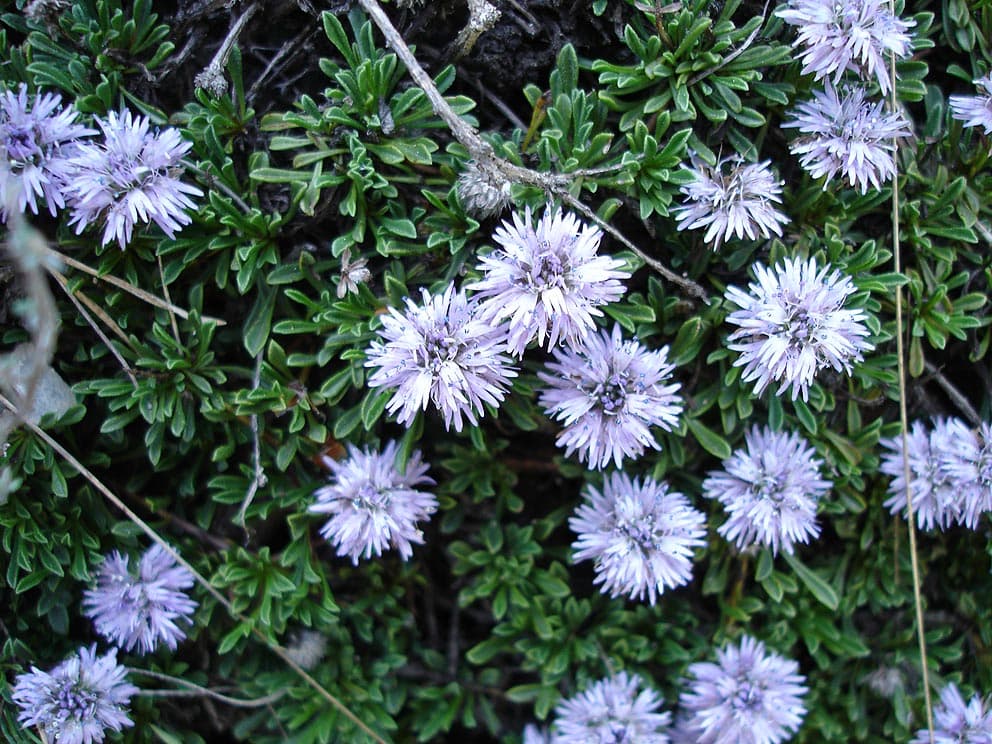
In May your globe daisy needs attention: watch the bloom.
- Blooms
What to do this May
Globularia has low water needs and is well adapted to dry conditions once established. Water sparingly after planting until roots have settled in, then reduce frequency. In a typical year, rainfall will be sufficient; only water during prolonged summer drought, and even then, err on the side of underwatering. Overwatering, especially in winter, encourages root rot and is the most common cause of failure with this plant. Feed lightly in March or April with a balanced, slow-release fertiliser or a light sprinkling of blood, fish, and bone. Globularia grows naturally in poor soils and does not require rich feeding; too much nitrogen will produce lush, soft growth at the expense of flowers and can make the plant less hardy. A single spring feed is ample for the year. This perennial is fully hardy in zones 4–8 and requires no special winter protection in temperate Europe. Its evergreen foliage remains attractive year-round. Avoid mulching with organic matter such as compost or bark, which holds moisture against the crown; if you mulch at all, use grit or gravel. Globularia is generally pest- and disease-free. Slugs and snails occasionally nibble young growth in spring, but damage is rarely serious. Root rot caused by poor drainage or overwatering is the main issue to watch for; symptoms include yellowing foliage and a collapsing crown. Prevention through good soil preparation and restrained watering is far easier than cure. Established clumps can be divided in early spring if they outgrow their space, though this is seldom necessary given the plant's modest spread.