Globe thistle in April: monthly care
Month-by-month care — Echinops ritro
In April your globe thistle needs attention: plant / sow and fertilise.
- Plant / sow
- Fertilise
What to do this April
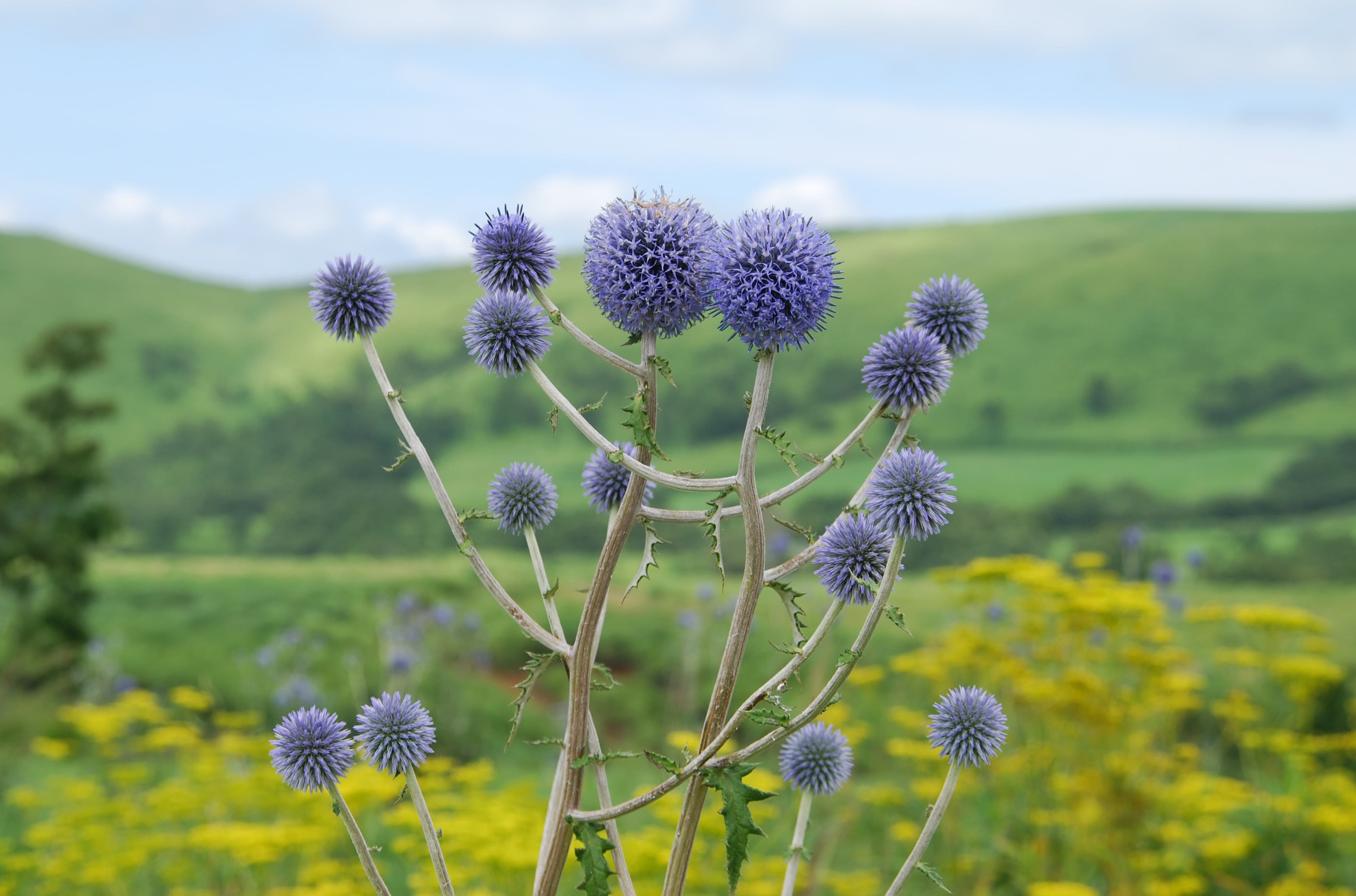
Globe thistle (Echinops ritro) thrives in full sun and well-drained soil, making it an excellent choice for hot, dry spots where many other perennials struggle. Choose a position that receives at least six hours of direct sunlight daily. This plant tolerates sandy soil, loam, and chalky soil equally well, but good drainage is essential—waterlogged roots will quickly rot. Prepare the planting site by removing all weeds and digging in some grit or sharp sand if your soil is heavy clay. There's no need to add compost or manure; globe thistle actually performs better in lean, poor-to-moderately fertile soil, which encourages sturdy stems and prevents floppy growth. Plant in March, April or May for establishment before summer, or in September and October to give roots time to settle before winter. Dig a hole roughly twice the width of the root ball and the same depth. Position the plant so the crown sits level with the surrounding soil—planting too deep can lead to rot. Space plants 50 cm apart to allow for their mature spread of 45–60 cm and good air circulation. Backfill with the excavated soil, firm gently with your hands, and water in thoroughly even though this is a drought-tolerant plant—initial watering helps eliminate air pockets and settles roots. Apply a thin mulch of gravel or grit around the base rather than organic matter, which can retain too much moisture. Staking is rarely necessary; the sturdy stems reach 80–120 cm and hold the spherical blue flowerheads without support if grown in full sun and lean soil.
Globe thistle is genuinely low-maintenance once established, tolerating drought and poor soil with ease. Water newly planted specimens regularly during their first growing season to help roots establish, but after that, watering is rarely necessary except during prolonged summer drought. Even then, a deep soak every two to three weeks is sufficient. Overwatering causes more problems than underwatering—this plant evolved for dry, stony habitats and resents wet feet. Feed sparingly. In April or May, scatter a light dressing of general-purpose granular fertiliser (such as blood, fish and bone) around the base, or apply a single handful of pelleted chicken manure. Too much nitrogen produces lush, floppy growth prone to collapse, so resist the temptation to overfeed. In lean soil, you can skip feeding altogether; globe thistle will still flower reliably. Mulch with gravel or grit rather than organic matter. A 2–3 cm layer around the crown suppresses weeds, improves drainage, and reflects heat—all beneficial for this sun-lover. Avoid bark or compost mulches, which retain moisture and can encourage crown rot. Globe thistle is fully hardy to zone 3 and needs no winter protection in temperate Europe. Leave the crown undisturbed over winter; it will reshoot reliably in spring. Pests and diseases are rare. Aphids occasionally cluster on young shoots in spring—a strong jet of water usually dislodges them, or tolerate them as they attract ladybirds and hoverflies. Powdery mildew can appear on foliage in late summer during dry spells, but it's cosmetic and doesn't harm the plant. Ensure good spacing and air circulation to minimise fungal issues.