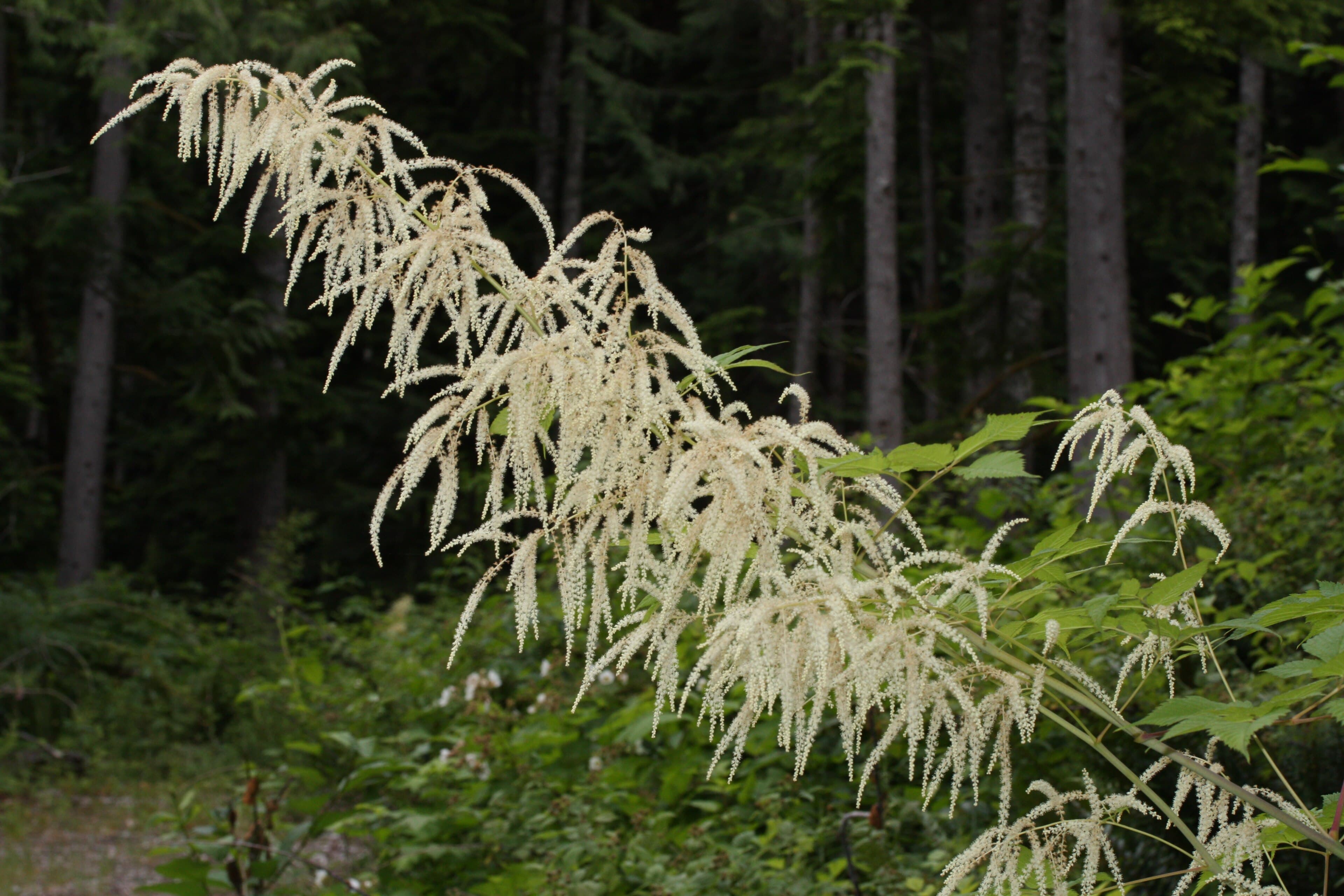
Goat's beard
Aruncus dioicus
Dutch: Keizersbaard
Keizersbaard (Aruncus dioicus) is a perennial from the Rosaceae family that grows up to 200cm tall. This plant thrives in partial shade to shade and requires low maintenance. Blooms in early summer and summer with white flowers and attracts bees and butterflies.
150–200 cm
100–120 cm
partial shade, full shade
moderate
loam, clay soil
low maintenance
early summer, summer
white
Ecologische waarde
Verzorgingskalender
| Taak | Jan | Feb | Mrt | Apr | Mei | Jun | Jul | Aug | Sep | Okt | Nov | Dec |
|---|---|---|---|---|---|---|---|---|---|---|---|---|
| 🌱Planten | ||||||||||||
| ✂️Snoeien | ||||||||||||
| 💧Bemesten |
Care tips
Planting
Aruncus dioicus thrives in partial to full shade, making it ideal for woodland gardens, shady borders, or the north side of buildings where many perennials struggle. Choose a spot with loam or clay soil that retains moisture without becoming waterlogged. This is a substantial perennial that will reach 150–200 cm tall with a spread of 100–120 cm, so give it plenty of room to develop its architectural presence. Plant in March, April, September, or October when the soil is workable and temperatures are mild. Autumn planting is particularly successful as it allows the roots to establish before winter. Dig a hole twice the width of the root ball and roughly the same depth. Work in plenty of organic matter—compost or well-rotted manure—to improve soil structure and moisture retention, especially if your soil is on the lighter side. Clay soils benefit from added grit to prevent compaction around the roots. Position the crown at soil level, not buried, and backfill with the improved soil, firming gently as you go to eliminate air pockets. Space plants 100 cm apart; Aruncus dioicus forms large clumps and needs room to show off its feathery plumes. Water thoroughly after planting to settle the soil around the roots. Apply a 5–7 cm layer of organic mulch such as leaf mould or composted bark around the base, keeping it clear of the crown itself. This conserves moisture and suppresses weeds while the plant establishes. In exposed sites, the tall flower stems may need discreet staking, though in sheltered shade they usually stand without support.
Pruning
Aruncus dioicus requires very little pruning, which is part of its appeal as a low-maintenance perennial. The main task is tidying up spent growth rather than any formative cutting. After flowering finishes in summer, you can deadhead the faded creamy-white plumes if you prefer a neater appearance, though many gardeners leave the seed heads in place for winter structure and to feed birds. The main pruning window is in late winter or early spring—February or March—before new growth emerges. Cut back all the previous year's stems to ground level using secateurs or loppers; the old stems become hollow and brittle, so they're easy to remove. This annual clear-up prevents a build-up of dead material and makes way for fresh foliage. Alternatively, you can tidy the plant in November after the first hard frosts have blackened the foliage, especially if you find the collapsed stems unsightly through winter. Wear gloves when handling the old stems, as they can be sharp when broken. Dispose of or compost the cut material. If your clump has become congested or flowering has declined after several years, you can divide it in early spring. Lift the entire root ball with a spade, then use a sharp spade or saw to split it into sections, each with several strong shoots. Replant divisions immediately at the same depth and water well. Aruncus dioicus does not require regular shaping or size control. Its natural habit is graceful and self-supporting, so resist the temptation to trim it during the growing season, which would spoil its form and remove the flower buds.
Maintenance
Aruncus dioicus is a robust, undemanding perennial once established, but it does appreciate consistent moisture. Water regularly during dry spells in spring and summer, especially in the first year. The large leaves lose moisture quickly, and the plant may wilt noticeably if too dry, though it usually recovers overnight. In shaded positions with moisture-retentive clay or loam, rainfall is often sufficient except during prolonged drought. A deep weekly soak is better than frequent shallow watering. Feed in March or April as new growth appears. Scatter a general-purpose granular fertiliser such as blood, fish and bone or a balanced slow-release feed around the base at the rate recommended on the packet, then water in. Alternatively, apply a 3–5 cm top-up of garden compost or well-rotted manure as a mulch; this feeds the soil and conserves moisture in one go. Avoid high-nitrogen feeds, which promote soft leafy growth at the expense of flowers. Aruncus dioicus is fully hardy to zone 3 and needs no winter protection in temperate Europe. The crown dies back completely and re-emerges reliably each spring. Refresh the mulch layer in autumn or early spring to suppress weeds and maintain soil structure. Pests and diseases are rare. Occasionally, sawfly larvae may skeletonise the foliage in early summer, leaving a lacy appearance. Pick off by hand or tolerate the damage, which is usually minor and doesn't affect overall vigour. Powdery mildew can appear on leaves in hot, dry summers, particularly if the plant is stressed for water; improve moisture levels and remove affected foliage. Slugs may nibble emerging shoots in spring but seldom cause lasting harm.
More about this plant
Combines well with
Related guides
Goat's beard in your garden design?
Make a free garden design with AI advice. Our AI knows Goat's beard and 130+ other plants.
Start free design