When to plant Goat's beard?
Best month and method — Aruncus dioicus
Plant your goat's beard in March, April, September and October — the optimal month is usually September.
The next planting window is September.
Spacing
100 cm
≈ 1 plant
For an X m² border, calculate: X × 1 plants.
Step by step: plant goat's beard
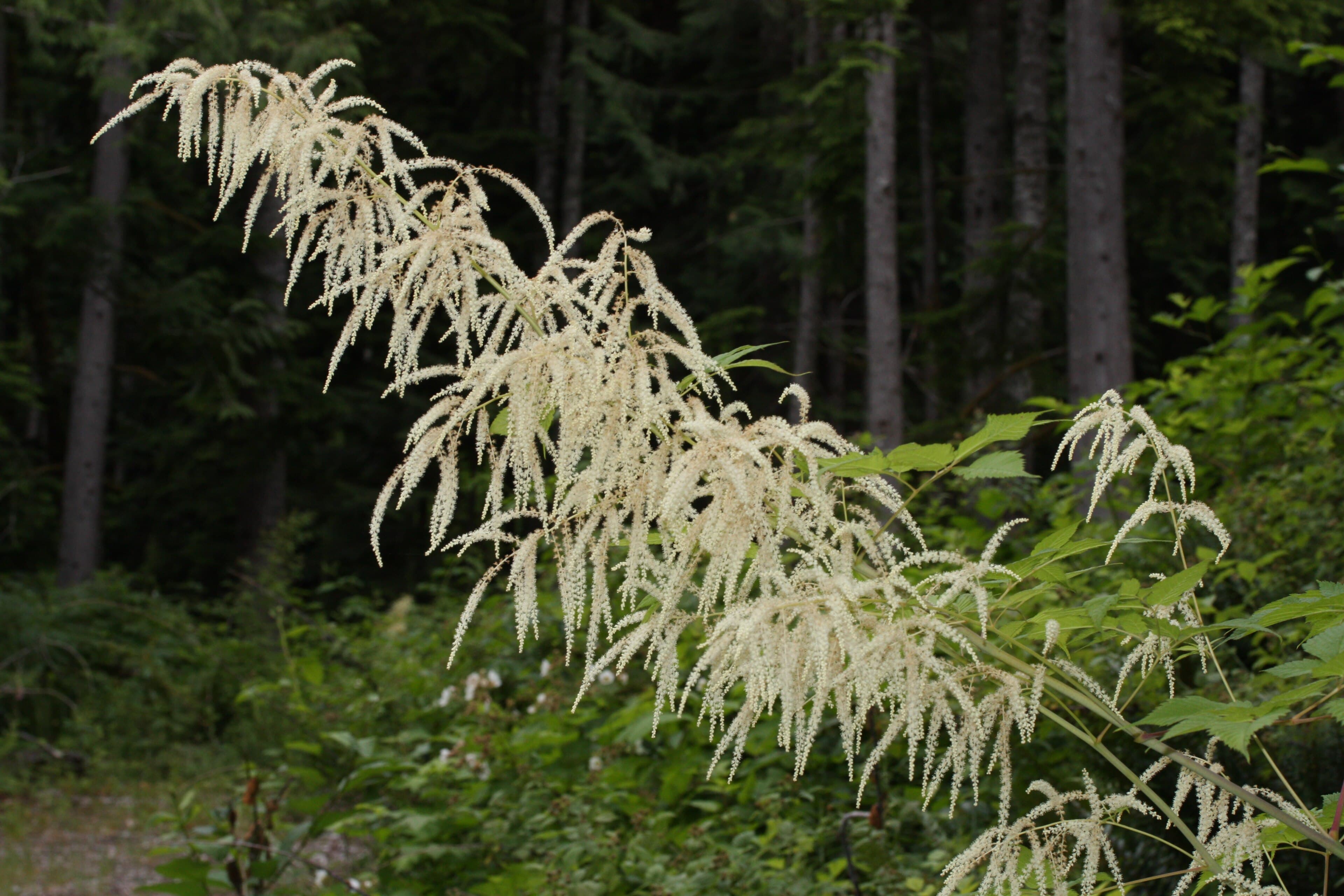
Aruncus dioicus thrives in partial to full shade, making it ideal for woodland gardens, shady borders, or the north side of buildings where many perennials struggle. Choose a spot with loam or clay soil that retains moisture without becoming waterlogged. This is a substantial perennial that will reach 150–200 cm tall with a spread of 100–120 cm, so give it plenty of room to develop its architectural presence. Plant in March, April, September, or October when the soil is workable and temperatures are mild. Autumn planting is particularly successful as it allows the roots to establish before winter. Dig a hole twice the width of the root ball and roughly the same depth. Work in plenty of organic matter—compost or well-rotted manure—to improve soil structure and moisture retention, especially if your soil is on the lighter side. Clay soils benefit from added grit to prevent compaction around the roots. Position the crown at soil level, not buried, and backfill with the improved soil, firming gently as you go to eliminate air pockets. Space plants 100 cm apart; Aruncus dioicus forms large clumps and needs room to show off its feathery plumes. Water thoroughly after planting to settle the soil around the roots. Apply a 5–7 cm layer of organic mulch such as leaf mould or composted bark around the base, keeping it clear of the crown itself. This conserves moisture and suppresses weeds while the plant establishes. In exposed sites, the tall flower stems may need discreet staking, though in sheltered shade they usually stand without support.


