Growing Goldmoss stonecrop in a pot
For balcony, patio or terrace — Sedum acre
goldmoss stonecrop grows well in a pot of at least Ø 24 cm (11 L capacity), in a position with full sun. Watering: 1-2x per week in summer, only when dry in winter.
Which pot?
Ø 24 cm
~ 11 L potting soil
Give the plant room with a pot slightly wider than the current rootball, with matching depth.
Watering
1-2x per week
only when dry
Always use a pot with drainage holes. Water dries out faster in pots — or the plant drowns. Check weekly with your finger: only water when the top 2 cm of soil is dry.
Pot care
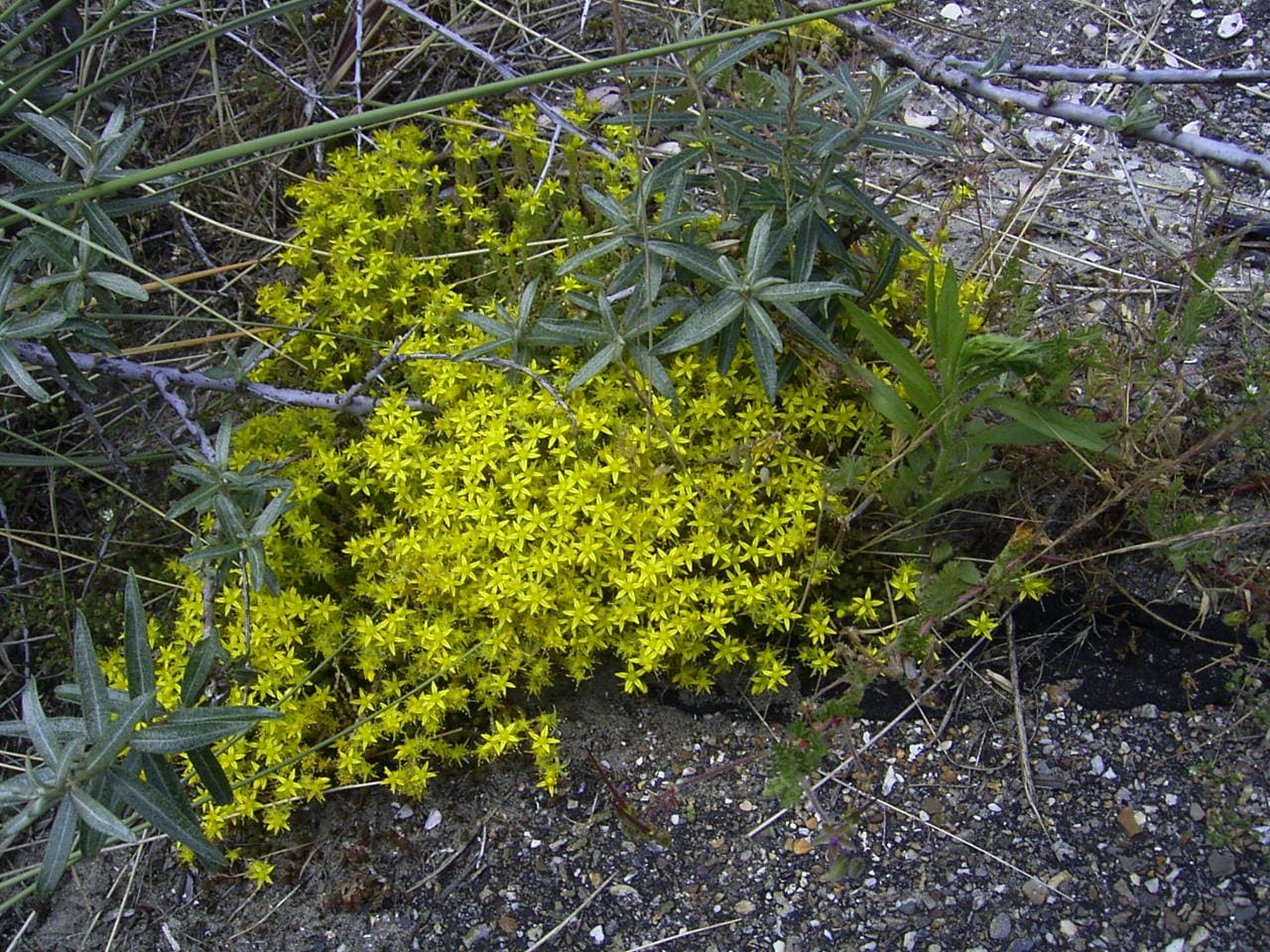
Goldmoss stonecrop is exceptionally low-maintenance once established. Its succulent leaves store water, making it highly drought-tolerant. In temperate climates with regular rainfall, established plants need no supplementary watering. Even during dry spells in summer, the plant will cope without irrigation. Only water newly planted specimens lightly if the soil becomes bone-dry in their first few weeks; after that, leave them alone. Feeding is not required. Goldmoss stonecrop is adapted to nutrient-poor soils and will grow leggy and lose its compact habit if given fertiliser. Avoid planting it near areas where lawn feed or general fertilisers are applied, as runoff can encourage weak, floppy growth. The plant is evergreen and fully hardy to zone 3, so it needs no winter protection in temperate Europe. It will sail through frost, snow, and cold winds without damage. In fact, cold weather often enhances the foliage colour, adding bronze or reddish tints. Pests and diseases are rare. Goldmoss stonecrop's thick, waxy leaves deter most insects, and its preference for dry conditions means fungal problems are uncommon. The main threat is root rot caused by waterlogged soil, particularly in winter. If you notice blackened, mushy stems, improve drainage immediately or move the plant to a drier spot. Mulching is unnecessary and should be avoided, as organic mulches retain moisture and can smother the low foliage. If weeds appear, hand-pull them carefully to avoid disturbing the shallow roots. Once the mat fills in, it will suppress most weeds naturally, creating a maintenance-free carpet of evergreen foliage and cheerful yellow summer flowers.
Pot-specific tip: add slow-release fertiliser pellets in March — potting soil exhausts much faster than open ground.