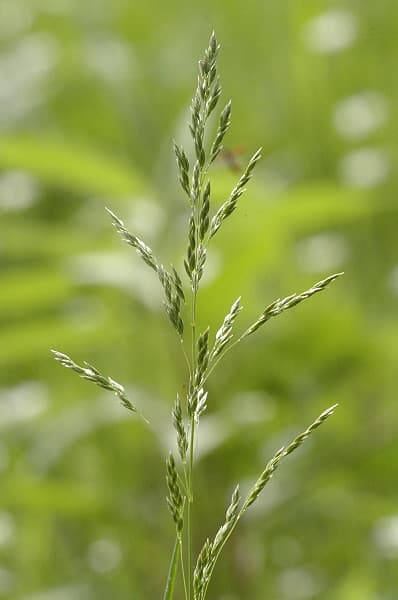
Hakone grass
Hakonechloa macra
Dutch: Schaduwgras
Schaduwgras (Hakonechloa macra) is a perennial from the Poaceae family that grows up to 40cm tall. This plant thrives in partial shade to shade and requires low maintenance. Blooms in late summer with green flowers.
30–40 cm
40–60 cm
partial shade, full shade
moderate
loam, sandy soil, clay soil
low maintenance
late summer
green
Verzorgingskalender
| Taak | Jan | Feb | Mrt | Apr | Mei | Jun | Jul | Aug | Sep | Okt | Nov | Dec |
|---|---|---|---|---|---|---|---|---|---|---|---|---|
| 🌱Planten | ||||||||||||
| ✂️Snoeien | ||||||||||||
| 💧Bemesten |
Care tips
Planting
Hakonechloa macra thrives in partial to full shade, making it an excellent choice for the shadier corners of your garden where many grasses struggle. It tolerates a wide range of soil types—loam, sandy soil, and clay—but the ground must be moisture-retentive yet well-drained. Avoid planting in dry, exposed positions or heavy, waterlogged clay that stays wet in winter. Plant in spring (March to May) or early autumn (September to October). Spring planting gives the roots a full growing season to establish before winter, while autumn planting works well if the soil is still warm and not waterlogged. Prepare the site by digging in plenty of organic matter—garden compost or well-rotted manure—to improve both drainage and moisture retention, especially in sandy or heavy clay soils. Dig a planting hole slightly larger than the root ball and set the plant at the same depth it was growing in its pot. Space plants 45 cm apart; Hakonechloa spreads slowly to form a low mound 40–60 cm wide, so don't be tempted to crowd them. Firm the soil gently around the roots and water thoroughly to settle the plant in. After planting, apply a 5 cm layer of mulch—bark chips or leaf mould work well—around the base to conserve moisture and suppress weeds. Keep the soil consistently moist through the first growing season, especially during dry spells in spring and summer. Hakonechloa is slow to establish and can sulk if allowed to dry out in its first year, so attentive watering in year one pays dividends later.
Pruning
Hakonechloa macra requires very little pruning in the traditional sense, but an annual tidy-up keeps it looking its best. The foliage turns attractive shades of bronze and gold in autumn and persists through winter, providing structure and interest when many perennials have died back. Leave the old foliage in place over winter to protect the crown from frost and wet, and to give shelter to overwintering insects. In early spring—March or April—cut back all the previous year's growth before the new shoots emerge. Use sharp secateurs or hedging shears and cut the whole clump down to within 5–8 cm of the ground. This is a straightforward job: simply gather the old stems in one hand and slice through them cleanly. The old foliage will be dry and brittle by this point, making it easy to remove. Rake away the debris or add it to your compost heap. Timing matters. If you prune too early in late winter, you remove the protective layer before the worst weather has passed. If you leave it too late, you risk damaging the fresh new shoots that emerge in mid to late spring. Aim to complete the job before you see bright green tips pushing through at the base. Hakonechloa doesn't produce showy flowers—the late-summer blooms are inconspicuous green spikelets—so there's no deadheading required. If any stems look tatty or damaged during the growing season, snip them out at the base, but otherwise leave the plant alone to develop its graceful, arching habit undisturbed.
Maintenance
Hakonechloa macra is a low-maintenance grass once established, but it does appreciate consistent moisture, especially in its shadier habitats where competition from tree roots can be fierce. Water regularly during dry spells in spring and summer, aiming to keep the soil evenly moist but not waterlogged. In autumn and winter, rainfall is usually sufficient, but check plants growing under dense tree canopies or against house walls, as these spots can stay surprisingly dry. Feed in April or May as new growth begins. Apply a balanced granular fertiliser (such as blood, fish and bone or a general-purpose feed like Growmore) around the base at the rate recommended on the packet, then water in well. A single spring feed is enough; Hakonechloa isn't a heavy feeder and too much nitrogen can lead to lush, floppy growth. Mulch annually in spring after feeding. A 3–5 cm layer of garden compost, leaf mould, or bark chips helps retain moisture, suppresses weeds, and gradually improves soil structure. Keep mulch clear of the crown itself to avoid rotting the base of the plant. Hakonechloa is fully hardy in zones 5–9 and needs no winter protection in temperate Europe. The clump may take a year or two to reach its full size, as it spreads slowly by short rhizomes, but patience is rewarded with a neat, weed-suppressing mound. Pests and diseases are rare. Slugs occasionally nibble young shoots in spring, so scatter slug pellets or use beer traps if damage is severe. Rust can appear as orange spots on the foliage in humid summers, but it's seldom serious; simply remove affected leaves and ensure good air circulation.
More about this plant
Combines well with
Related guides
Hakone grass in your garden design?
Make a free garden design with AI advice. Our AI knows Hakone grass and 130+ other plants.
Start free design