Heather in April: monthly care
Month-by-month care — Calluna vulgaris
In April your heather needs attention: plant / sow and prune.
- Plant / sow
- Prune
What to do this April
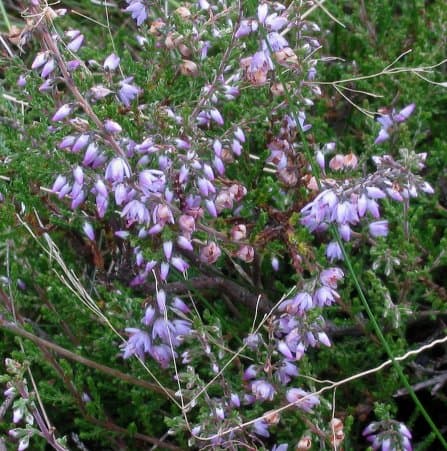
Heather thrives in full sun and demands acidic, free-draining soil—ideally sandy or peaty ground with a pH below 6.5. If your garden soil is neutral or alkaline, heather will struggle and eventually fail, so test before planting or grow it in containers filled with ericaceous compost. Avoid heavy clay unless you can improve drainage significantly with sharp sand and organic matter. The best planting windows are March to May and September to October, when the soil is workable and plants can establish roots before temperature extremes. Space plants 40 cm apart; they will knit together into a low, weed-suppressing mat within two to three years. Dig a hole slightly wider than the root ball but no deeper—heather roots are shallow and dislike being buried. Tease out any circling roots gently, place the plant so the top of the root ball sits level with the surrounding soil, then backfill with the excavated soil or ericaceous compost if your native soil is marginal. Water thoroughly after planting to settle roots, even though heather has low water needs once established. A 5 cm mulch of composted bark or pine needles helps retain moisture, suppresses weeds, and maintains acidity. Avoid rich, moisture-retentive mulches like garden compost, which can encourage root rot. Heather dislikes root disturbance, so plant carefully and avoid repositioning later. In exposed sites, firm the soil around the base after winter frosts, as shallow roots can lift. No staking is needed; the plants are naturally compact and wind-tolerant once settled.
Heather requires annual pruning to stay compact, floriferous, and tidy. Without it, plants become leggy, woody at the base, and flower poorly. Prune in March or April, just as new growth begins to show but before it extends fully. Pruning too late removes the developing flower buds; too early and frost may damage fresh cuts. Use sharp hand shears or secateurs—hedge trimmers work well for large drifts but can look brutal on individual specimens. Remove the previous year's flowering shoots, cutting back to just below the old flower spikes and into the green foliage beneath. Take off roughly one-third to half the top growth, but never cut into old, bare wood lower down; heather will not regenerate from leafless brown stems and you risk killing the plant. The aim is to trim lightly into the leafy growth, encouraging dense branching and abundant late-summer and autumn flowers. If you inherit an old, neglected heather that has become sparse and woody, replacement is usually more successful than renovation. Young plants establish quickly and will outperform a struggling veteran within two seasons. After pruning, rake off the clippings to prevent a matted layer smothering new shoots. No other pruning is needed through the year. Deadheading spent flowers is unnecessary—the dried blooms often provide winter interest and structure, and spring pruning removes them anyway. Focus your effort on that single annual trim in early spring.