Growing Heather in a pot
For balcony, patio or terrace — Calluna vulgaris
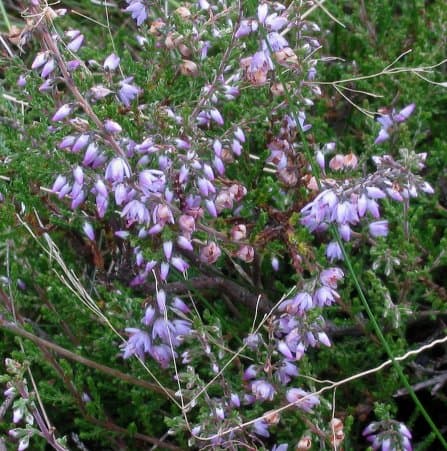
heather grows well in a pot of at least Ø 48 cm (87 L capacity), in a position with full sun. Watering: 1-2x per week in summer, only when dry in winter.
Which pot?
Ø 48 cm
~ 87 L potting soil
Choose a generous pot with good drainage — small pots restrict root development.
Watering
1-2x per week
only when dry
Always use a pot with drainage holes. Water dries out faster in pots — or the plant drowns. Check weekly with your finger: only water when the top 2 cm of soil is dry.
Pot care
Once established, heather is remarkably undemanding. Water new plants regularly through their first spring and summer, especially in dry spells, but mature specimens tolerate drought well thanks to their deep, fibrous roots and low water needs. In prolonged summer droughts, an occasional deep soak is appreciated, but avoid keeping the soil constantly moist—heather resents waterlogging and is prone to root rot (Phytophthora) in poorly drained or overly wet conditions. Feed sparingly in March with a controlled-release ericaceous fertiliser or a light scattering of blood, fish and bone. Heather evolved on nutrient-poor moorland and too much feeding, especially nitrogen, produces soft, lush growth prone to disease and reduces flowering. One modest application per year is sufficient; many gardeners skip feeding altogether on naturally acidic soils without ill effect. Heather is fully evergreen and hardy to zone 4, so no winter protection is needed in temperate Europe. Mulch lightly each spring with composted bark or pine needles to suppress weeds and maintain soil acidity, but keep mulch clear of the stems to prevent rot. Pests are rare. The main threat is heather beetle (Lochmaea suturalis), whose larvae strip foliage in spring, turning it brown. Inspect plants in April and May; if you spot greyish larvae or browning patches, pick off by hand or apply an insecticide labelled for ornamental beetles. Phytophthora root rot is the most serious disease, causing dieback and death; it is incurable, so prevention through good drainage and avoiding overwatering is essential. Remove and destroy any affected plants promptly to limit spread.
Pot-specific tip: add slow-release fertiliser pellets in March — potting soil exhausts much faster than open ground.


