Hop in November: monthly care
Month-by-month care — Humulus lupulus
In November your hop needs attention: plant / sow and prune.
- Plant / sow
- Prune
What to do this November
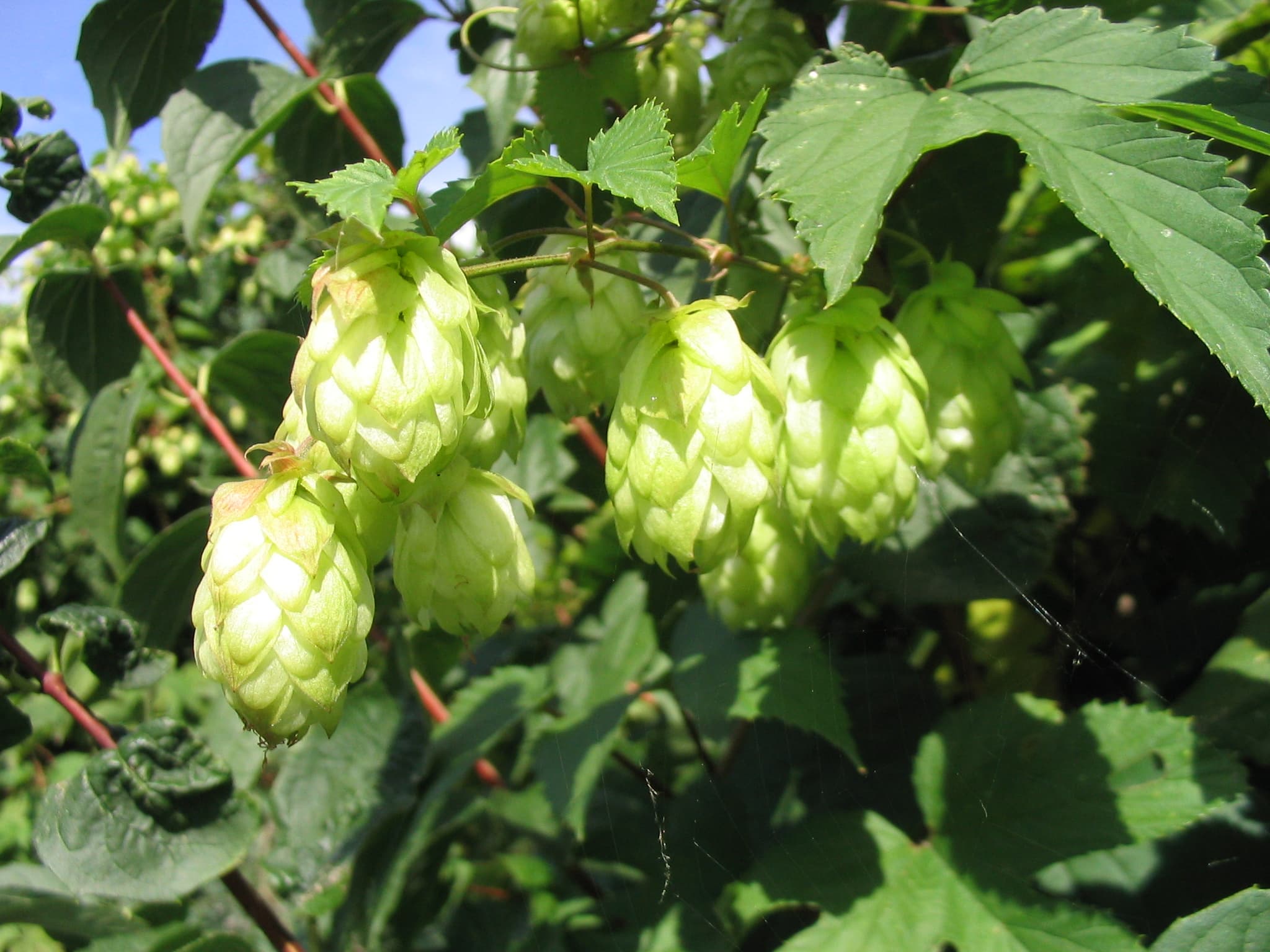
Hop is a vigorous perennial climber that dies back to ground level each winter and regrows rapidly from spring onwards. Plant bare-root crowns or pot-grown plants in March, April or November, choosing a spot in full sun or partial shade. Hops tolerate some shade but produce more abundant cones in sunnier positions. They thrive in loam-based soil that is moisture-retentive yet well-drained; dig in plenty of garden compost or well-rotted manure before planting to improve structure and fertility. Space plants 200 cm apart to allow for their considerable spread—mature hops can easily cover 2–4 metres horizontally and climb 4–8 metres vertically. Dig a planting hole twice the width of the root ball and plant the crown 5–8 cm below the soil surface. Firm in gently and water thoroughly. Hops are twining climbers that need sturdy vertical support from the outset: install tall posts, wires, pergolas or allow them to scramble up trees or buildings. Traditional hop gardens use coir strings or wires running from ground anchors to overhead wires at 4–6 metres high. Immediately after planting, water well to settle the roots and apply a 5–8 cm layer of organic mulch around the base, keeping it clear of the crown itself. In the first season, guide the young bines (hop stems) clockwise around their supports as they emerge; they will quickly grip and climb on their own. Water regularly during dry spells in the first year to help establishment.
Hop pruning is straightforward but essential for healthy, productive plants. The main pruning happens in late autumn (November) or late winter (February). In November, once the foliage has been blackened by frost and the cones harvested, cut all the bines down to ground level, removing the entire season's growth. This prevents overwintering of pests and diseases and tidies the plant for winter. Alternatively, leave this job until February if you prefer the dried stems for winter interest or wildlife habitat, but complete the cut-back before new shoots emerge in early spring. Use sharp secateurs or loppers for thinner stems and a pruning saw for older, woodier bines. The stems can be tough and fibrous, so take care when pulling them down from supports—untangle carefully or cut into manageable sections. Dispose of or compost the old growth; if disease has been present, bin it rather than composting. In February, tidy the crown by removing any dead or damaged material and clearing away old mulch and debris to expose fresh soil. Hops also benefit from thinning in late spring. When the new bines reach 30–60 cm tall (usually May), select the three to six strongest shoots per plant and pinch or cut out the rest at ground level. This concentrates the plant's energy into fewer, more vigorous bines that will climb higher and produce better cones. Throughout summer, trim back any wayward side-shoots if the plant is encroaching where it shouldn't, but avoid heavy pruning during the growing season.