Hosta 'Frances Williams' in October: monthly care
Month-by-month care — Hosta 'Frances Williams'
In October your hosta 'Frances Williams' needs attention: plant / sow and prune.
- Plant / sow
- Prune
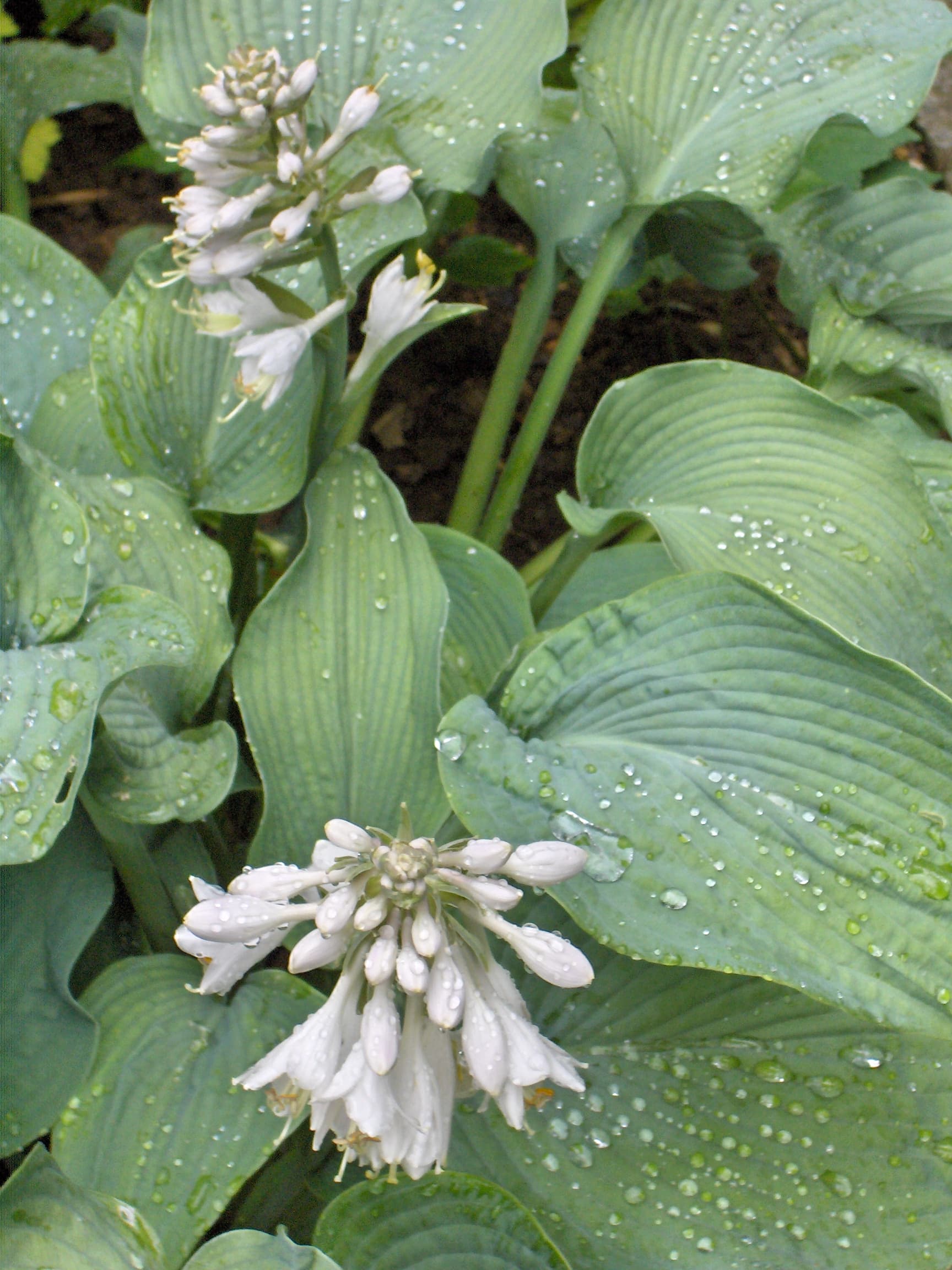
What to do this October
Hosta 'Frances Williams' thrives in partial to full shade, making it ideal for borders under trees, north-facing beds, or shaded courtyard gardens. Avoid direct sun, which scorches the blue-green leaves and fades their distinctive creamy-yellow margins. Plant in spring (March to May) or autumn (September to October) when the soil is workable and temperatures are mild. This hosta prefers loam or clay soil that holds moisture without becoming waterlogged. Before planting, dig in plenty of organic matter—well-rotted compost or leaf mould—to improve structure and fertility, especially if your soil is heavy clay. Dig a planting hole roughly twice the width of the root ball and the same depth. Position the crown so it sits level with the surrounding soil surface; planting too deep can lead to rot. Space plants 80 cm apart to allow for their mature spread of up to a metre. Hostas grow slowly in their first year but will fill out substantially by the third season. After planting, firm the soil gently around the roots to eliminate air pockets, then water thoroughly to settle the plant in. Apply a 5 cm layer of organic mulch—bark chips or garden compost—around the base, keeping it clear of the crown itself. This conserves moisture, suppresses weeds, and provides a barrier against slugs and snails, which are the main pest threat. In exposed gardens, consider surrounding new plants with grit or crushed eggshells for additional slug deterrence. Water regularly during the first growing season to help the root system establish.
Hosta 'Frances Williams' requires very little pruning in the traditional sense, but it does benefit from seasonal tidying to keep it looking its best and to maintain plant health. The main task is removing old foliage in autumn, specifically in October or November, once the leaves have been blackened by the first frosts. Wait until the foliage has fully died back and collapsed naturally. Cutting back too early, while leaves are still green, deprives the plant of nutrients it would otherwise store in the roots for next season's growth. Use clean secateurs or garden shears to cut the spent leaves down to just above ground level. Remove all the old foliage from the bed rather than leaving it in place, as decaying hosta leaves can harbour slugs, snails, and fungal spores over winter. If you prefer a tidier appearance through summer, you can remove individual damaged or yellowing leaves at the base as they appear, but this is optional. After flowering in summer, cut off the spent flower stalks at their base if you find them unsightly, though some gardeners leave the seed heads for winter interest. Hosta 'Frances Williams' does not require any shaping, thinning, or rejuvenation pruning. The clump will slowly expand outward each year. If it becomes too large for its space or the centre starts to decline after many years, lift and divide the entire clump in early spring, replanting healthy sections with several growing points. This isn't pruning as such, but it's the only intervention an overgrown hosta truly needs.