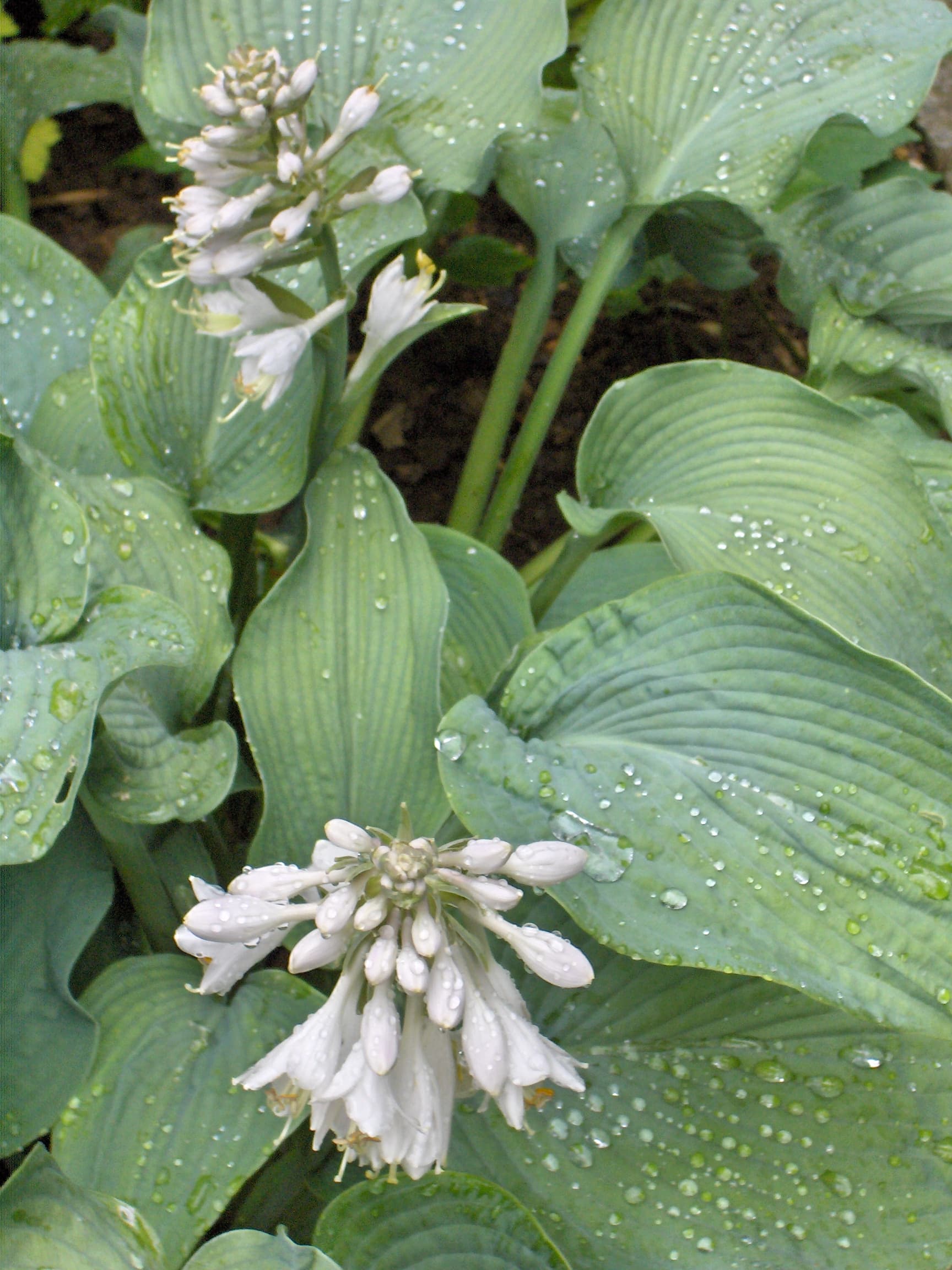
Hosta 'June'
Hosta 'June'
Dutch: Hartlelie 'June'
Hartlelie 'June' (Hosta 'June') is a perennial from the Asparagaceae family that grows up to 40cm tall. This plant thrives in partial shade to shade and requires low maintenance. Blooms in summer with purple flowers and attracts bees.
30–40 cm
40–60 cm
partial shade, full shade
moderate
loam, clay soil
low maintenance
summer
purple
Ecologische waarde
Verzorgingskalender
| Taak | Jan | Feb | Mrt | Apr | Mei | Jun | Jul | Aug | Sep | Okt | Nov | Dec |
|---|---|---|---|---|---|---|---|---|---|---|---|---|
| 🌱Planten | ||||||||||||
| ✂️Snoeien | ||||||||||||
| 💧Bemesten |
Care tips
Planting
Hosta 'June' thrives in partial to full shade, making it ideal for borders under trees, woodland gardens, or any spot that receives dappled light or no direct sun. Avoid planting in full sun, which will scorch the variegated foliage and fade its distinctive blue-green and chartreuse colouring. The best planting times are March to May or September to October, when the soil is workable and temperatures are moderate. This hosta prefers loam or clay soil that retains moisture without becoming waterlogged. Before planting, dig in plenty of organic matter—well-rotted compost or leaf mould—to improve soil structure and fertility, especially if your soil is heavy clay. Dig a planting hole roughly twice the width of the root ball and deep enough so the crown sits level with the surrounding soil surface. Space plants 45 cm apart to allow for their mature spread of 40–60 cm. Position the plant so the crown (where roots meet shoots) is just at or slightly above soil level; planting too deep can lead to rot. Backfill with the improved soil, firming gently to eliminate air pockets. Water thoroughly immediately after planting to settle the roots and ensure good soil contact. Apply a 5 cm layer of organic mulch—bark chips or compost—around the base, keeping it clear of the crown itself. This conserves moisture, suppresses weeds, and enriches the soil as it breaks down. Keep the soil consistently moist for the first growing season while the plant establishes. Hostas are slow to settle in spring but will reward patience with lush, colourful foliage by early summer.
Pruning
Hosta 'June' requires very little pruning in the traditional sense, as it is grown primarily for its foliage rather than its structure. The main task is tidying up spent flower stems and removing old foliage in autumn. In summer, purple flower spikes appear; while attractive, many gardeners prefer to remove them as they emerge to direct the plant's energy into producing larger, more vibrant leaves. If you do let them flower, cut the stems down to the base once blooms have faded to keep the plant looking tidy. The key pruning window is October to November, after the first frosts have blackened the foliage. At this point, cut back all leaves to ground level using secateurs or garden shears. This prevents the decaying foliage from harbouring slugs and snail eggs over winter, which are the hosta's main enemy. Remove and compost or bin the old leaves rather than leaving them in place. Some gardeners prefer to leave the foliage standing until spring to provide a little winter protection for the crown, but this increases pest pressure and looks untidy. In spring, as new shoots emerge, check for any frost-damaged or slug-damaged leaves and snip these off at the base to keep the clump looking fresh. Hostas are remarkably forgiving and will quickly produce replacement foliage. No other pruning, shaping, or deadheading is necessary. The plant naturally forms a neat, symmetrical mound without intervention, reaching 30–40 cm in height. Avoid cutting into the crown itself or removing healthy foliage during the growing season, as this weakens the plant unnecessarily.
Maintenance
Hosta 'June' has moderate water needs and performs best when the soil remains consistently moist, particularly during spring and summer when foliage is actively growing. Water deeply once or twice a week in dry spells, soaking the root zone rather than wetting the leaves, which can encourage fungal issues. In autumn and winter, natural rainfall is usually sufficient. Mulching annually in spring with a 5 cm layer of compost or well-rotted manure helps retain moisture, suppress weeds, and gradually improves soil fertility. Feed in April, May, and June to support the lush foliage display. A balanced slow-release granular fertiliser scattered around the base of the plant in early April works well, or apply a liquid feed every three to four weeks during the growing season. Avoid high-nitrogen feeds late in summer, as this encourages soft growth vulnerable to frost damage. Hosta 'June' is fully hardy in zones 3–9 and requires no winter protection in temperate Europe. The foliage dies back completely after the first frosts, and the plant remains dormant until mid- to late spring. Be patient—hostas are often the last perennials to emerge, sometimes not showing new shoots until late April or even May. The main pest problem is slugs and snails, which can shred young foliage overnight. Use organic slug pellets, beer traps, or copper tape around the crown in early spring when shoots first appear. Inspect regularly in damp weather. Vine weevil larvae occasionally attack the roots; if the plant suddenly wilts despite moist soil, check for grubs in the root ball. Hostas are otherwise disease-resistant and require minimal intervention once established, making them an excellent low-maintenance choice for shady gardens.
More about this plant
Combines well with
Related guides
Hosta 'June' in your garden design?
Make a free garden design with AI advice. Our AI knows Hosta 'June' and 130+ other plants.
Start free design