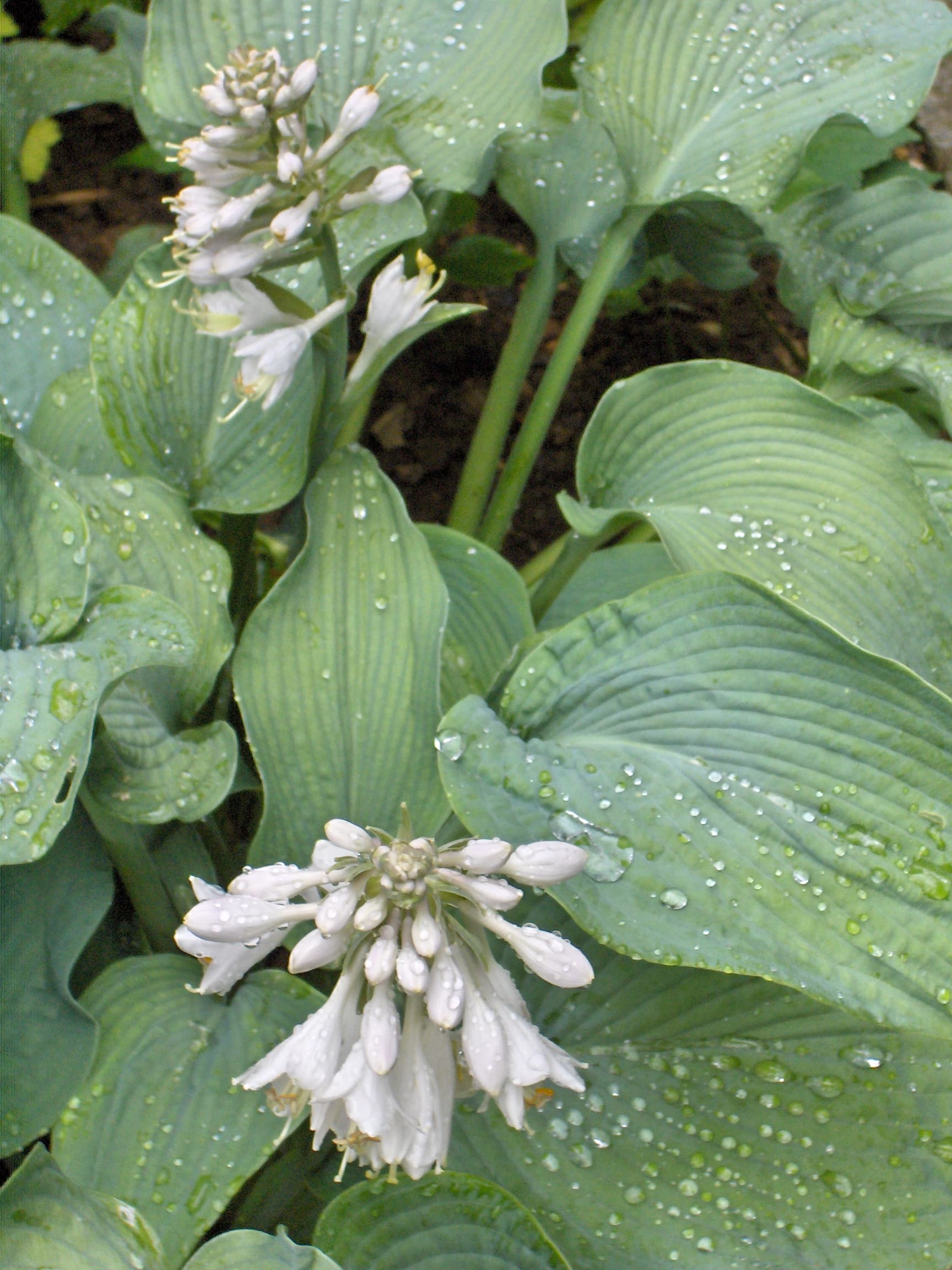
Hosta 'Patriot'
Hosta 'Patriot'
Dutch: Hartlelie 'Patriot'
Hartlelie 'Patriot' (Hosta 'Patriot') is a perennial from the Asparagaceae family that grows up to 60cm tall. This plant thrives in partial shade to shade and requires low maintenance. Blooms in summer with purple flowers and attracts bees.
50–60 cm
60–80 cm
partial shade, full shade
moderate
loam, clay soil
low maintenance
summer
purple
Ecologische waarde
Verzorgingskalender
| Taak | Jan | Feb | Mrt | Apr | Mei | Jun | Jul | Aug | Sep | Okt | Nov | Dec |
|---|---|---|---|---|---|---|---|---|---|---|---|---|
| 🌱Planten | ||||||||||||
| ✂️Snoeien | ||||||||||||
| 💧Bemesten |
Care tips
Planting
Hosta 'Patriot' thrives in partial to full shade and is an excellent choice for brightening darker corners of the garden with its bold, white-edged foliage. Plant in March, April or May for spring establishment, or in September and October for autumn planting. Choose a spot sheltered from strong winds, which can damage the large leaves, and avoid full sun, which scorches the foliage and fades the striking variegation. Prepare the soil thoroughly before planting. Hostas prefer moisture-retentive loam or clay soil enriched with organic matter. Dig in plenty of well-rotted compost or leaf mould to improve structure and water retention. The planting hole should be roughly twice the width of the root ball and deep enough so the crown sits level with the surrounding soil surface—never bury the crown, as this invites rot. Space plants 60 cm apart to allow for their mature spread of 60–80 cm. If planting multiple hostas, this spacing ensures good air circulation and room for the clumps to develop their full, architectural form without crowding. After planting, water thoroughly to settle the soil around the roots and eliminate air pockets. Apply a 5–7 cm layer of organic mulch such as composted bark or leaf mould around the base, keeping it clear of the crown itself. This mulch conserves moisture, suppresses weeds, and gradually improves soil fertility. Keep the soil consistently moist during the first growing season while the roots establish. Newly planted hostas benefit from regular watering, especially during dry spells in late spring and summer.
Pruning
Hosta 'Patriot' requires very little pruning in the traditional sense, but it does benefit from seasonal tidying to keep it looking its best and to maintain plant health. The main task is removing old foliage in autumn, specifically in October or November, once the leaves have been blackened by the first frosts. At this point the plant is entering dormancy and the foliage has served its purpose. Use clean secateurs or garden shears to cut back all the frost-damaged leaves to ground level. This autumn clear-up is important for two reasons: it removes potential hiding places for slugs and snails over winter, and it tidies the border before the dormant season. Hostas are herbaceous perennials that die back completely, so don't worry about cutting too much—new shoots will emerge fresh from the crown in spring. During the growing season, remove any damaged, torn or slug-eaten leaves as you spot them. Cut these right back to the base of the leaf stem to keep the clump tidy and reduce the risk of fungal infection in damaged tissue. If individual leaves become badly scorched by unexpected sun exposure, remove them in the same way. After flowering in summer, you can deadhead the spent purple flower spikes if you wish, cutting them down to the base. This is purely cosmetic—hostas are grown primarily for foliage, and leaving the faded flowers won't harm the plant. However, removing them does keep the clump looking neater and prevents energy being diverted into seed production.
Maintenance
Hosta 'Patriot' has moderate water needs and performs best when the soil is kept consistently moist but not waterlogged. Water regularly during dry spells in spring and summer, particularly in May and June when the leaves are expanding rapidly. Clay and loam soils retain moisture well, but even these can dry out in prolonged dry weather. Water at the base of the plant rather than overhead to reduce the risk of fungal leaf spots and to avoid creating damp conditions that attract slugs. Feed in April, May and June to support the lush foliage growth that makes this hosta so attractive. A balanced, slow-release granular fertiliser applied in early April is ideal, or use a liquid feed every three to four weeks through late spring. Avoid high-nitrogen feeds late in the season, as soft growth is more vulnerable to slug damage and frost. Slugs and snails are the primary pests of hostas and can shred young leaves overnight. Check regularly in damp weather, especially in spring as new shoots emerge. Use organic slug pellets, beer traps, or go out with a torch after dark to hand-pick them. Copper tape around pots or grit mulches offer some deterrence. Vine weevil larvae occasionally attack the roots; if plants wilt unexpectedly, check for white grubs in the soil. Hosta 'Patriot' is fully hardy to zone 3 and needs no winter protection in temperate Europe. The crown will survive hard frosts underground. Refresh the mulch layer each autumn after cutting back foliage to protect the crown and suppress weeds. Divide congested clumps every four to five years in early spring to maintain vigour.
More about this plant
Combines well with
Related guides
Hosta 'Patriot' in your garden design?
Make a free garden design with AI advice. Our AI knows Hosta 'Patriot' and 130+ other plants.
Start free design